


Tu Van Pagoda in Cam Ranh: Vietnam’s Unique Shell Temple Guide (2026)
Have you ever seen a temple built from seashells and coral? Tu Van Pagoda in Cam Ranh is exactly that, a hand-crafted masterpiece where monks transformed countless shells into towers, dragons, and an underground tunnel representing the 18 Levels of Hell from Buddhist tradition. This 2026 guide covers what to see, how to get there, and everything you need for a smooth visit.
Tu Van Pagoda (Shell Pagoda): Quick Guide
- What it is A working Buddhist temple clad entirely in seashells and coral, hand-built by monks.
- Must-see The 39 m Bao Tich Tower, the Prajna Boat, and the “18 Levels of Hell” tunnel.
- Where 3 Thang 4 Street, Cam Ranh City, about 8 km south of the centre.
- Cost Free to enter, including the tower and tunnel; donations welcome.
- Getting there About 25 minutes from the airport or the Bai Dai resorts.
What Is Tu Van Pagoda (The Shell Pagoda)?
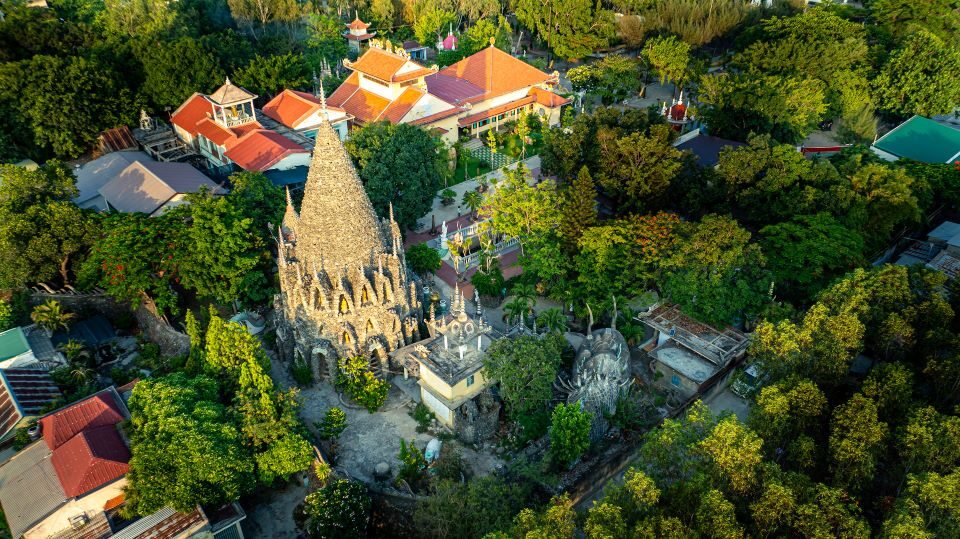
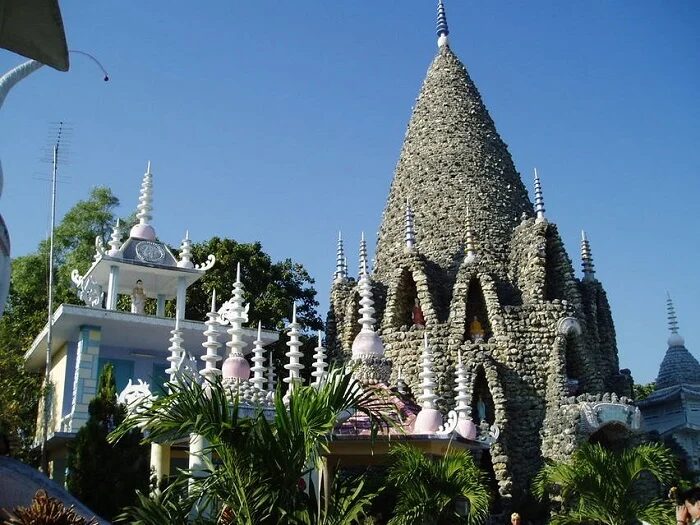
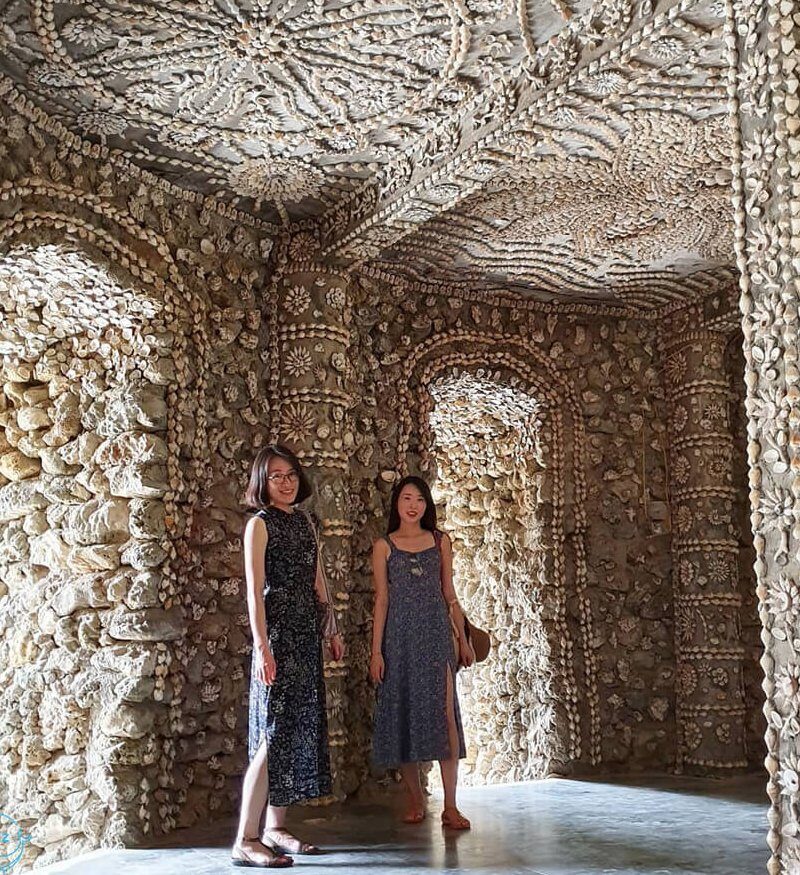
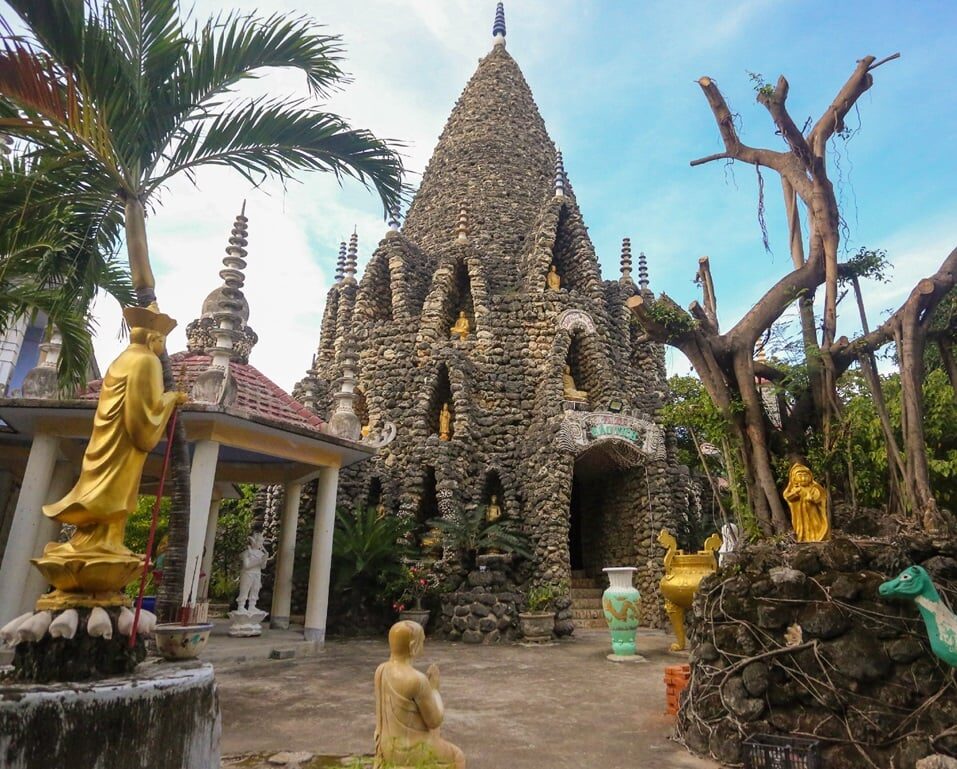
Tu Van Pagoda in Cam Ranh, known locally as the Shell Pagoda or Oc Pagoda, is a working Buddhist temple famous for its ocean-inspired architecture. Almost every surface, from the gates and walls to the soaring central tower, is clad in seashells, clams, and coral gathered from the nearby coast, hand-pressed into the concrete underneath.
What sets it apart is that the resident monks designed and built everything by hand, without architects or heavy machinery. The result is part temple and part folk-art wonder, and it looks unlike anything else in Vietnam. For travelers who enjoy authentic local culture, it is a genuine highlight of the region.
The pagoda goes by several names, and each hints at its character. Locals call it Chua Oc, the Shell Pagoda, or the Coral Pagoda, all nods to the materials that cover it. Beyond the surface decoration, the shells and coral are worked into the concrete itself, giving the walls a texture and shimmer you rarely see in a Buddhist temple.
It is also one of the most photographed temples in Khanh Hoa, and for good reason. Sunlight catching the pale shells gives the whole complex a soft, pearly glow that shifts through the day, so no two visits look quite the same.
History and Spiritual Significance
Resident monks began building the pagoda in 1968, and the main temple was completed in the early 1970s. The idea of cladding the structures in shells and coral came later, with the great garden started in 1985 and the landmark tower rising through the 1990s.
The materials were never only decorative. According to the monks, gathering and shaping the shells by hand was a way to train their patience, focus, and physical and mental strength. Each structure ties to a story from Buddhist teaching, so a slow walk through Tu Van Pagoda in Cam Ranh doubles as a lesson in karma, compassion, and the path to enlightenment.
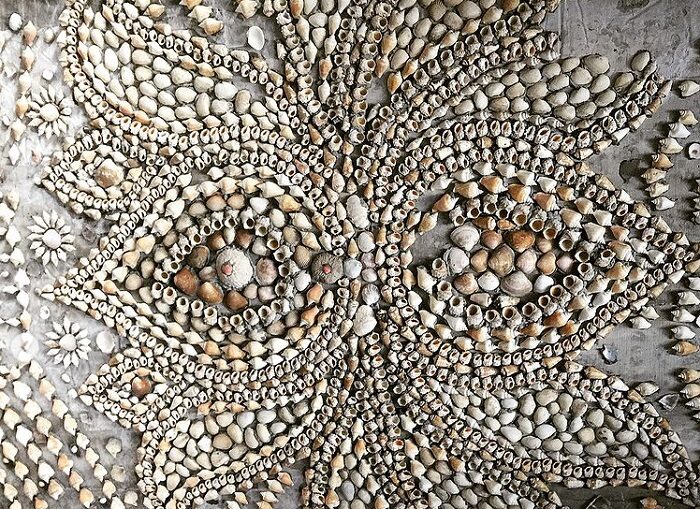
The vision is credited to the pagoda’s monks, who wanted a spiritual complex whose every surface was drawn from the sea. They gathered coral and shells washed ashore along the Cam Ranh coast, and as local residents dug ponds to farm shrimp and fish in the 1980s, even more raw material surfaced. Piece by piece, the monks shaped it all by hand across many patient years.
Even the dragon statues carry a story. Several were reportedly brought from Ngu Hanh Son, the Marble Mountains near Da Nang and another revered Buddhist site, then set among the shell-covered courtyards. The whole complex is meant to be read as much as photographed, with each figure pointing back to a Buddhist idea.
Architecture and Must-See Highlights
The pagoda packs several remarkable structures into a compact, walkable site. These are the highlights of Tu Van Pagoda in Cam Ranh you should not miss.
Bao Tich Tower and the Prajna Boat
The centrepiece is the Bao Tich Tower, a 39-metre spire recognised in the Vietnam Record Book as the tallest of its kind in the country. Built between 1995 and 2000 entirely by hand, it carries eight doors that represent the Noble Eightfold Path, and 49 smaller stupas surround it, each holding a Buddha statue. Step inside and the concentric, shell-lined walls make you feel as if you are standing within a giant seashell.
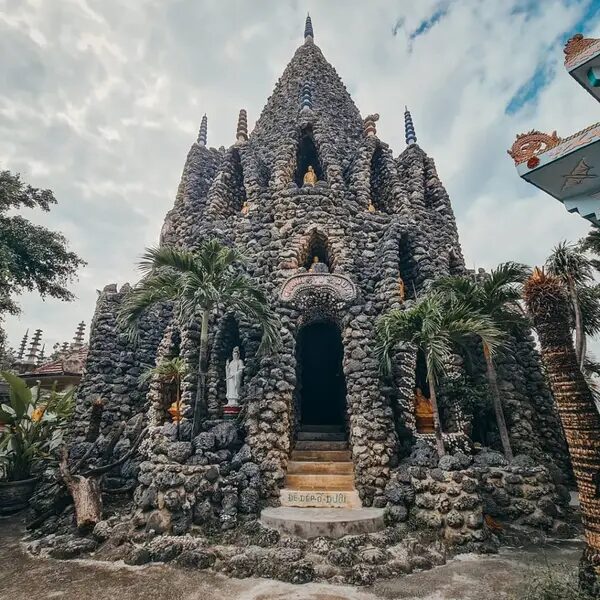
Near the entrance sits the Prajna Boat, a three-storey vessel about 10 metres long and 4 metres wide, decorated in shells and stacked with Buddhist books. It symbolises the boat of wisdom that carries people across the sea of suffering, and it is a favourite first photo stop.
The tower rises over two floors, with the ground level open to visitors and the upper level reserved for worship. Inside stands a statue of Guanyin with a thousand arms and a thousand eyes, while the 49 surrounding stupas each hold a different Buddha, among them Amitabha, Shakyamuni, and Maitreya. Look closely at the walls and the mosaic patterns resolve into thousands of individual shells, every one pressed into place by hand.
The Prajna Boat rewards a closer look too. Its three storeys are stacked with Buddhist scriptures, and hundreds of small statues cover its shell-clad hull. As a symbol, it carries the righteous across the ocean of suffering, a hopeful note right at the entrance.
The 18 Levels of Hell Tunnel
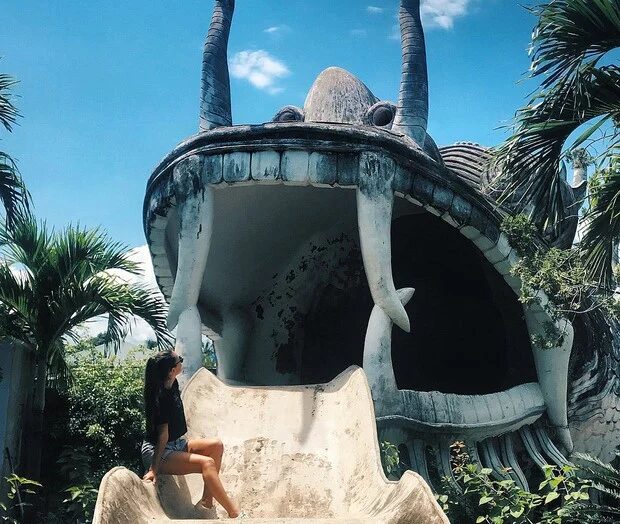
The most talked-about experience is the tunnel known as the 18 levels of hell. You enter through a dragon’s head into a dark, narrow passage that winds roughly 500 metres and dips several metres underground, with painted scenes at each gate depicting the consequences of human wrongdoing.
Sources differ on the exact number of gates, with some visitors counting around a dozen rather than a strict eighteen, yet the symbolism stays consistent. You pass through suffering and emerge, as if reborn, from the dragon’s mouth into a peaceful garden. Bring a flashlight, since natural light barely reaches the deepest sections, and allow 40 to 60 minutes for the full loop.
The descent is designed to unsettle you gently. The air grows cooler and damper as you go, the silence deepens, and lower sections ask taller visitors to duck their heads. Near the end you cross the symbolic Nai Ha bridge, the marker between suffering and release, before stepping back into daylight through the dragon’s jaws.
Bring a flashlight — natural light barely reaches inside
The tunnel winds roughly 500 metres and dips several metres underground, with the deepest sections almost fully dark, so a torch is essential.
Allow 40 to 60 minutes for the full loop, and note that taller visitors have to duck in the lower stretches before emerging through the dragon’s mouth.
Gardens, Dragon Statues and Guanyin Shrines
Beyond the tunnel lies the Prajna Flower Garden, a shaded space of old trees and statues of sea creatures and animals resting in harmony. It is a deliberate contrast to the tunnel, calm where the passage felt tense, and a fine place to pause in the heat.
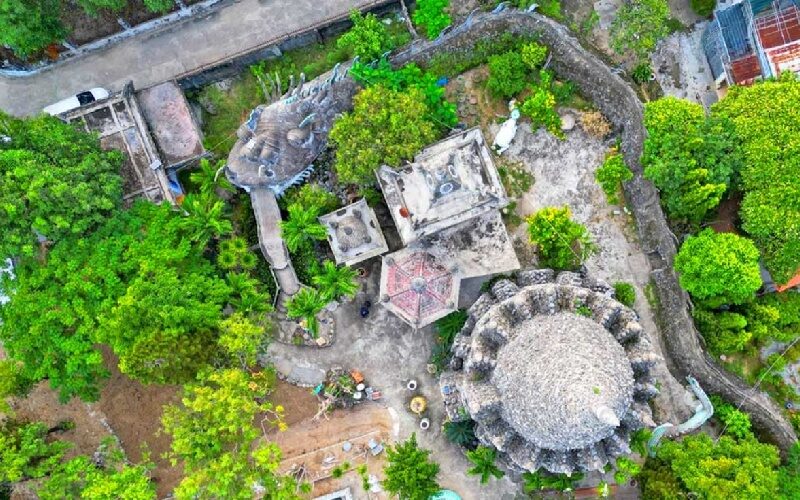
Elsewhere you will find intricate dragons crafted entirely from shells, some reportedly brought from the Marble Mountains near Da Nang, and a shrine to Guanyin, the Goddess of Mercy, depicted with a thousand arms and a thousand eyes. These small details reward a slow, curious walk rather than a rushed visit.
The garden has a name of its own, Bat Nha Hoa Vien, or the Prajna Flower Garden, and the monks began collecting shells for it as far back as 1985. Among the trees you will spot creatures of land and sea alongside a shell-built rendering of the Five Elements Mountains. Each figure ties to a thread of Buddhist mythology, so the garden reads like a gentle epilogue to the tunnel’s darker lessons.
Give yourself time to simply sit for a while. Many visitors find that the contrast between the eerie tunnel and the bright, shell-strewn gardens is the real memory they carry home, more than any single statue or tower.
Visitor Information (2026)
A few practical notes make a visit to Tu Van Pagoda in Cam Ranh straightforward and respectful.
- Location and Address: 3 Thang 4 Street (3rd of April Street), Cam Linh Ward, Cam Ranh City, Khanh Hoa, about 8 kilometres south of the city centre.
- Opening Hours: generally open during daylight hours. There are no widely published official hours, so it is best to confirm locally before a late-afternoon visit.
- Entry Fee and Donations: free to enter, including the tower and the tunnel. A small donation toward the upkeep of the grounds is welcome but never required.
- Dress Code and Temple Etiquette: dress modestly with shoulders and knees covered, speak quietly, remove hats inside shrines, and always ask before photographing monks.
A little temple etiquette goes a long way here. Step softly, keep phones on silent, and consider lighting a stick of incense in the main hall as many visitors do. Because this is an active place of worship, treat anyone praying with care and follow any signs asking for quiet.
Donations left at the pagoda help maintain the fragile shell and coral surfaces, which need regular care in the salt air. Even a small note is a kind gesture in return for a free visit to somewhere so carefully made.
How to Get to Tu Van Pagoda
The pagoda sits within easy reach of the airport, the beach resorts, and Nha Trang. The three routes below cover the most common starting points.
From Cam Ranh International Airport (CXR)
From the airport, the pagoda is about a 25-minute drive south. A metered taxi or Grab is the simplest option, and many visitors fold the stop into their arrival or departure day. Our guide to Cam Ranh International Airport covers arrivals and transport in more detail.
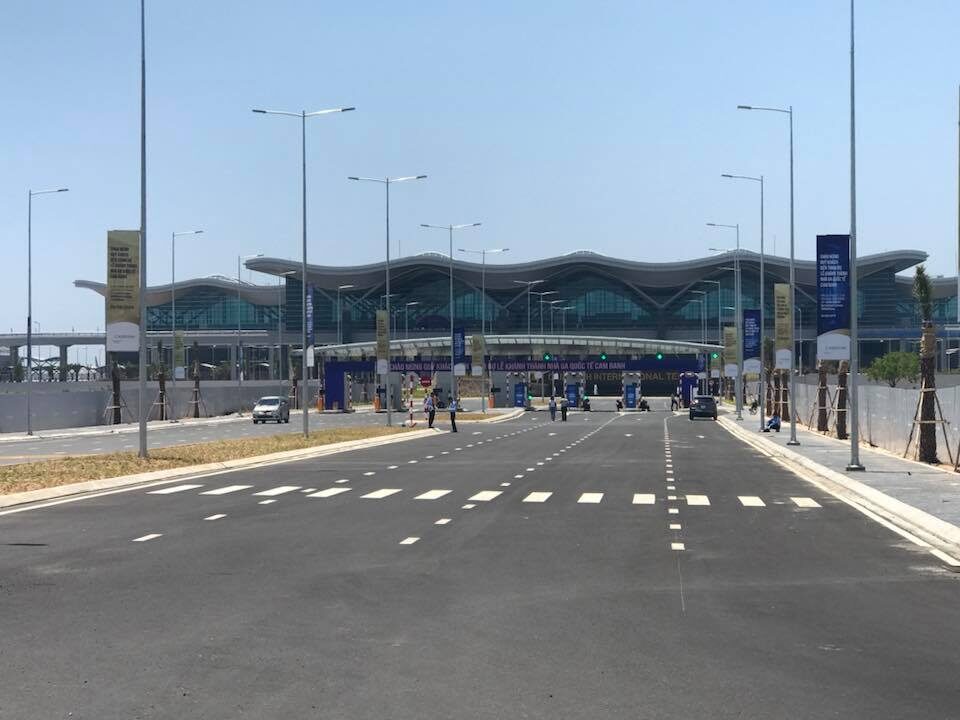
Grab and metered taxis are both easy to find at arrivals, and the fare for the short hop is modest. If you are heading to the coast afterward, the pagoda slots neatly between the airport and the Bai Dai resorts, which makes it a natural first or last stop.
From Bai Dai Beach and the Resort Strip
If you are staying on the Bai Dai resort strip, the pagoda is roughly a 20 to 25-minute drive. A hotel car or a booked Grab makes the trip painless, and the coastal road is pleasant. Setting out early avoids both traffic and the midday heat.
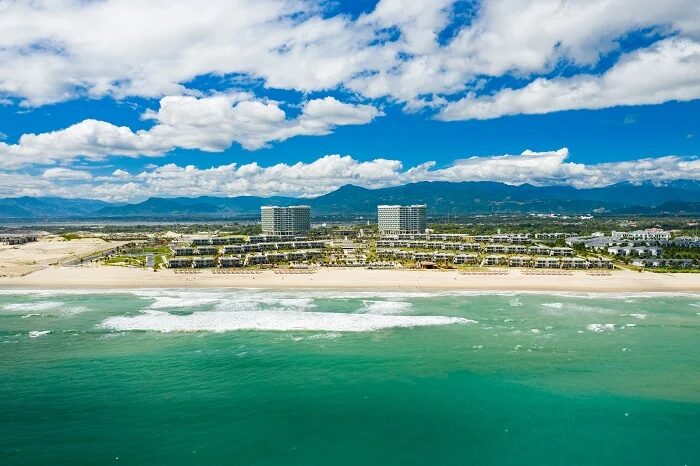
There is parking at the site for both cars and motorbikes, so a self-drive works well from the strip. Because the pagoda sits just off the main road, it is easy to fold into a wider morning of sightseeing along the coast.
From Nha Trang (Car, Motorbike or Local Bus)
From Nha Trang, expect about an hour to cover the 50 to 60 kilometres south. A private car or taxi is easiest, confident riders can take a motorbike along the coastal highway, and budget travelers can use the local bus toward Cam Ranh. For options and prices, see our guide on getting from Nha Trang to Cam Ranh.
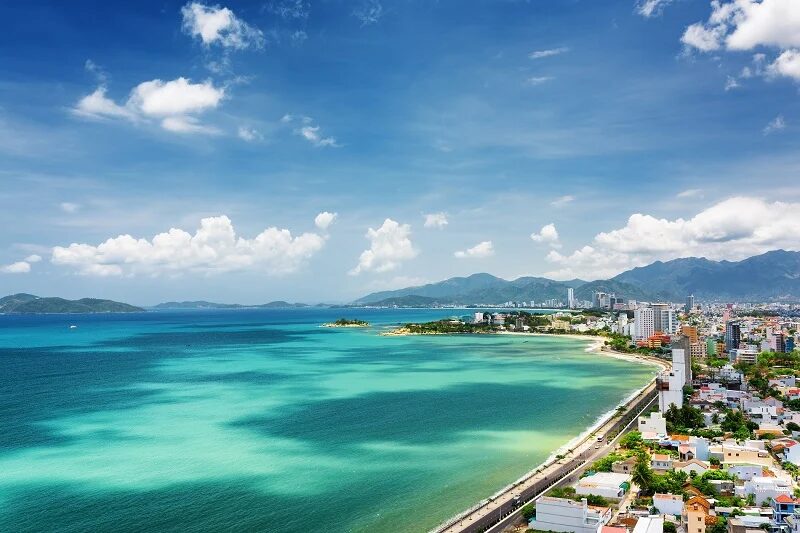
The coastal highway south is scenic in its own right, tracing the sea for much of the way. Once in Cam Ranh, the pagoda is a short, well-signed turn off the main road, so it is hard to miss with a map app running.
*Prices are for reference only and may change without notice. Please contact us directly for current rates.
Best Time to Visit
As a spiritual site, Tu Van Pagoda in Cam Ranh welcomes visitors year-round, though a little timing helps. The section below also covers what to wear and pack.
Mornings are the sweet spot, cooler and quieter than the harsh midday sun, which matters on a site with an open courtyard and a warm tunnel. For beach weather to match, the dry months from roughly January to August are the most reliable, with May to August especially settled.
Buddhist holidays and the Tet Lunar New Year draw larger local crowds, so avoid those dates if you prefer a quiet visit. For photography, the soft morning light flatters the pale shells and the tower’s spires, one more reason to arrive early rather than late.
Read more: Best Time to Visit Cam Ranh: 2026 Weather & Monthly Forecast
Rain is most likely from around September to December, when short, heavy showers pass through. A visit still works on those days, since much of the site can be seen between showers, though the tunnel floor may be damper underfoot.
Morning light is what makes the shells glow
The pagoda’s surface is pressed with pale shells and coral, and soft early light gives it a pearly shimmer that the flat midday sun washes out.
Mornings are also cooler for the open courtyard and warm tunnel, so an early visit wins on both photos and comfort.
What to Combine Nearby
Tu Van Pagoda in Cam Ranh pairs neatly with a couple of nearby stops for a fuller day out. The two below are the easiest to add to your route.
Bai Dai (Long) Beach
Bai Dai, or Long Beach, is a long sweep of pale sand a short drive from the pagoda, ideal for a swim and a seafood lunch after a morning of sightseeing. Its calm, clean water makes it an easy reward once you leave the temple grounds.
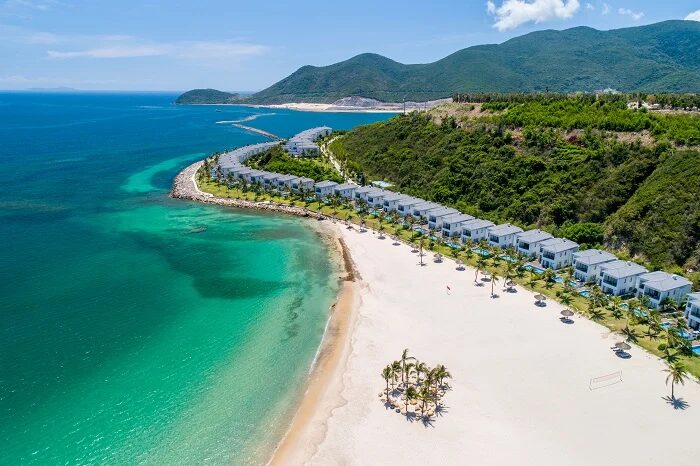
Simple seafood shacks and fresh coconuts line parts of the sand, so it is easy to lose a lazy afternoon here. It is the natural counterpoint to a morning of shell towers and dim tunnels.
Read more: 5 Best Bai Dai Cam Lam Secrets You Should Know
Vietnam-Russia Monument and Other Cam Ranh Highlights
Near the airport stands the Vietnam-Russia friendship monument, a striking memorial to the servicemen once based in the area. Combined with a beach stop and a fresh seafood meal, it rounds out a relaxed day of local discovery. For more ideas, see our list of things to do in Cam Ranh.
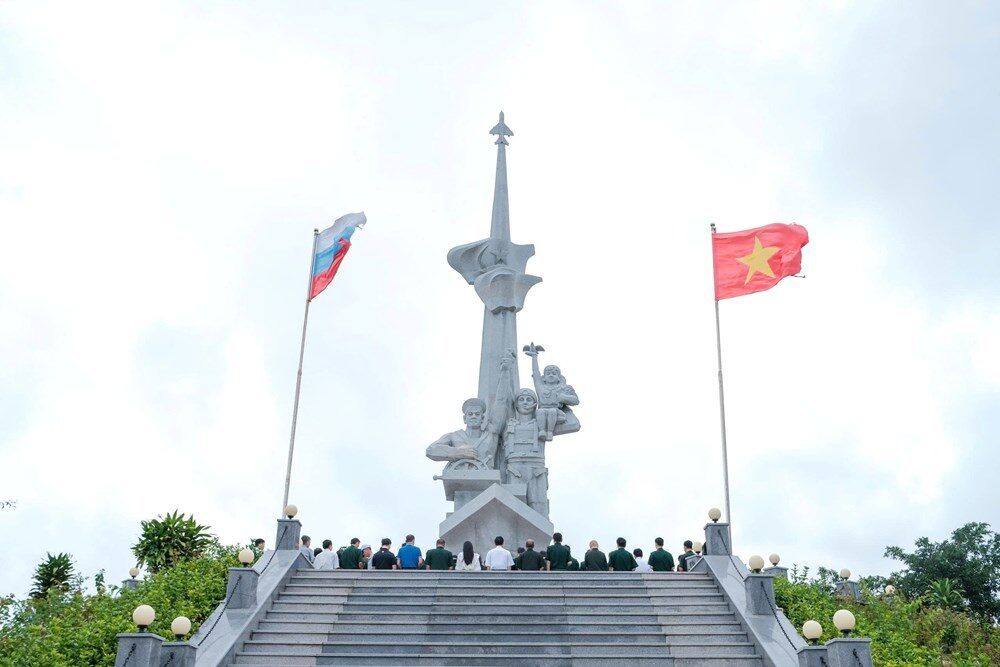
With an early start, you can comfortably combine the pagoda, the monument, a beach swim, and lunch before the afternoon heat peaks. That mix of culture, history, and coast is what makes a Cam Ranh day trip so satisfying.
Where to Stay Near Tu Van Pagoda
Cultural days in the tropical heat go better with a comfortable base to return to. The spotlight and tips below cover where to stay and how to arrange the trip.
Alma Resort Cam Ranh: A Beachfront Base About 25 Minutes Away
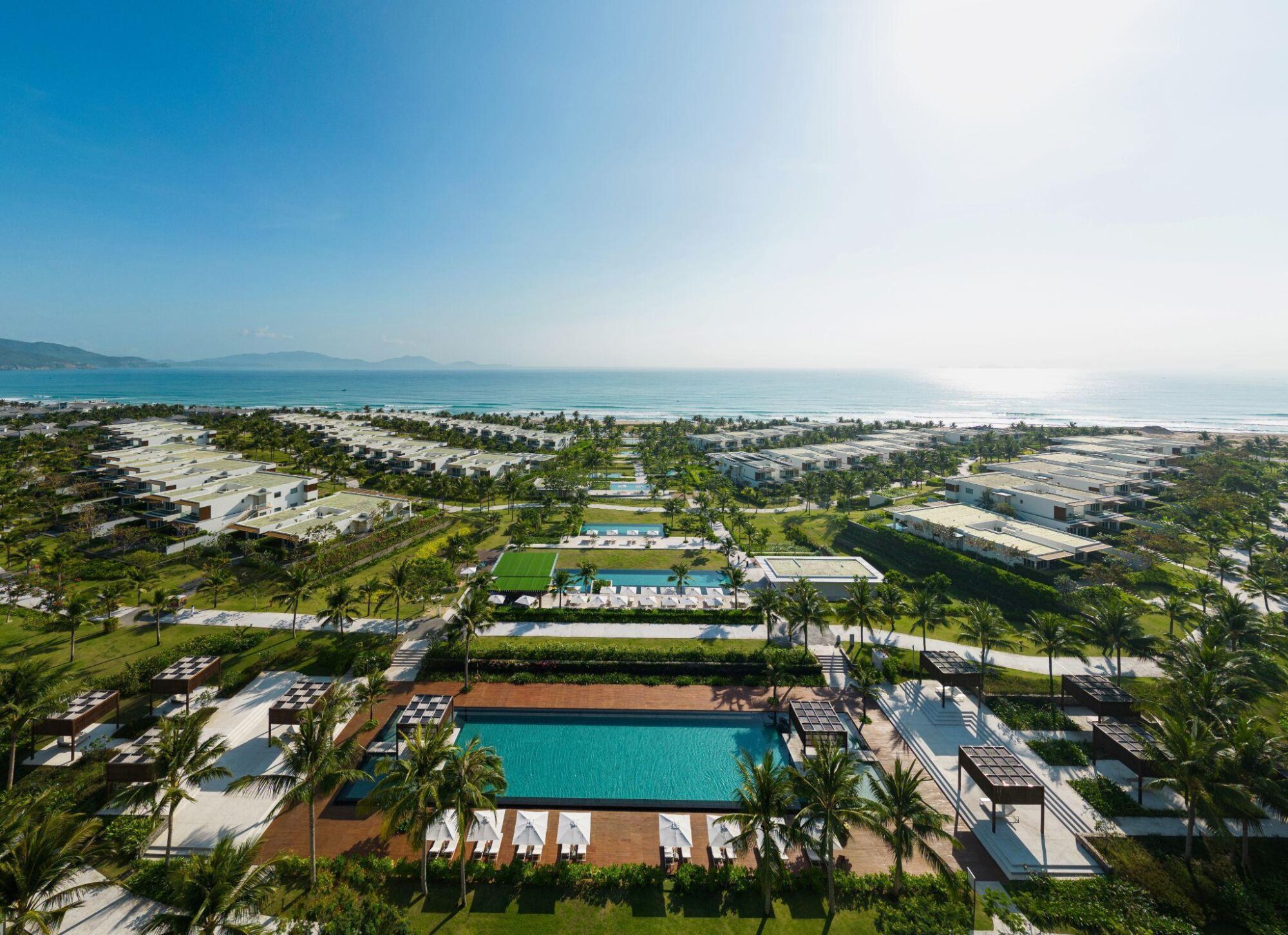
Alma Resort Cam Ranh sits on Bai Dai (Long Beach) about 25 minutes from the pagoda, spread across 30 hectares of frontage a few minutes from the airport. That location makes it an ideal base for a cultural half-day trip, close enough to fold the temple into a morning and be back beside the sea by lunch.
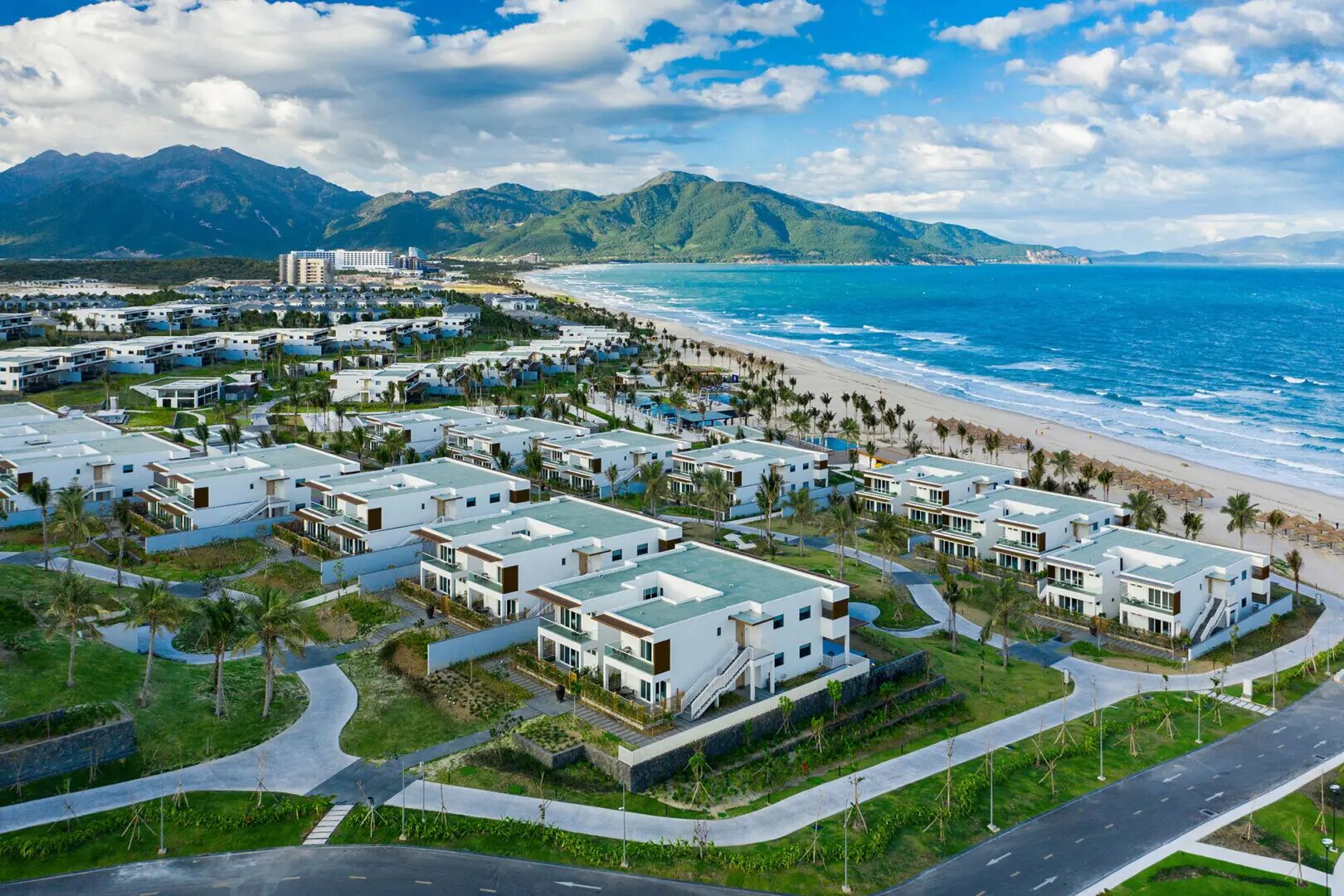
The real advantage of basing yourself here is proximity. Because Alma Resort Cam Ranh sits about 25 minutes from the pagoda, the Shell Pagoda becomes an easy half-day out rather than a full-day expedition from Nha Trang, so you can visit in the morning and be back beside the sea by lunch. And because almost everything sits on one landscaped site, there is no second car ride between the temple and your afternoon by the pool.
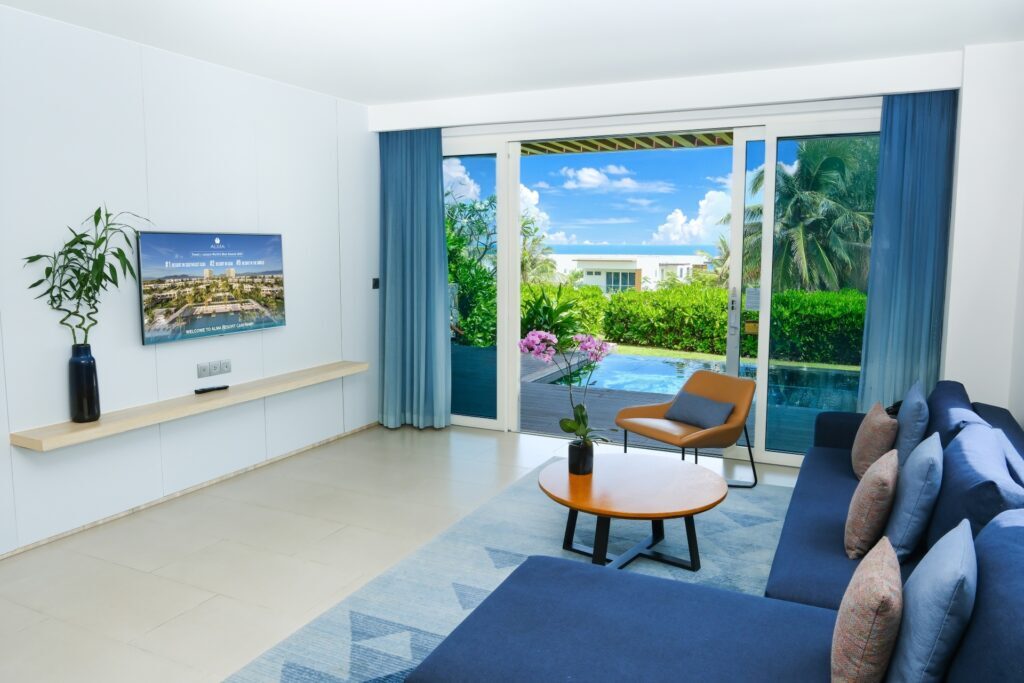
Where you sleep sets the tone for that recovery, and two room types suit a cultural trip especially well. Couples and small families tend to choose the 1 Bedroom Villa, Private Pool, Ocean View, a 147 square metre retreat that opens onto its own plunge-pool terrace facing the sea.
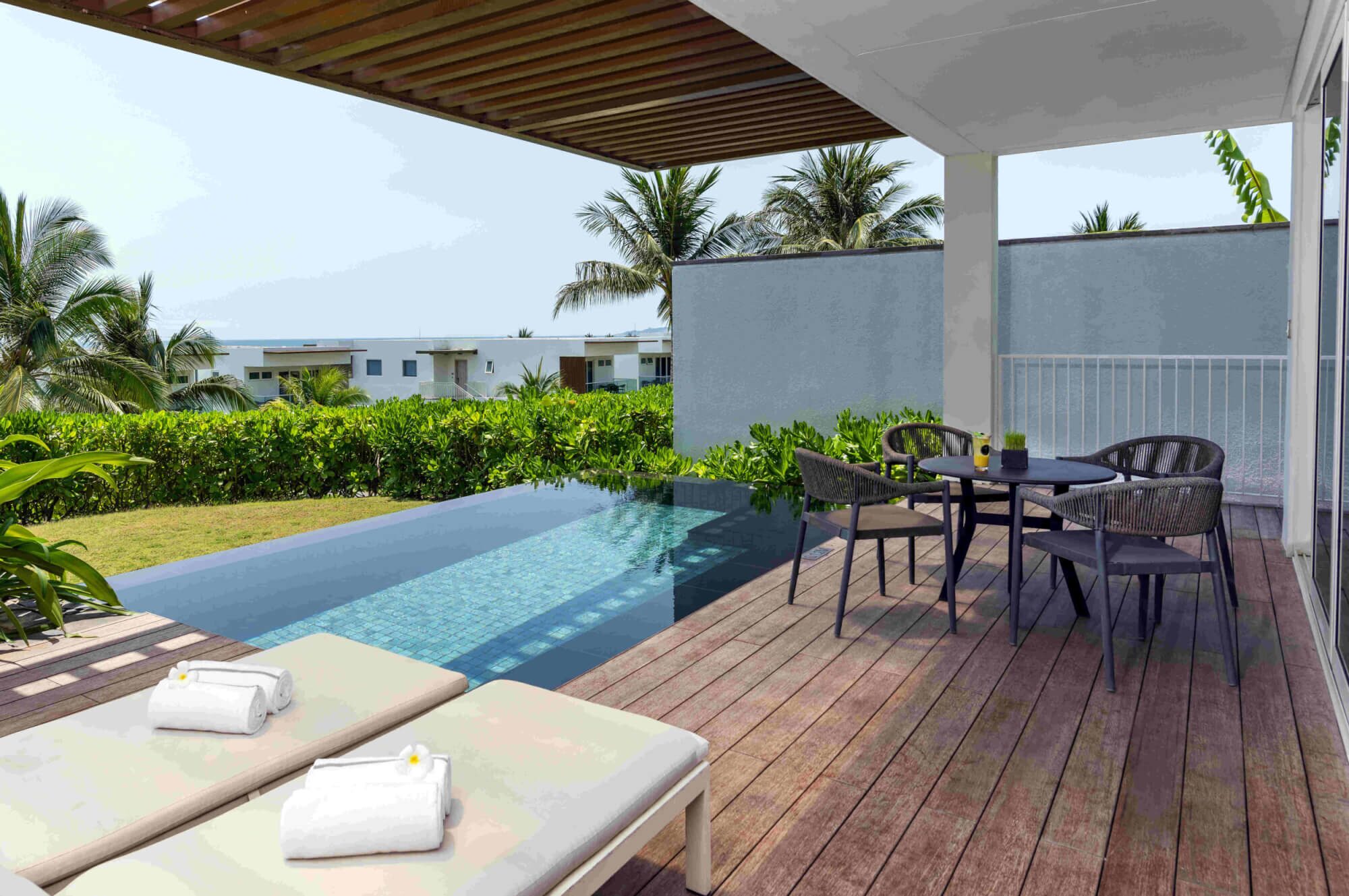
After a dusty morning at the pagoda, slipping into a private pool a few steps from the bed, with no crowds and no schedule, is exactly the reset a hot day of sightseeing calls for. Inside, a full living and dining area, a mini pantry with a fridge and microwave, and a large en suite bathroom with a full-length bath and rain shower make it comfortable for a longer, slower stay.
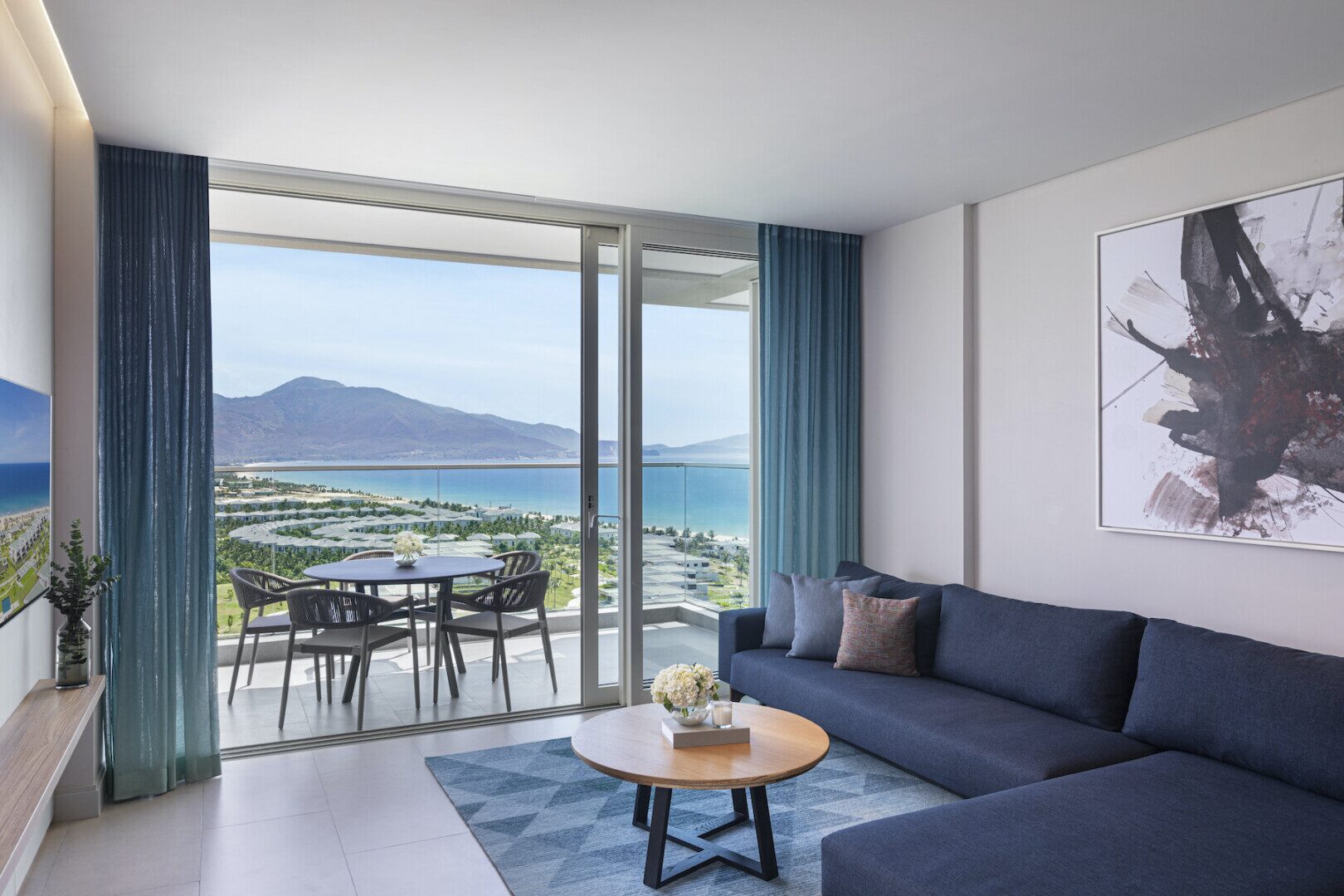
Travelers who do not need a private pool often prefer the 1 Bedroom Suite with Terrace Ocean View, which at 70 square metres is the largest entry-level suite in the area. Floor-to-ceiling windows open onto a private terrace with a dining table, and the layout keeps a generous living and dining space separate from the bedroom, so the room still feels calm after a full day out.
Thoughtful touches in these suites, like a mini pantry with Nespresso coffee, mean a quiet morning in is as easy as heading down to breakfast. For those seeking an even closer connection to the water, upgrading to a beachfront villa allows you to wake directly to a stunning sunrise over Bai Dai.
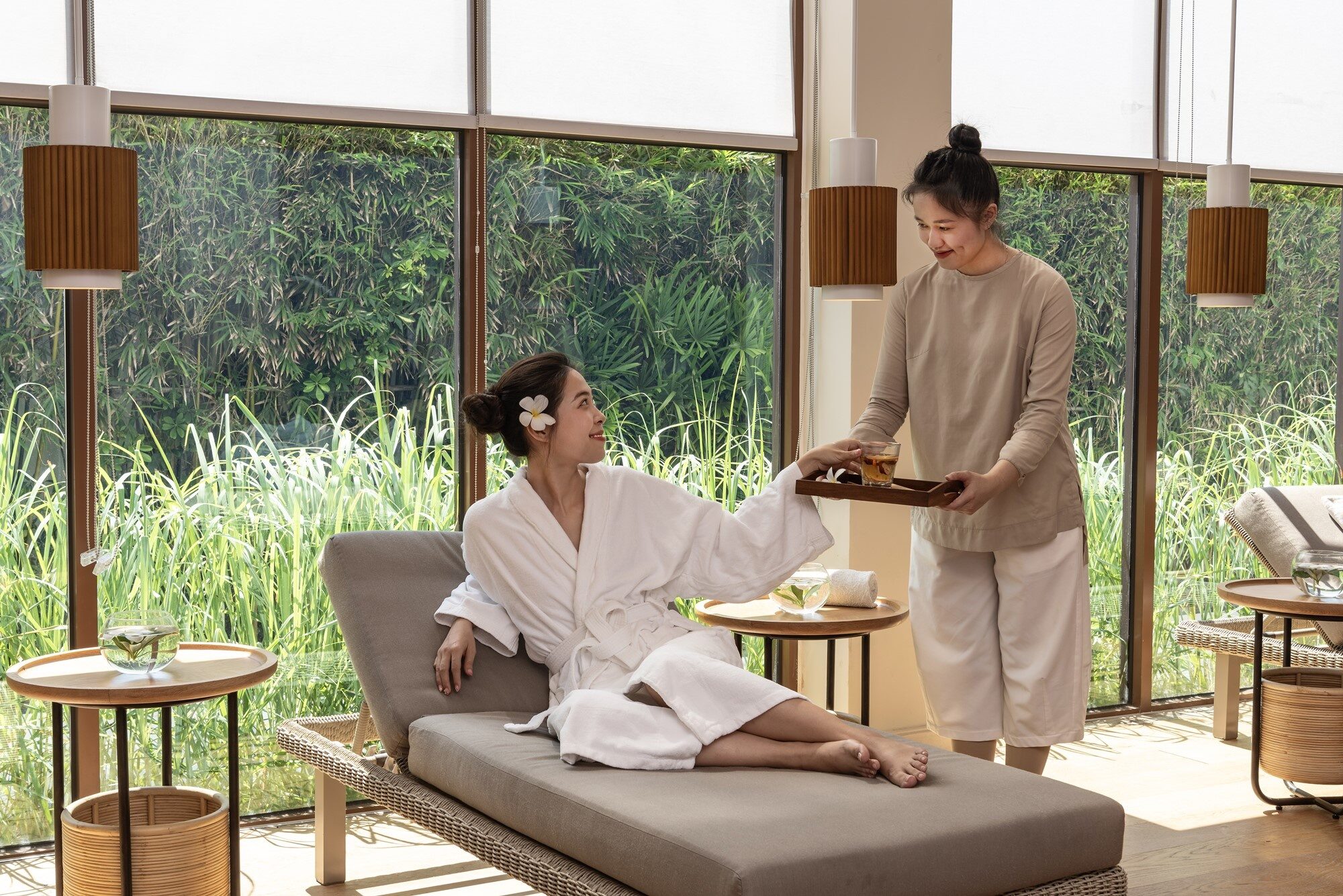
With the room settled, the real reward after a cultural morning is the resort’s wellness offering. The heart of it is Le Spa, a retreat of 13 standalone treatment villas scattered through a garden, each named after a Vietnamese flower.
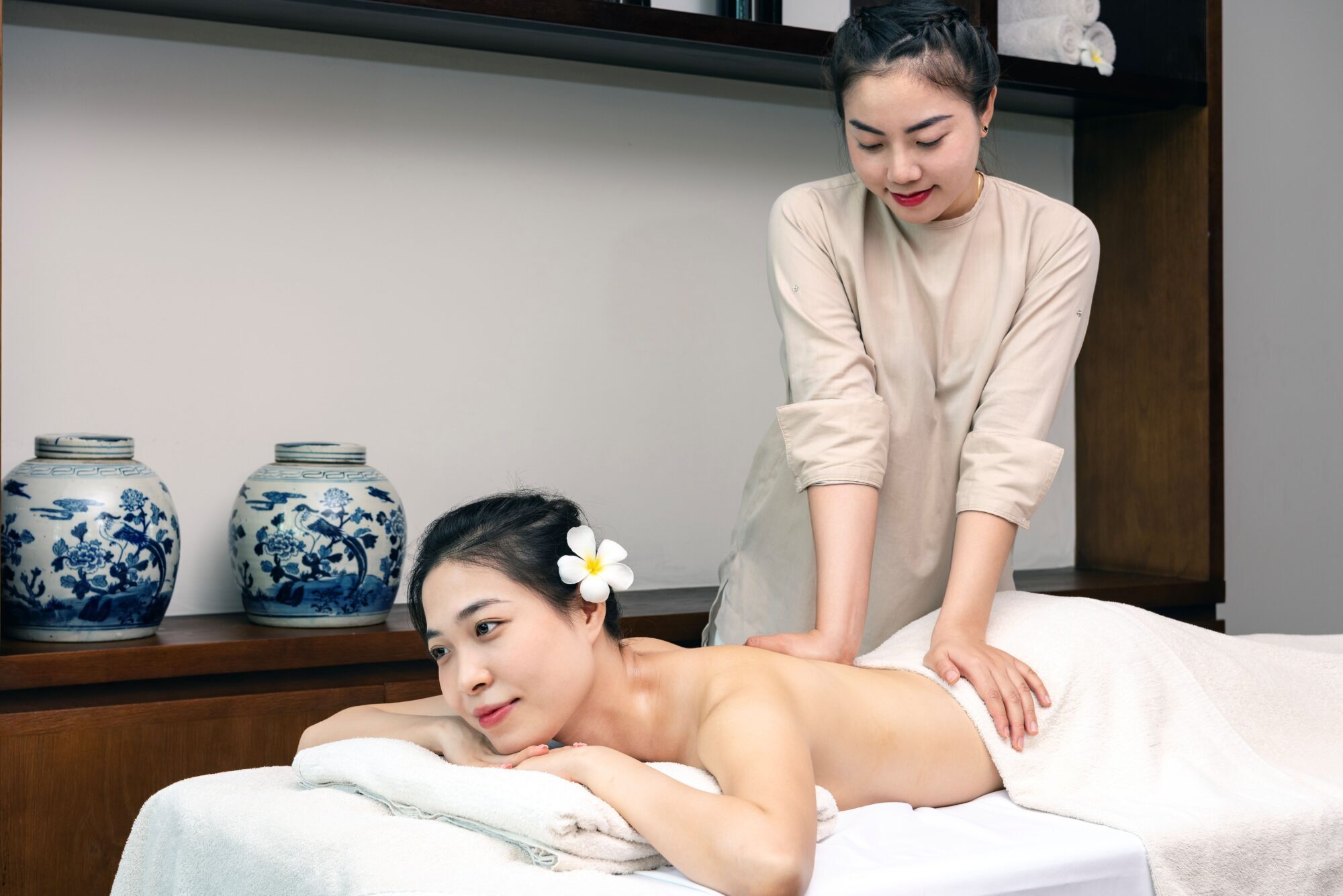
Therapists begin with a private consultation, then lead you along a garden path to your own villa, using Aromatherapy Associates products for massages, facials, body wraps, and scrubs, with separate steam and sauna rooms and a relaxation suite where a herbal tea closes the treatment.
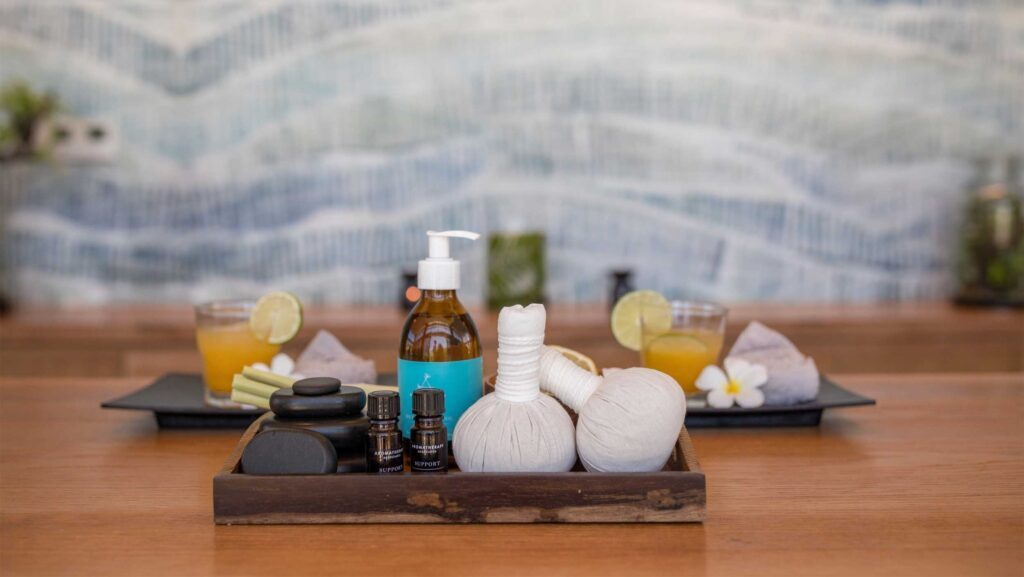
For travelers who want to make wellness the point of the trip, the resort runs structured programs such as the Le Spa Wellness Journey and a Half Day Retreat, weaving together yoga, singing-bowl meditation, hot-stone therapy, and body treatments.
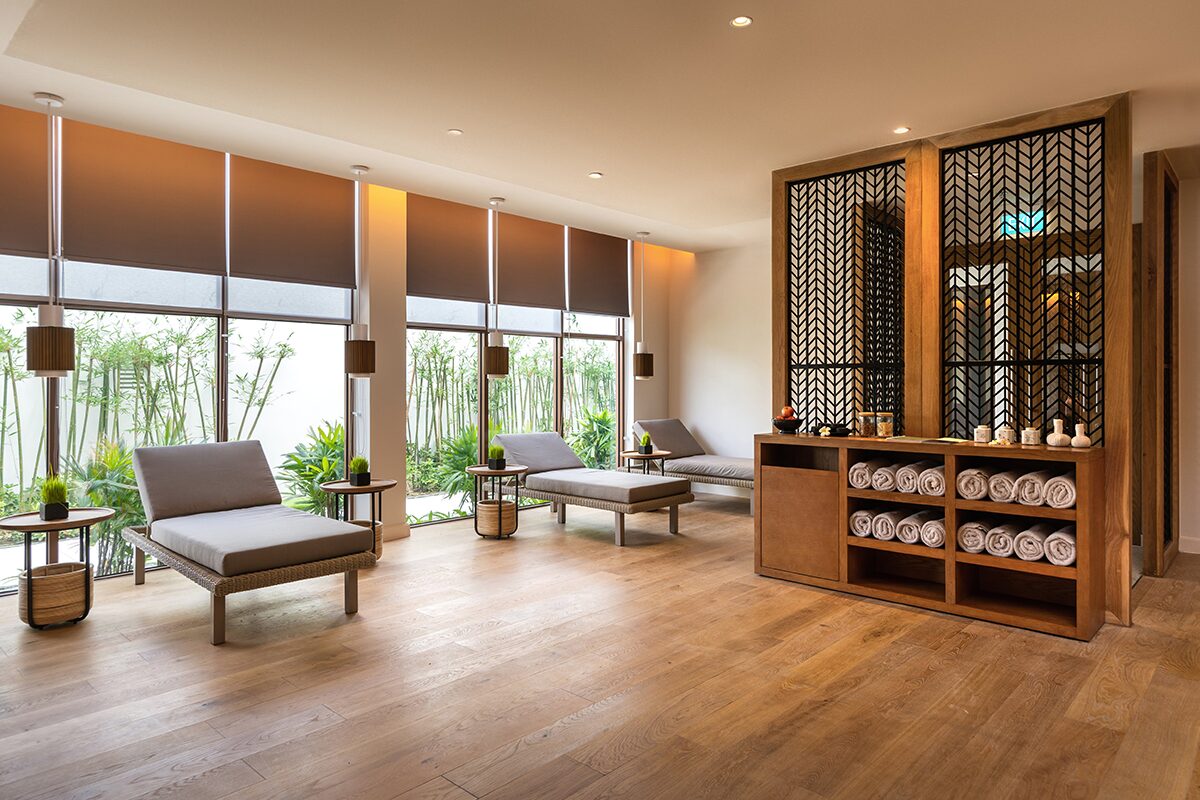
A sound healing session with Tibetan singing bowls costs around VND 350,000 (approx. $14 USD) and a yoga class about VND 200,000 (approx. $8 USD), so an unhurried afternoon after the morning’s sightseeing need not be expensive.
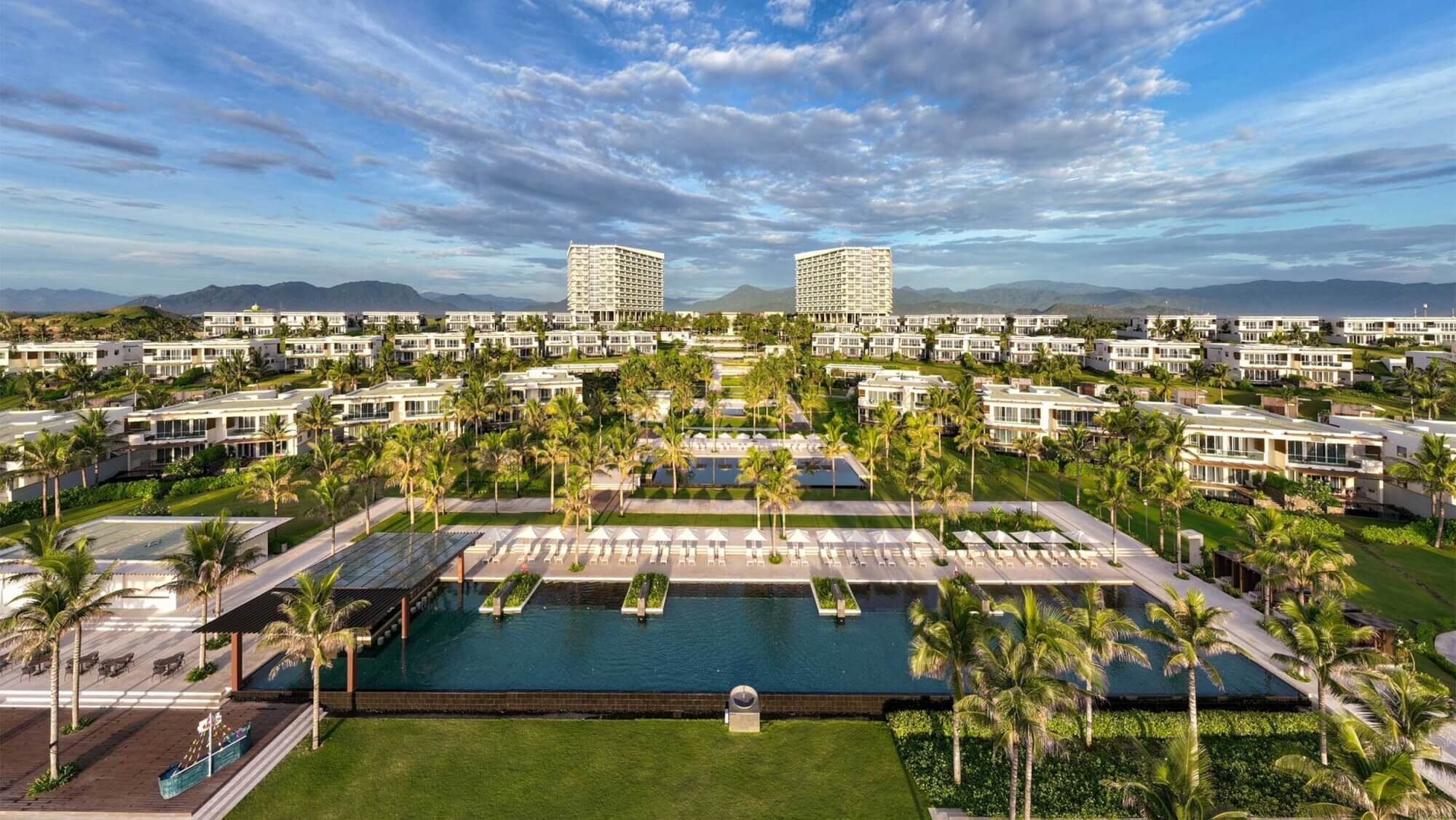
The water is just as restorative. Twelve pools cascade down toward the beach, and rather than one crowded pool there is a 75-metre lap pool, an adults-only pool, and a jacuzzi pool, with cabanas and loungers dotted along the terraces. After a morning at the pagoda, a slow afternoon drifting between the pools and the private beach is the natural second half of an easy, unhurried day.
*Prices are for reference only and may change without notice. Please contact us directly for current rates.
Arranging a Visit via the Resort Concierge
You do not have to plan the logistics alone. The resort’s tour desk can arrange a private car and driver, suggest timings that dodge the midday heat, and fold the pagoda into a wider cam ranh itinerary alongside a beach swim or a seafood lunch. It is the simplest way to see Tu Van Pagoda in Cam Ranh without renting your own vehicle or negotiating fares.
Booking through the resort also means someone confirms conditions on the day, which matters at a site with no fixed published hours. It quietly removes the guesswork from a cultural outing and lets you focus on the experience itself, then return to a spa treatment or a quiet pool to round off the day.
Read more: Top 10 Best Resorts in Cam Ranh: 2026 Ultimate Vacation Review
However you plan it, an unhurried visit is the way to appreciate what the monks achieved here. This is a place built over decades from patience and the sea, and it rewards travelers who slow down enough to notice the detail in every shell.
*Prices are for reference only and may change without notice. Please contact us directly for current rates.
Conclusion
Tu Van Pagoda in Cam Ranh is one of Vietnam’s most original temples, a hand-crafted world of shell-covered towers, dragons, and a symbolic descent through the 18 levels of hell. Go in the morning, dress modestly, carry a flashlight, and give yourself an hour or two to take it in.
To pair the visit with rest by the sea, Alma Resort Cam Ranh makes a comfortable base a short drive away. Browse the suites and villas and book your stay to build your Cam Ranh trip around it.
Frequently Asked Questions
Is Tu Van Pagoda worth visiting?
Yes. Few temples anywhere are hand-clad in shells and coral on this scale, and the mix of art, spirituality, and the dramatic hell tunnel makes it a real highlight of a Cam Ranh trip, especially for travelers who prefer culture over crowds. There is genuinely nothing else quite like Tu Van Pagoda in Cam Ranh in the country, which is why it appears on so many Khanh Hoa itineraries.
How much does it cost to enter?
Entry is free, including the tower and the tunnel. A small donation toward the upkeep of the grounds is appreciated but never required.
How long does a visit take?
Most visitors spend about one to two hours, including 40 to 60 minutes in the tunnel and time to wander the gardens and towers. Photographers will want a little longer, and anyone who enjoys quiet reflection could easily linger half a morning.
Is the tunnel safe or claustrophobic?
The tunnel is dark, narrow, and warm, and it can feel tight in places, so it may not suit anyone strongly claustrophobic. There is a single clear path with openings for air and light, and a flashlight makes it manageable for most visitors. If it feels too tight, you can simply turn back the way you came, since the route does not branch.