


Long Son Pagoda & Nha Trang Stone Church: Visitor Guide 2026
A White Buddha looks over Nha Trang from a hill beside the railway line, and a Gothic stone church on its own hill has served the city since 1933. A search for a stone pagoda in Nha Trang usually leads to these two places, which stand within minutes of each other and make one easy half-day. Here is what each offers, when to go, what to wear and how to reach both from the Cam Ranh peninsula.
About Long Son Pagoda and the Stone Church
Long Son Pagoda and the Stone Church are the two landmarks most visitors mean when they search for a stone pagoda, one Buddhist and one Catholic, and both are free to enter.
Where Are the Two Sites?
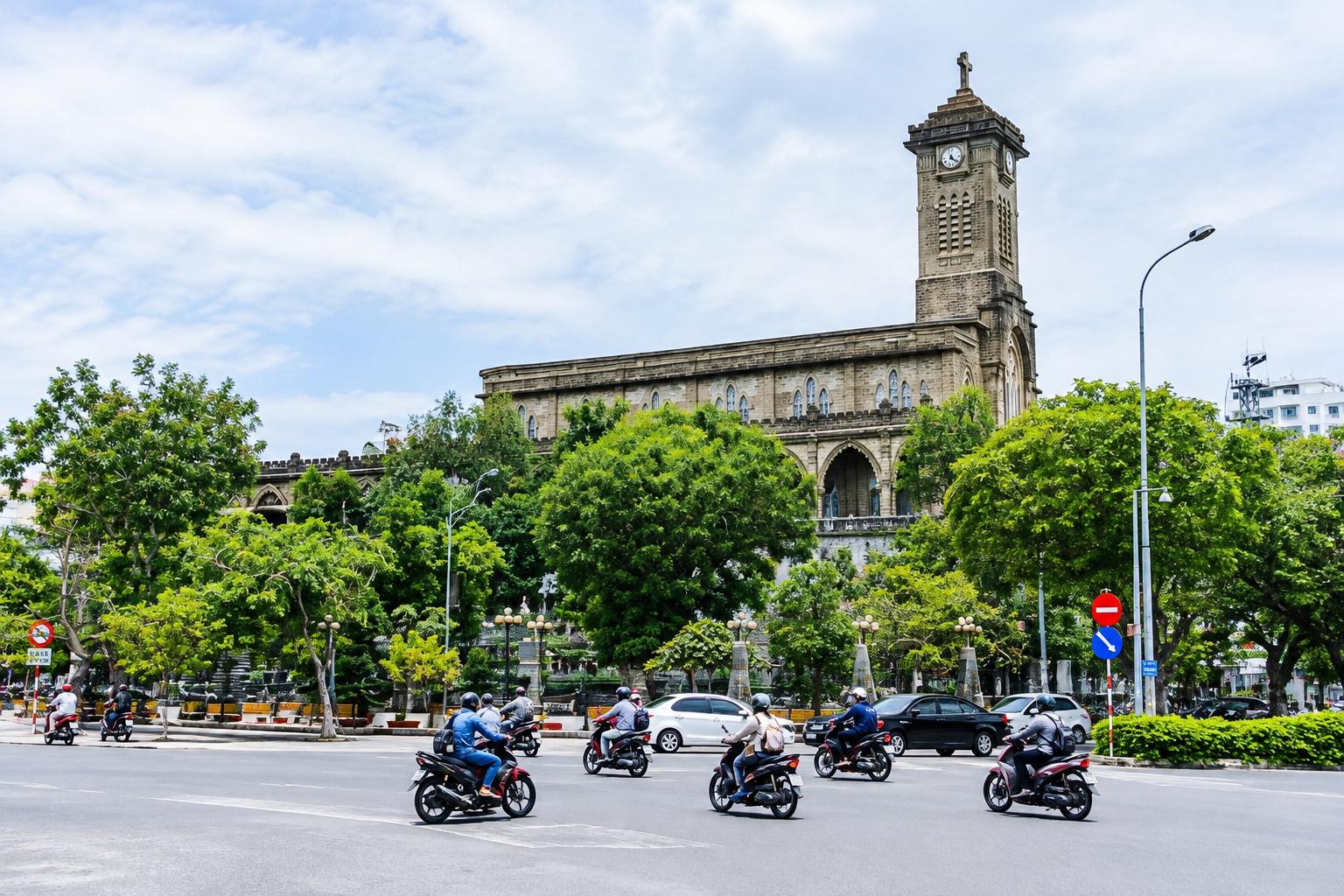
Long Son Pagoda stands at 22 Duong 23 Thang 10 in Tay Nha Trang Ward, at the foot of Trai Thuy Hill, about 500 metres from Nha Trang railway station and about 2.5 km from the Tran Phu beachfront. The Stone Church, officially the Christ the King Cathedral, sits on a small hill on Thai Nguyen Street beside the Nga Sau junction, and Google Maps lists it as 1 Thai Nguyen.
By car the two are about 3 minutes apart, roughly 1.3 km, and walking takes about 20 minutes. Po Nagar Cham Towers lies 9 minutes beyond Long Son, which makes a third stop possible.
The History of Long Son Pagoda
Long Son Pagoda traces its origins to the late 19th century and was first called Dang Long Tu. After a storm damaged the pagoda in 1900, it was moved from the top of Trai Thuy Hill to its present site at the foot of the hill.
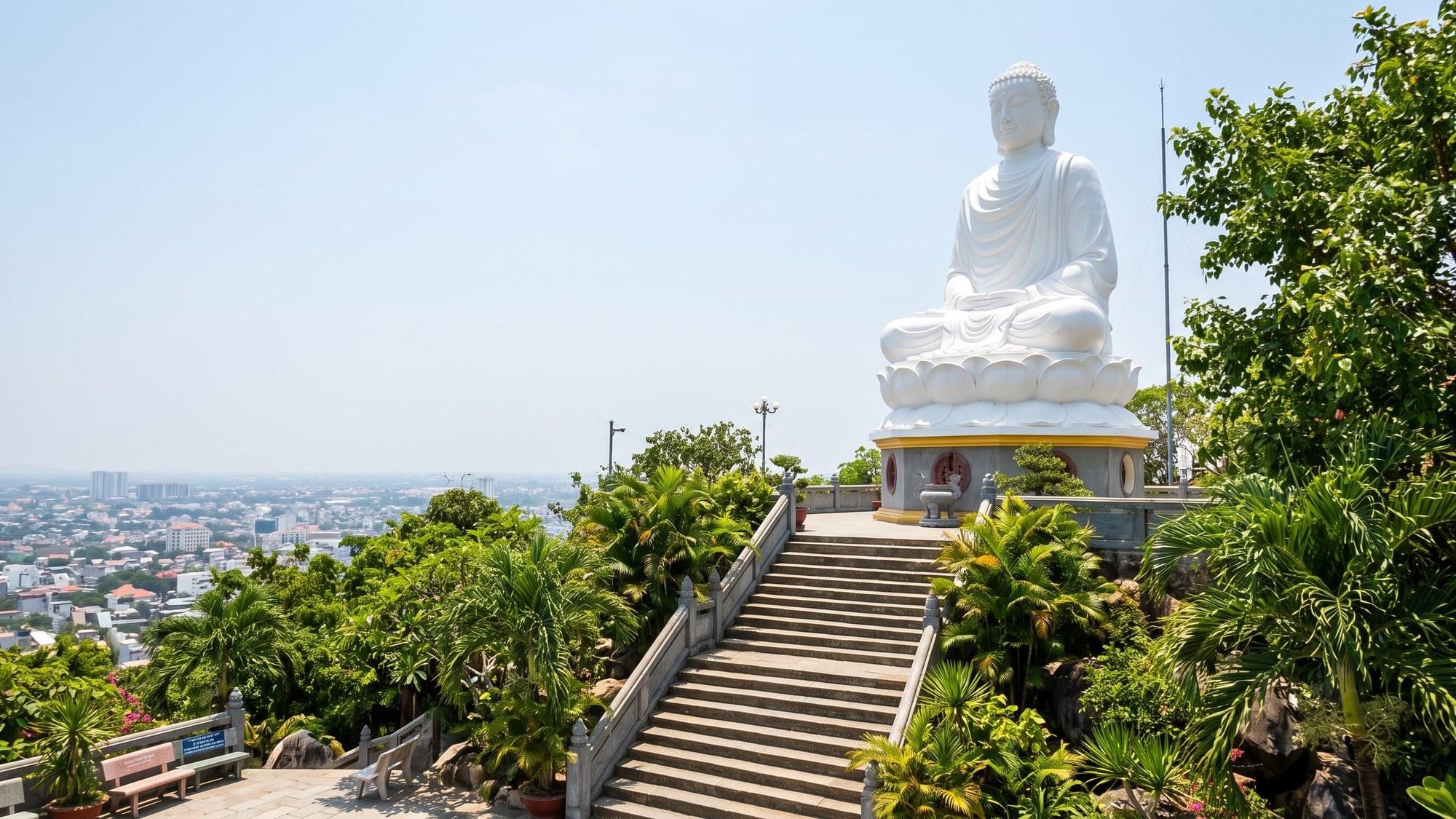
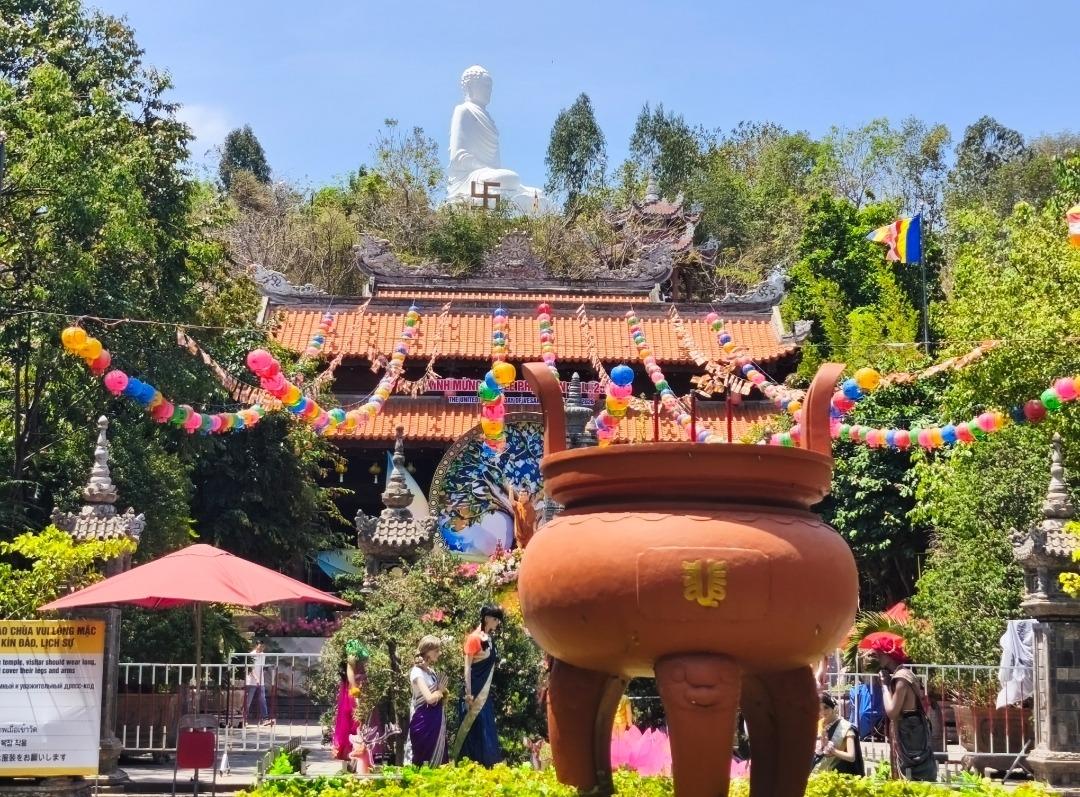
The pagoda was donated to the An Nam Buddhist Association in 1936. In 1938 Emperor Bao Dai granted it the royal title Sắc tứ Long Sơn tự, and it has been rebuilt several times since. The White Buddha statue on the hill was built in 1964 to 1965 and gives the pagoda its second name, the White Buddha Pagoda.
The Highlights of Long Son Pagoda
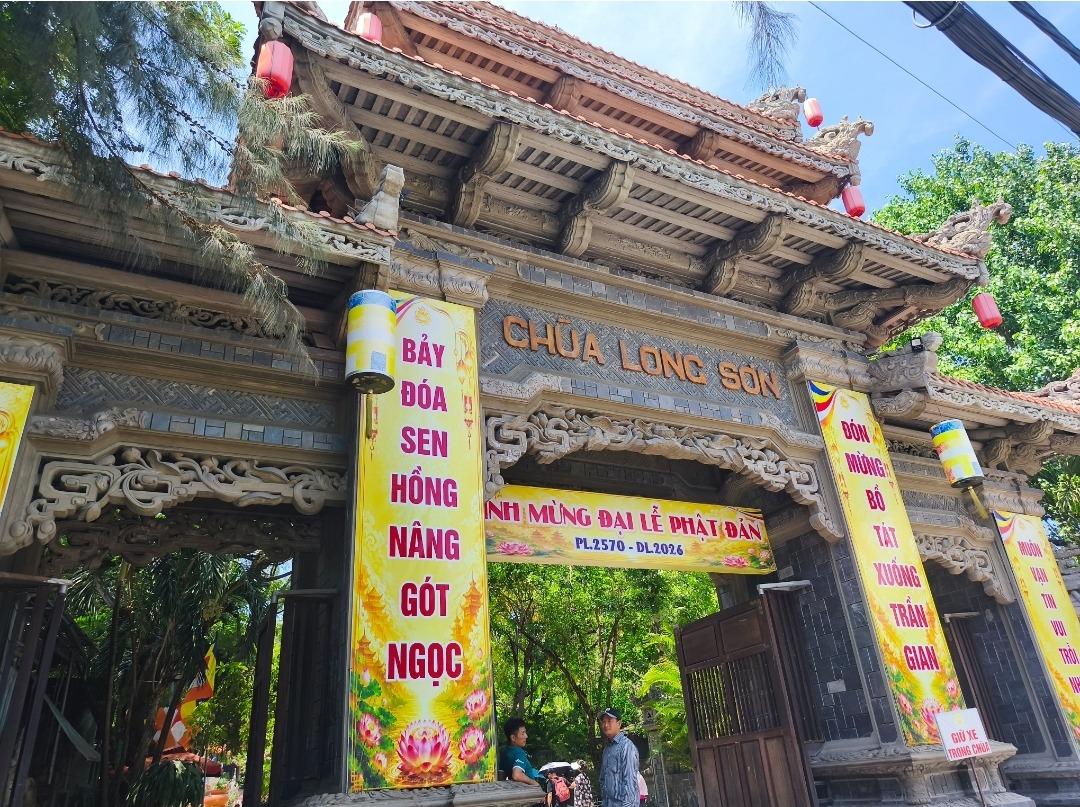
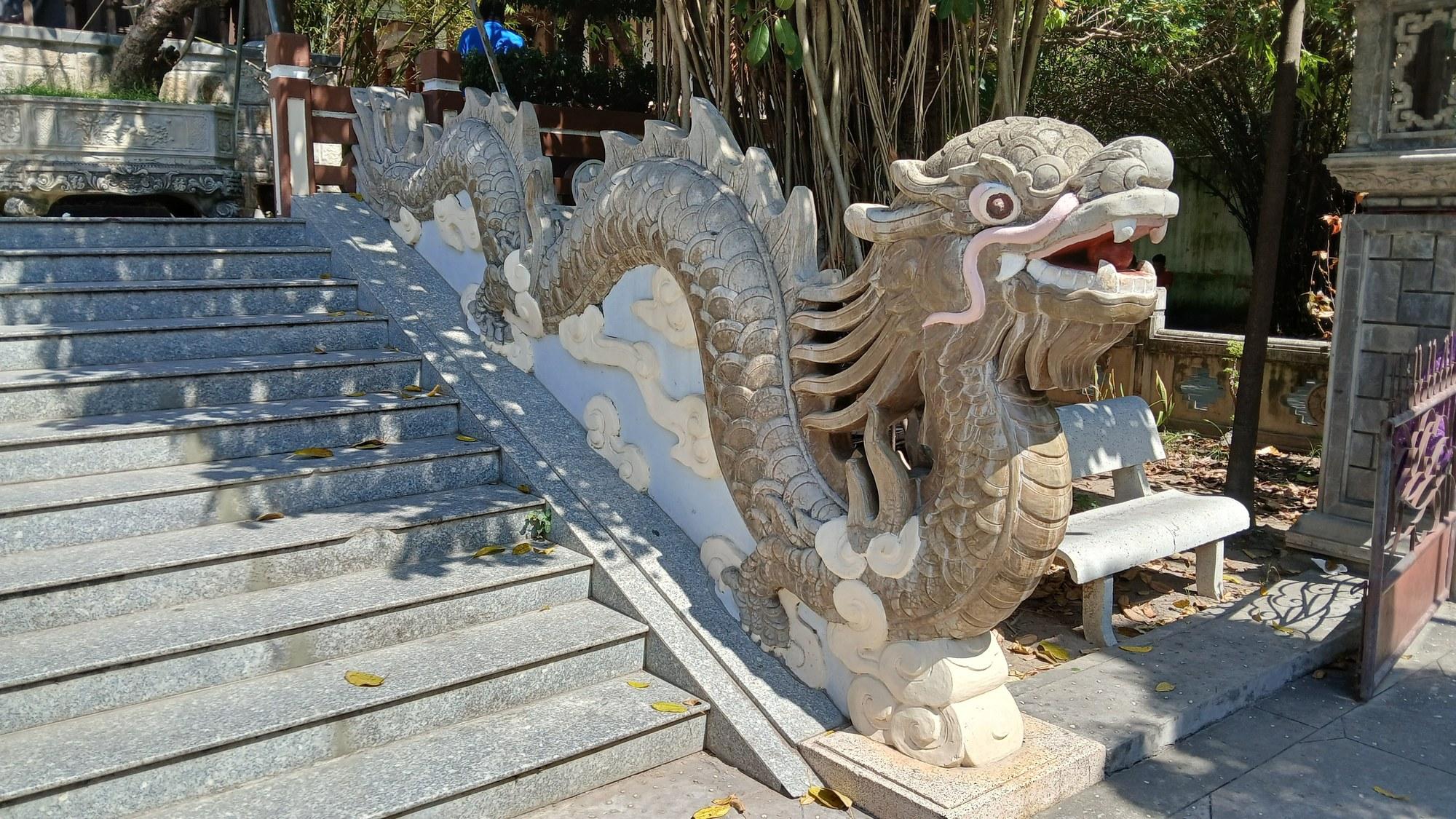
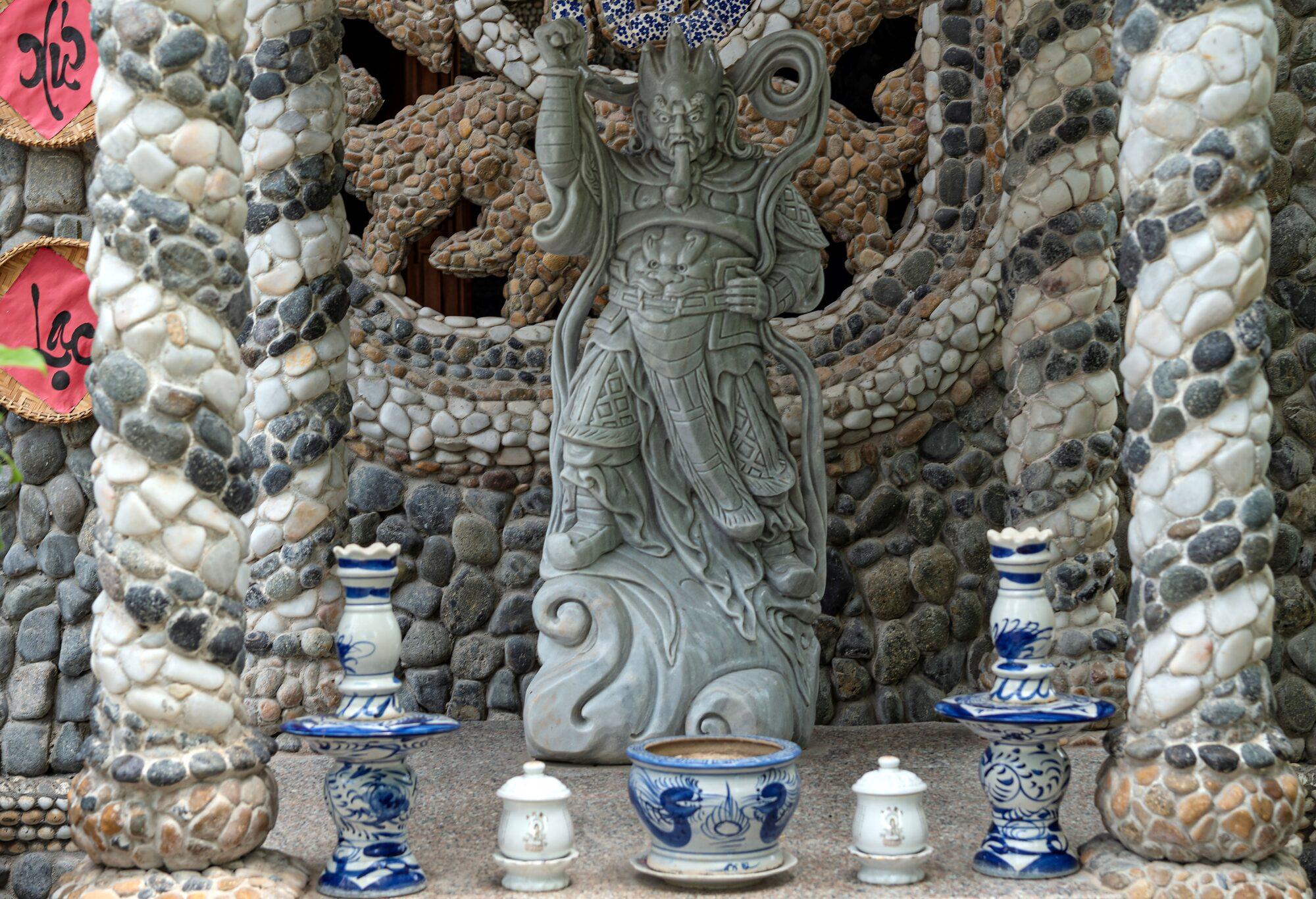
The grounds cover more than 3,000 square metres, shaded by mature trees and lotus ponds. The Tam Quan Gate is decorated with dragon and cloud motifs, and the dragons on the gate and roofs are made from pieces of coloured glass and ceramic, a common style in central Vietnam. The main hall holds a bronze statue of Shakyamuni Buddha in meditation, with a relief of Buddhas and bodhisattvas behind it.
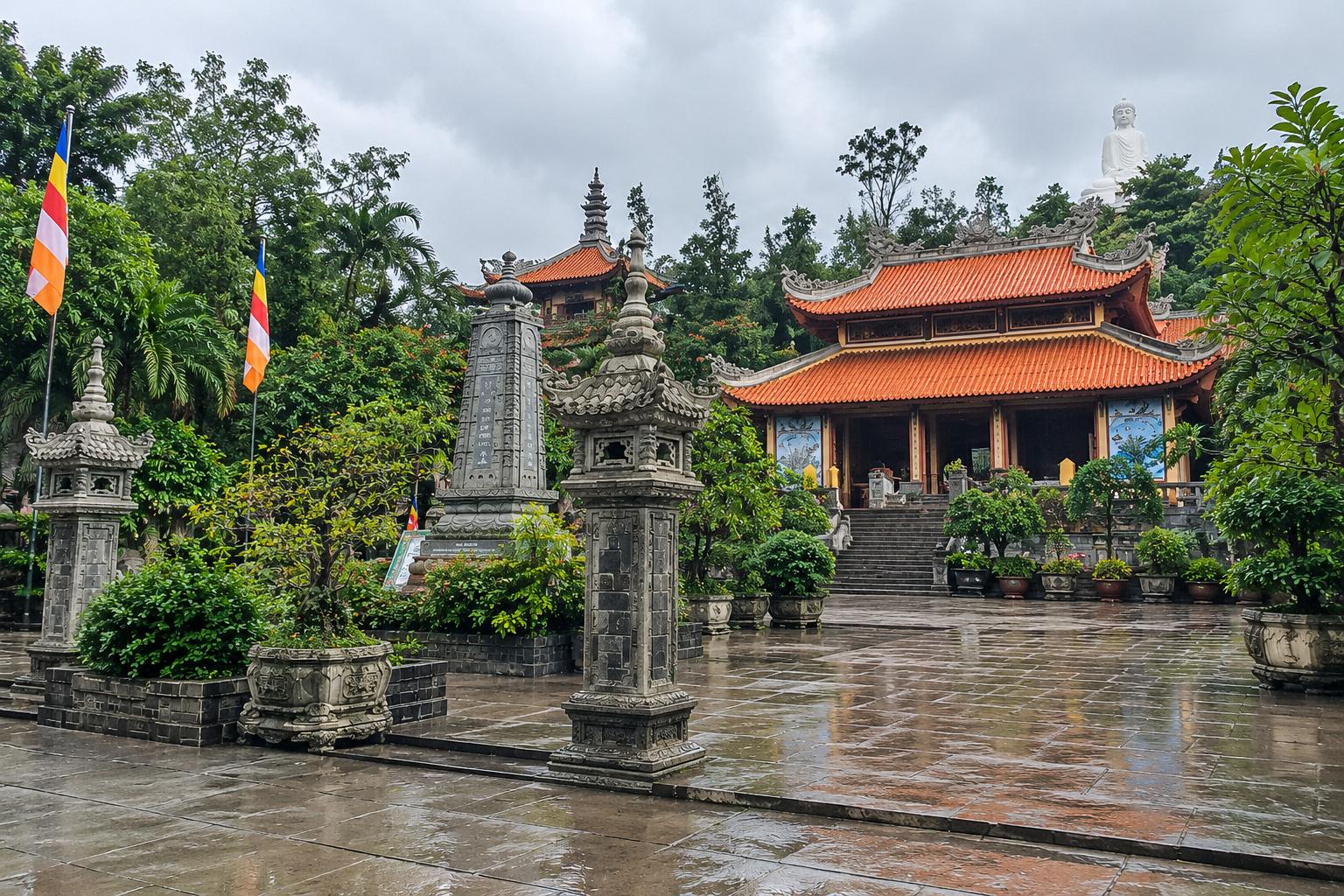
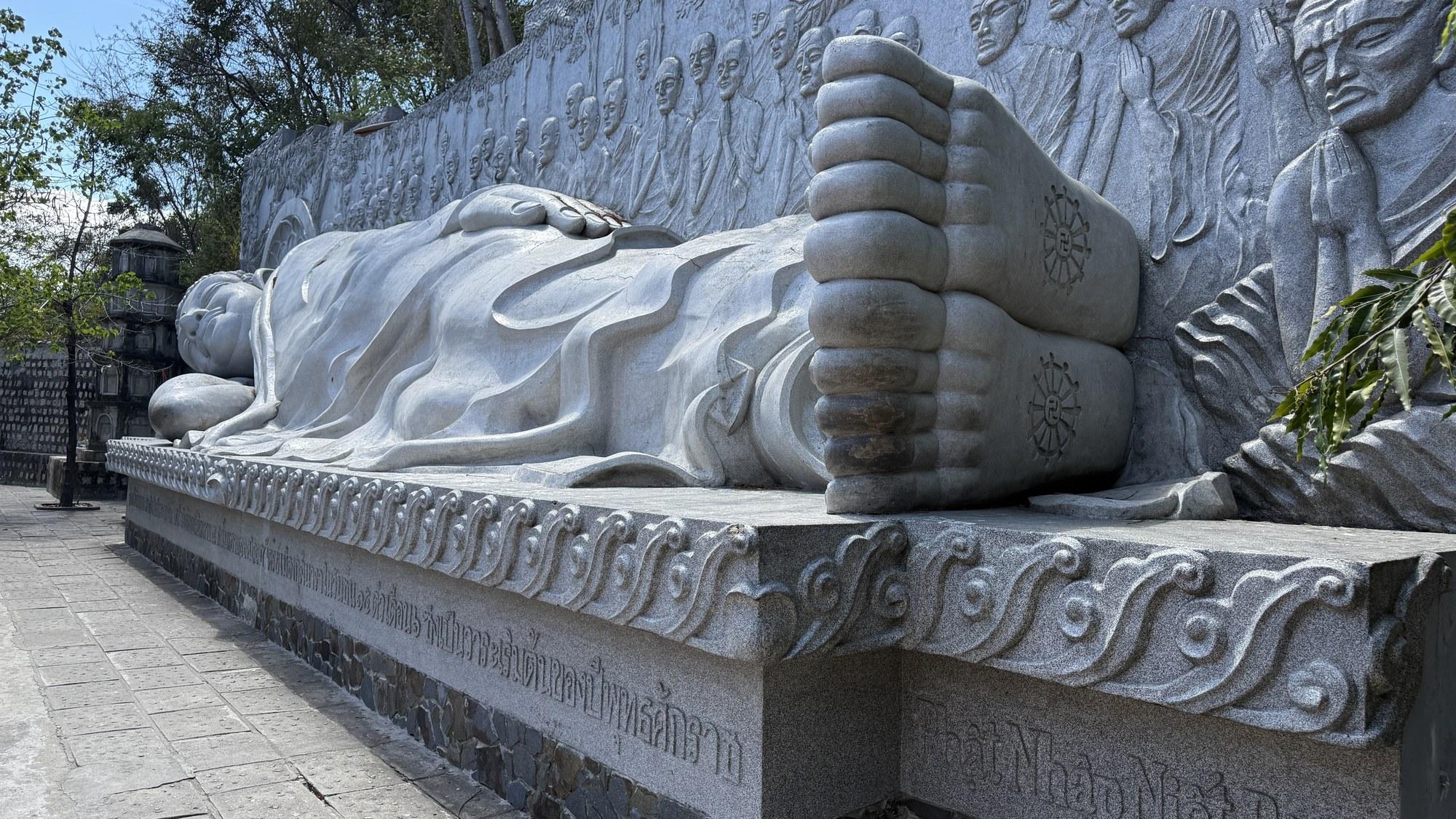
A long stone staircase climbs to the White Buddha. On the way up, a granite Buddha lies in nirvana against a relief of 49 disciples with hands clasped in farewell, and a bell tower holds a 1.5-tonne bell donated by Hue Buddhists in 2002. At the summit the Buddha sits on a lotus throne with a pair of dragons in front of it, and the chamber and reliefs around the lotus base honour seven monks who set themselves alight in 1963 to protest the Diem government, a history many Vietnamese visitors stop to reflect on. Treat this corner as a place of remembrance rather than a photo backdrop: stand back, keep voices low and ask before photographing the reliefs.
Guides quote the White Buddha at different heights because they measure different things. The provincial tourism page gives 14 metres for the statue itself and 24 metres from ground level, so both figures can be right.
The Reclining Buddha
The granite reclining Buddha beside the staircase is one of the most photographed scenes at the pagoda, about 17 metres long and 5 metres wide.
The History of the Stone Church
In 1885 Nha Trang was a handful of fishing hamlets with a few hundred Catholics, and the town itself was founded only in 1924. The French priest Louis Vallet, who lived from 1869 to 1945, proposed a parish and began building on 3 September 1928, according to the diocese’s parish history. The church came into use in 1933, and the town’s Catholics have worshipped there ever since.
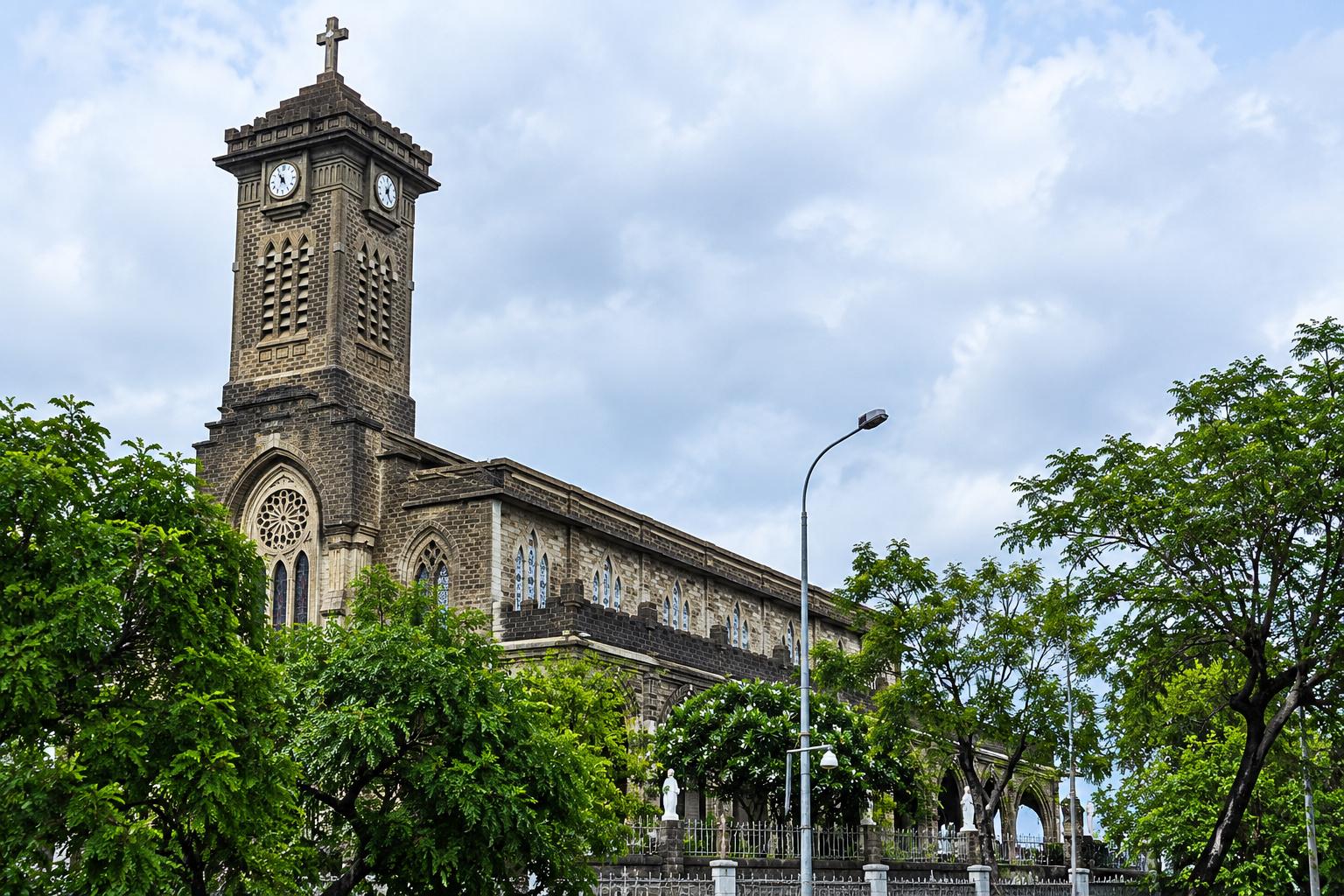
A winding road climbs the hill to the entrance. The church is also called the Mountain Church and the Nga Sau Church, after the six-way junction it overlooks.
The Highlights of the Stone Church
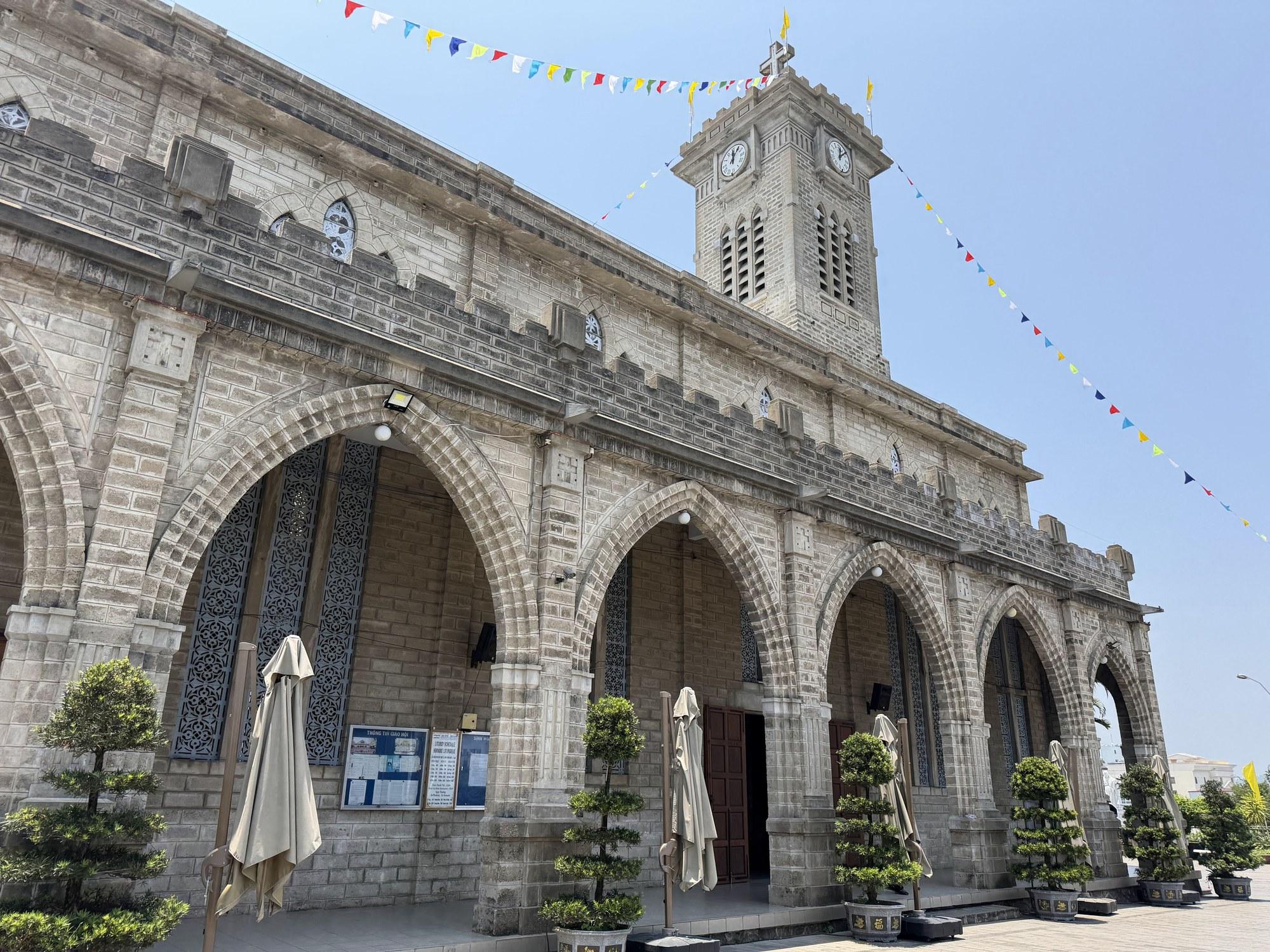
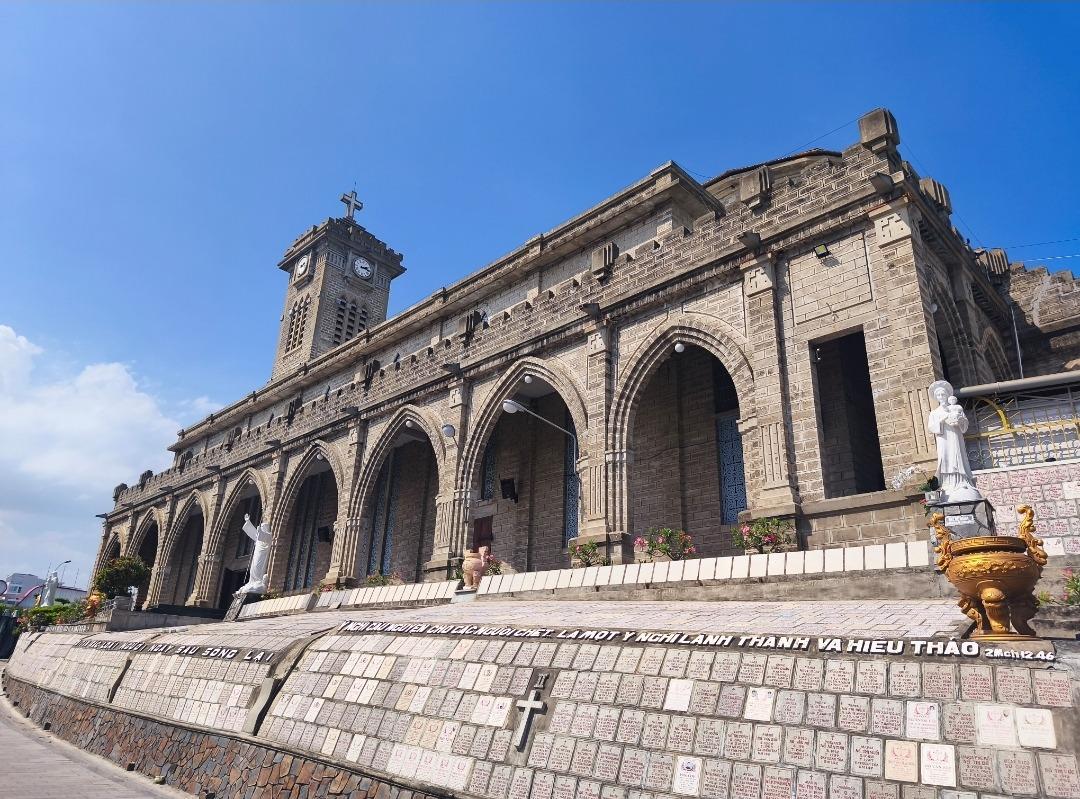
Built from rough-hewn stone blocks, the Gothic church draws the eye straight up to its clock tower. The facade has pointed arches, a rose window and an IHS symbol over the door. The bell tower rises about 38 metres from street level and carries a cross, and a large clock with four faces looks in every direction.
Inside, a wide vaulted ceiling, colourful stained glass with rose motifs and two rows of pews lead to a statue of Jesus. The windows show Biblical scenes, paintings on the walls depict the 14 Stations of the Cross, and sunlight from the east and west makes the interior bright. Bronze bells cast in France hang in the tower.
Things to Do at the Pagoda and the Church
Neither site rewards rushing. Here’s how most people spend a morning here.
Offer Incense and Pray for Peace
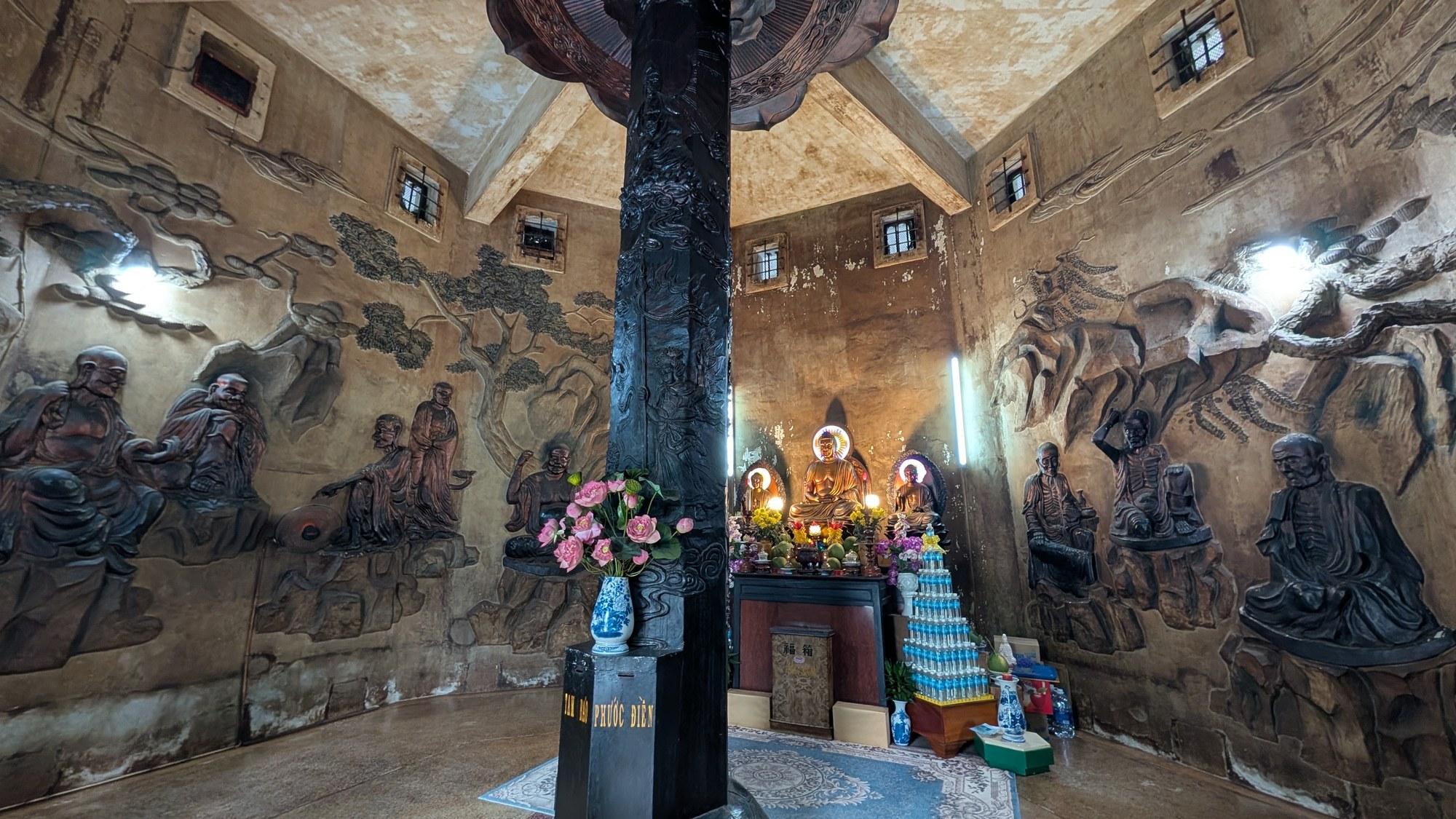
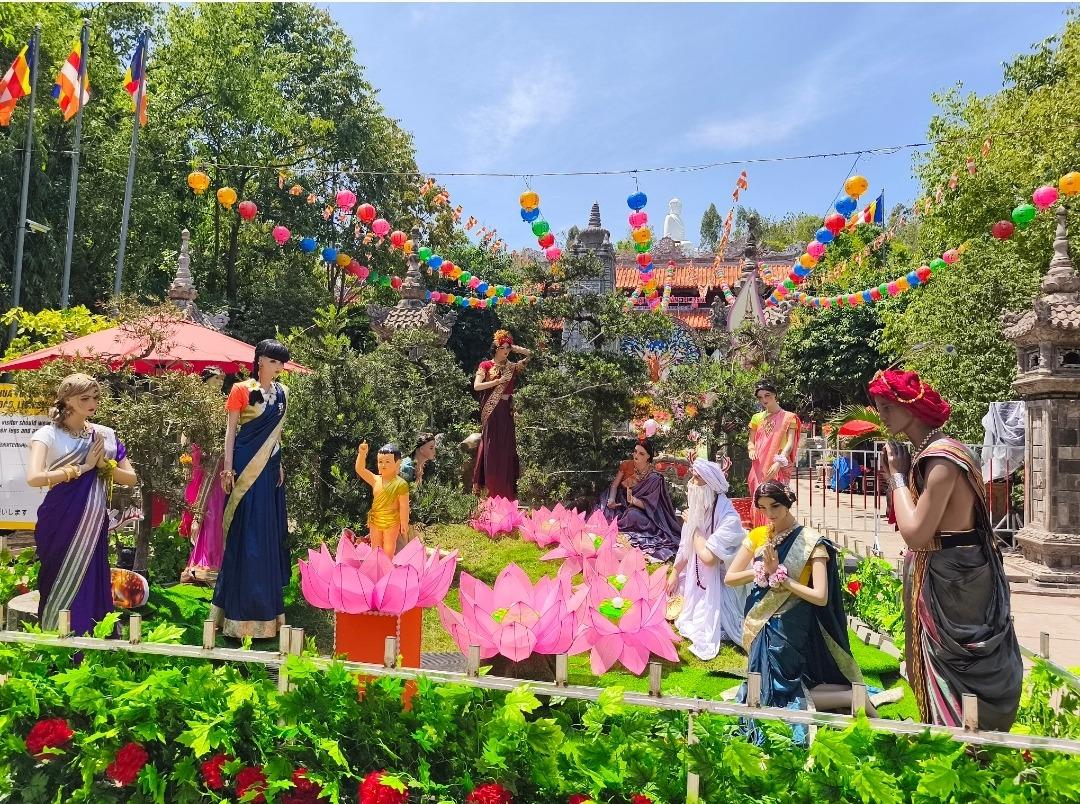
Visitors to Long Son Pagoda light incense and pray for health, prosperity and peace for their families. Locals gather in the main hall on the first and fifteenth day of the lunar month, when the pagoda fills with incense smoke and offerings. The Full Moon Festival in the first lunar month and the Vu Lan Festival in the seventh also draw crowds.
Take in the View From Trai Thuy Hill
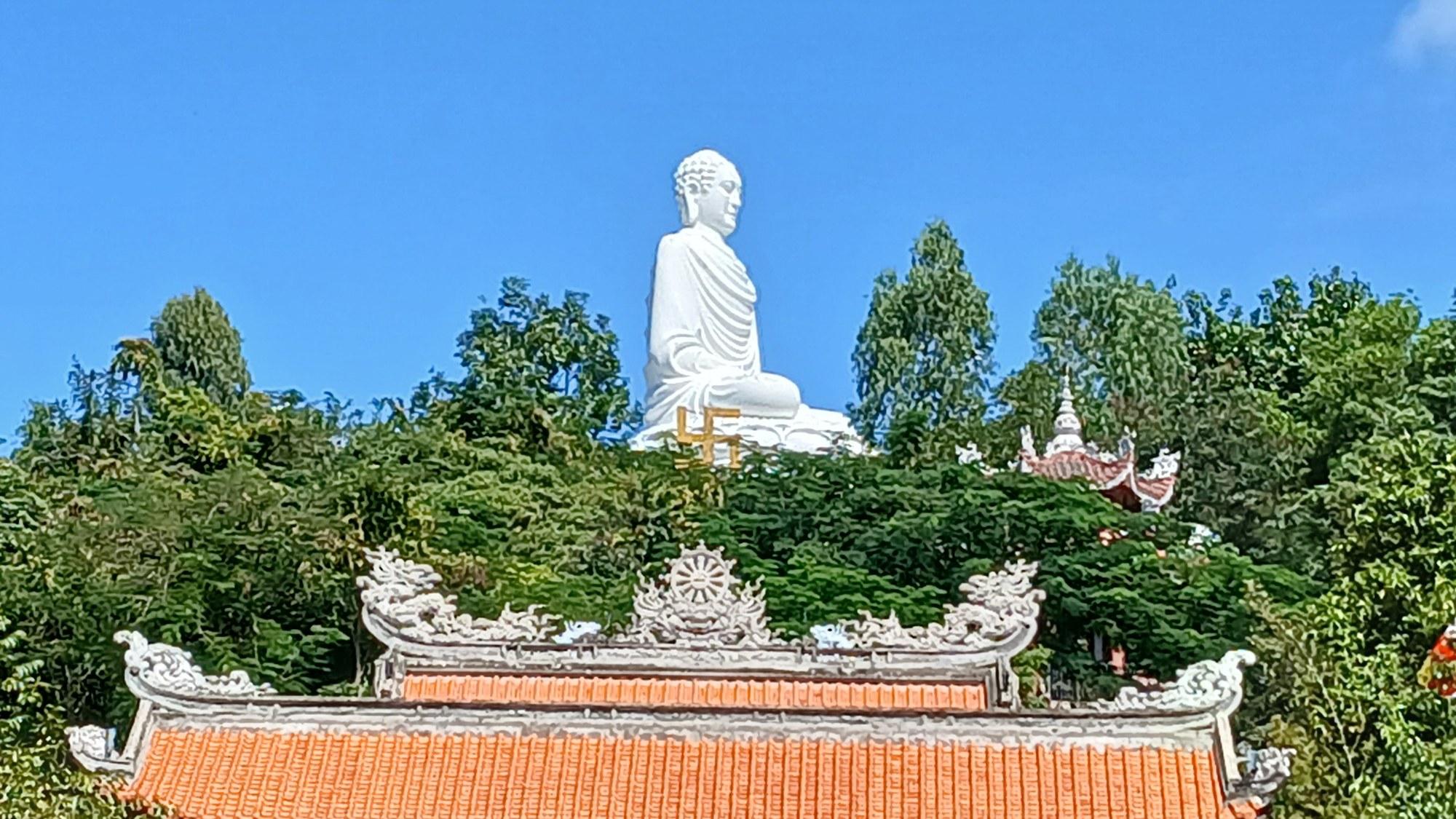
From the White Buddha at the top of the hill, the view runs over high-rise buildings, busy streets, Nha Trang Bay and the Cai River in the distance. The climb is easiest between 07:00 and 09:00 or from 15:30 to 17:30, when the staircase is cooler.
Visit the Church Between Masses
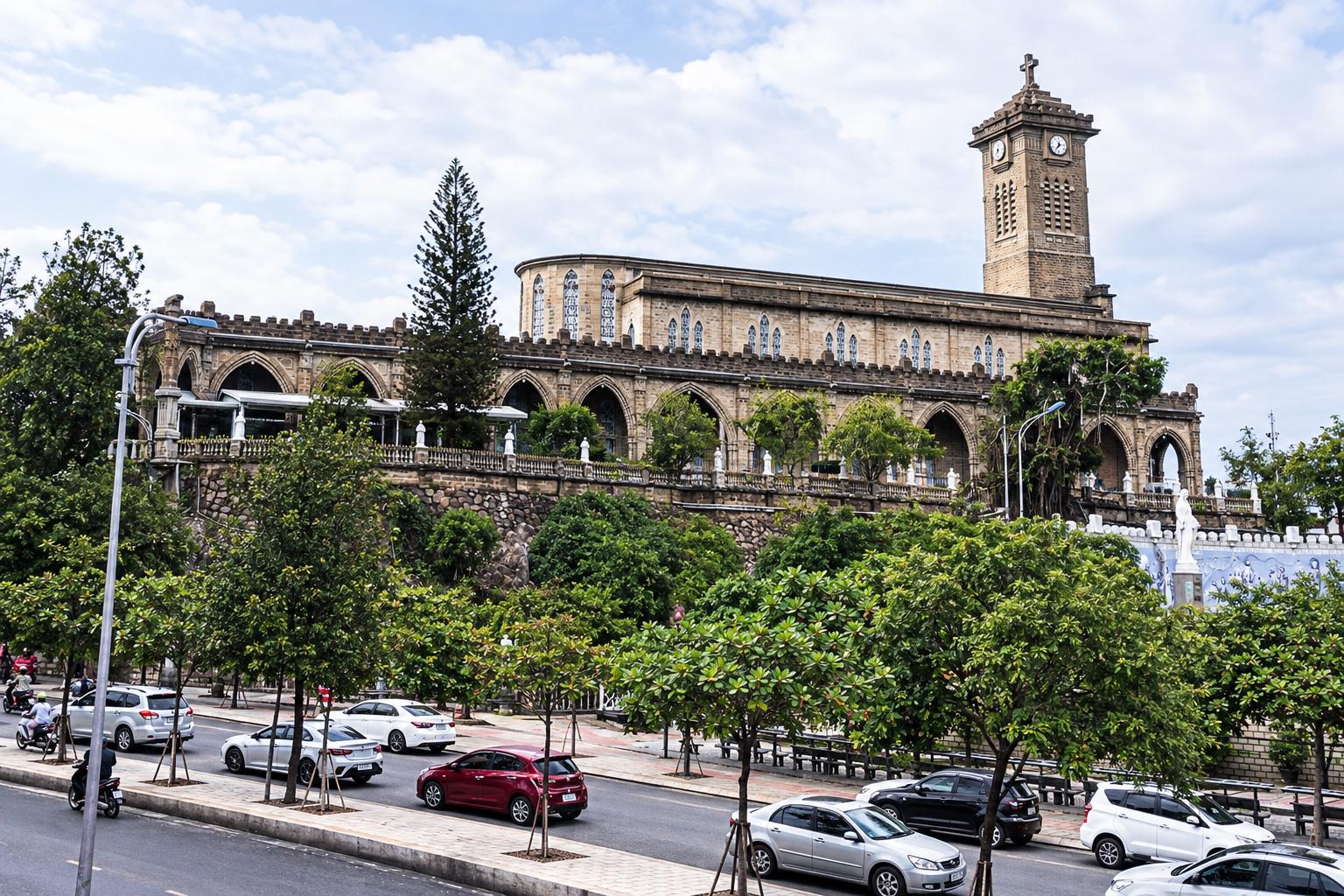
The Stone Church is a working parish. Sightseeing stops during Mass, but you’re welcome to sit quietly at the back. From Monday to Saturday the church is open to visitors from 05:30 to 17:00, and Mass is at 04:45 and 17:00. On Sundays visiting is limited to 05:00 to 07:00 and 11:00 to 16:30, except during the 15:00 Mass. Walk around the outside to see the stonework and the tower, step inside quietly and sit for a few minutes.
Eat Vegetarian Near the Pagoda
A vegetarian restaurant stands just behind the pagoda entrance, and several others around it serve affordable dishes made with fresh vegetables. For local specialities afterwards, Nha Trang’s banh can, bun cha ca and nem nuong are all within a short ride, and Alma’s guide to what to eat in Nha Trang lists where to find them.
Photograph the Church Facade
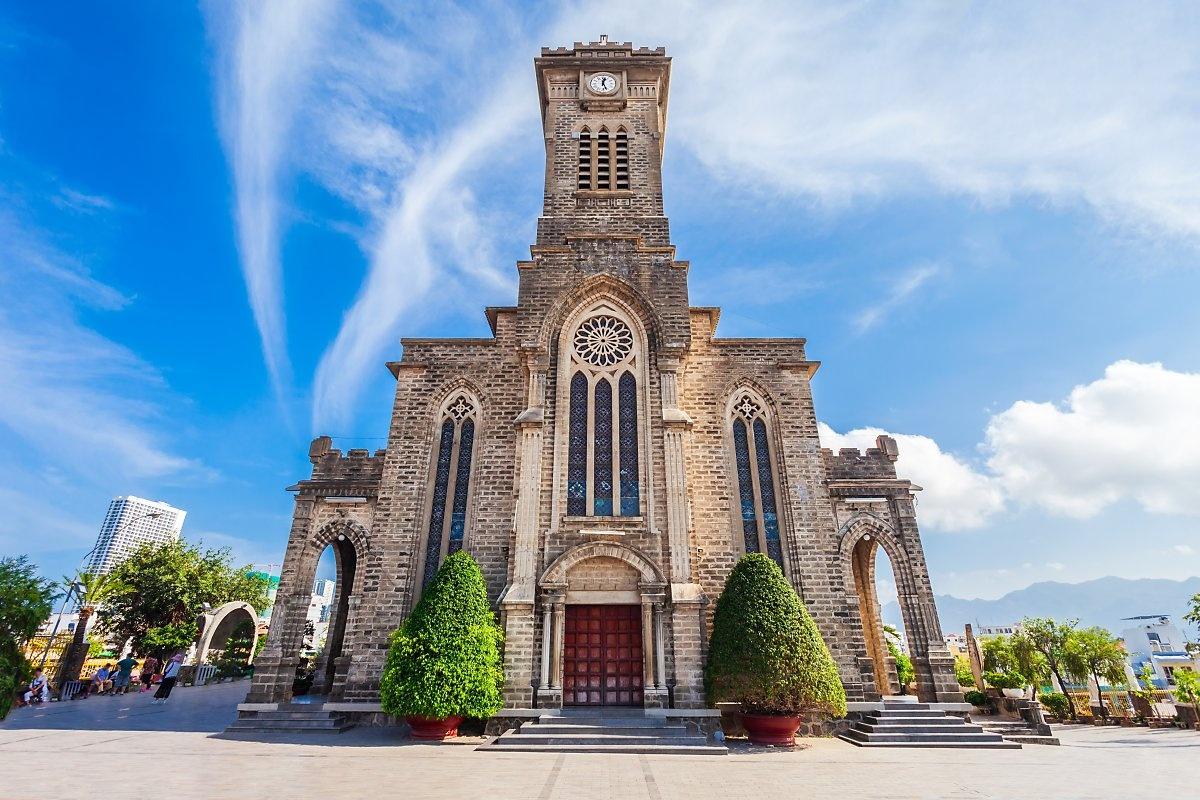
The facade photographs best in late afternoon, when low light warms the stone and the shadows give the arches depth, while midday sun flattens it. The path up the hill gives the closest view of the rose window. Visitors may take personal photographs, and should avoid pointing a camera at people at prayer.
Attend a Service as a Quiet Guest
Visitors can sit at the back during a service if they dress modestly and stay quiet. Mass is at 04:45 and 17:00 from Monday to Saturday, and Sunday has several Masses, so ask at the gate or check the parish notice for the day’s times. Leave when the service ends, and do not walk around during the liturgy.
Notes for Visitors
The practicalities are simple, though the two sites differ on a few points.
Opening Hours and Entrance Fee
Long Son Pagoda is free, and the provincial tourism page lists its hours as 07:00 to 17:30. Hours can shift for ceremonies, so confirm on the day.
The Stone Church is free to visit. Visiting hours are 05:30 to 17:00 from Monday to Saturday and 05:00 to 07:00 and 11:00 to 16:30 on Sunday, except during the 15:00 Mass, so confirm on the day.
Detailed Information:
- Long Son Pagoda: 22 Duong 23 Thang 10, Tay Nha Trang Ward; free; about 07:00 to 17:30
- Stone Church: Thai Nguyen Street, Nga Sau junction; free; Monday to Saturday 05:30 to 17:00, Sunday 05:00 to 07:00 and 11:00 to 16:30, except during the 15:00 Mass
- From Alma: About 40 to 50 minutes by car to either site
- Time Needed: Long Son about 1 hour; church 20 to 45 minutes
Dress Code
Both sites ask for modest dress: shoulders covered and trousers or skirts below the knee, with no sleeveless tops, shorts or short skirts. Pack a sarong and you’re covered, and the church may refuse entry to anyone in very short or revealing clothing.
At the pagoda, leave shoes outside the main hall, where socks are fine, and take hats off. Cover any tattoo of the Buddha or another deity, since it can be read as disrespectful.
- A sarong or light shawl, or trousers and a top with sleeves.
- Flat, slip-on shoes for the staircase and the main hall.
- A hat and a small bottle of water for the climb.
Behaviour, Offerings and Vendors
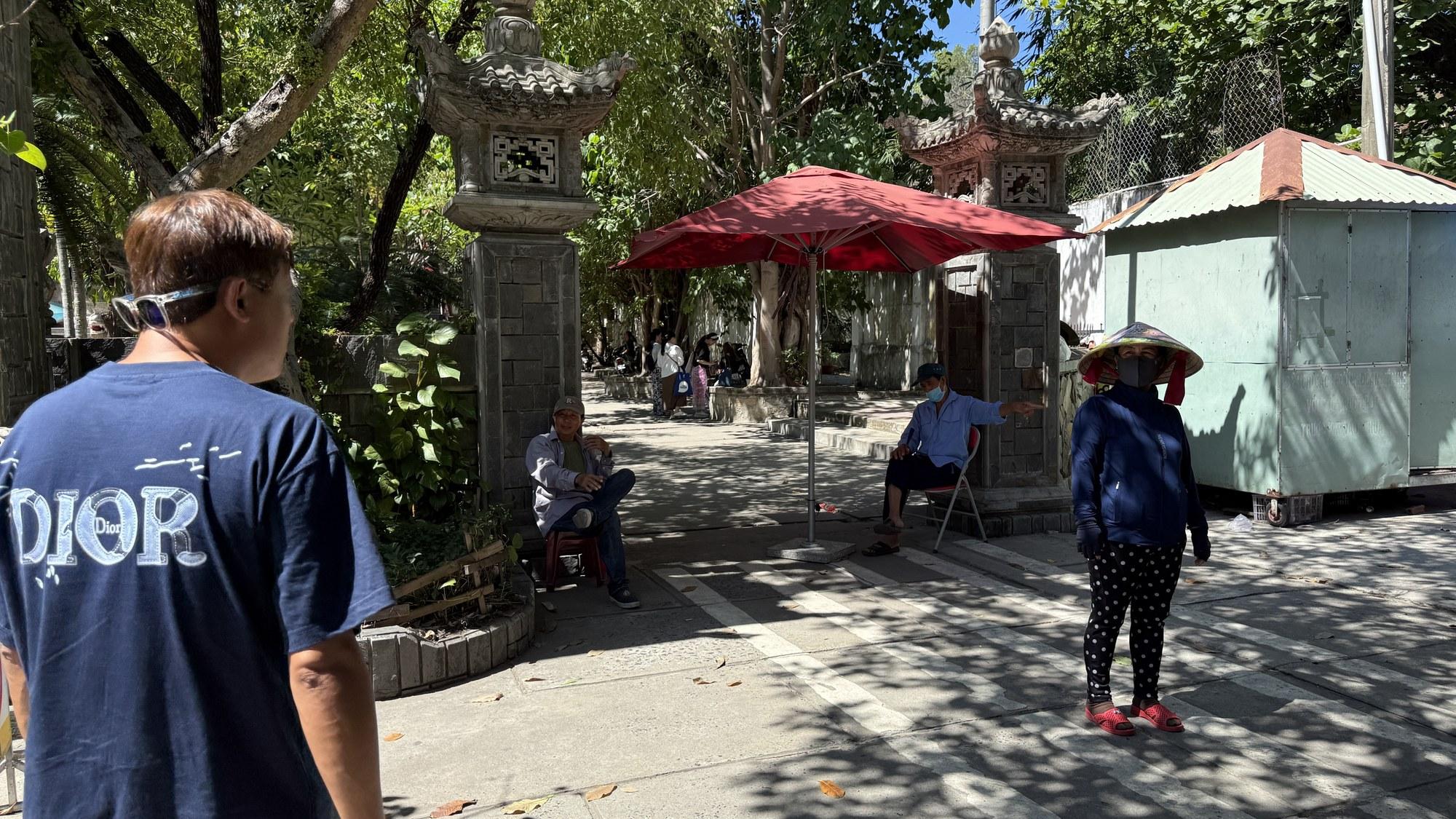
Keep voices low in both places, and don’t touch or climb on statues for photos. Photographs inside are best taken only after asking. Offerings at the pagoda are simple: fruit, flowers, incense, candles, tea or vegetarian food, and meat is not allowed. At the Tam Quan Gate, enter by the side doors rather than the central one. At Long Son, ignore vendors and motorbike riders offering a lift to the Buddha. The climb is free and the ward has banned the service.
At the church, personal photographs are fine, while wedding shoots and professional filming need the parish’s permission, according to the Nha Trang ward government.
The Nha Trang Ward government warns visitors that people at the church gates may ask for money for tickets that do not exist, including requests up to 50,000 VND. Entry is free; politely decline such requests.
Best Time to Visit
January to August is generally drier. Between September and December, the staircase to the White Buddha can be slippery after heavy rain, while things to do in Nha Trang and Cam Ranh when it rains covers wet-day alternatives. Check the calendar and weather before planning a visit.
Early morning is the best time at both sites, with cooler air for the climb and fewer visitors. Weekdays suit the church better than Sundays, when visiting is limited.
The Climb and Mobility
Guides count the staircase to the White Buddha differently, between about 150 and 190 steps, depending on where you start counting. Every account agrees that it is long, shaded in places and slippery after rain. Take it slowly, wear flat shoes and carry water.
The staircase is not suited to wheelchairs or pushchairs. Visitors who cannot climb can still see the main hall and the lower grounds, and the Stone Church is easier because a winding road runs up to its entrance.
How Long to Allow
Allow about an hour at Long Son Pagoda, most of it on the staircase and at the summit, and 20 to 45 minutes at the Stone Church. With the short drive between them, the two fit into about two and a half hours on site, and a car or Grab saves the 20-minute walk in the heat. Add Dam Market or Po Nagar and lunch in the city, and the route below becomes a half-day from the resort.
A traveller short on time can see the White Buddha and the church facade in about 90 minutes. Photographers and anyone attending a service will want longer, and weekday mornings leave the staircase quiet.
Reaching the Two Sites From Cam Ranh and the Airport
From Alma Resort Cam Ranh on Bai Dai, both sites are about 40 to 50 minutes away by car. A traveller landing at the airport reaches the resort in about 10 to 15 minutes, so a morning arrival can start the day here. A taxi or Grab for the run to Nha Trang costs roughly 375,000 to 550,000 VND (about 14 to 21 USD), and a private car with a driver about 500,000 to 875,000 VND. For an easier morning, ask the concierge at Alma Resort Cam Ranh to arrange a private car with the driver waiting at each stop. A guided alternative is Zazen Travel’s Cultural and Heritage Tour, which includes Nha Trang Cathedral and Po Nagar Cham Towers, along with Truong Son Craft Village and Dam Market; it can be booked at the Promotions Desk in the lobby.
Without a car, the Nha Trang sightseeing bus is an option. The operator sells four-hour tickets at 150,000 VND (about 6 USD) and 24-hour tickets at 250,000 VND (about 10 USD), and its route lists Long Son Pagoda, the Stone Church, Po Nagar and the Yersin Museum among the stops. Check departure times on the booking page first.
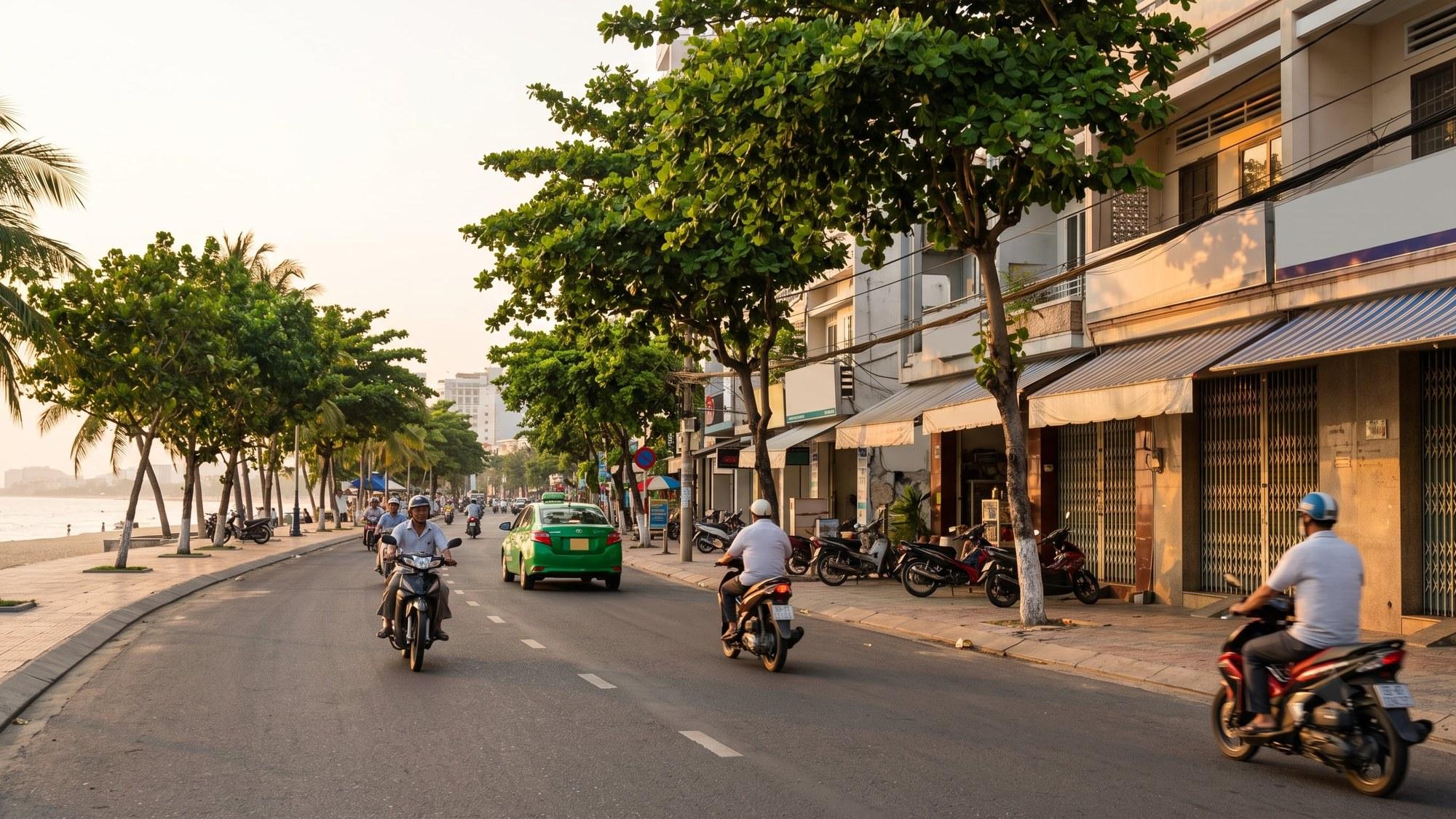
Within the city, a Grab from the Tran Phu beachfront takes 5 to 10 minutes. The railway station is a useful landmark, since the pagoda is about 500 metres from it, and local buses stop near Phuong Sai Market and the station. Hotels and rental shops hire out motorbikes (ask for current rates), and the guide to getting around Cam Ranh covers the peninsula side.
Ask the driver to wait or to drop you at one site and collect you at the other, since the two are only a short ride apart.
A Morning Route Linking Both Sites
The route below starts early for cooler air on the climb, and it is built for a weekday. For a longer stay in the city, the Nha Trang itinerary spreads the same sights over several days. On a Sunday, visit the pagoda first and reach the church at 11:00 or later.
| Time | Stop | What to do |
|---|---|---|
| 07:30 | Leave Alma Resort Cam Ranh | Take the coastal road to Nha Trang, about 40 to 50 minutes by car |
| 08:10 | Long Son Pagoda | Visit the main hall, then climb to the White Buddha and the viewpoint; allow about 1 hour |
| 09:15 | Drive to the Stone Church | About 3 minutes by car; park near the Nga Sau junction |
| 09:20 | Stone Church | Walk the outside, step in quietly, visit for 20 to 45 minutes |
| 10:15 | Dam Market or Po Nagar | Dam Market is a short drive from Long Son, and Po Nagar about 7 minutes from the church |
| 11:30 | Lunch in the city | Banh can, bun cha ca or a vegetarian meal |
| 12:30 | Return to the peninsula | About 40 to 50 minutes by car, back at the resort for the pool or the afternoon |
Po Nagar and Dam Market won’t both fit, so pick one for the 10:15 slot. The guide to the Po Nagar Cham Towers lists its hours and dress rules.
Pagoda, Church or Cham Towers?
Three sacred sites sit within a short ride of each other, and each belongs to a different tradition. The table shows how they differ.
| Site | Tradition | What you see | Time needed | Cost |
|---|---|---|---|---|
| Long Son Pagoda | Buddhist | The White Buddha, a staircase and a view over the city | About 1 hour | Free |
| Stone Church | Catholic | A Gothic stone facade, stained glass and a clock tower | 20 to 45 minutes | Free |
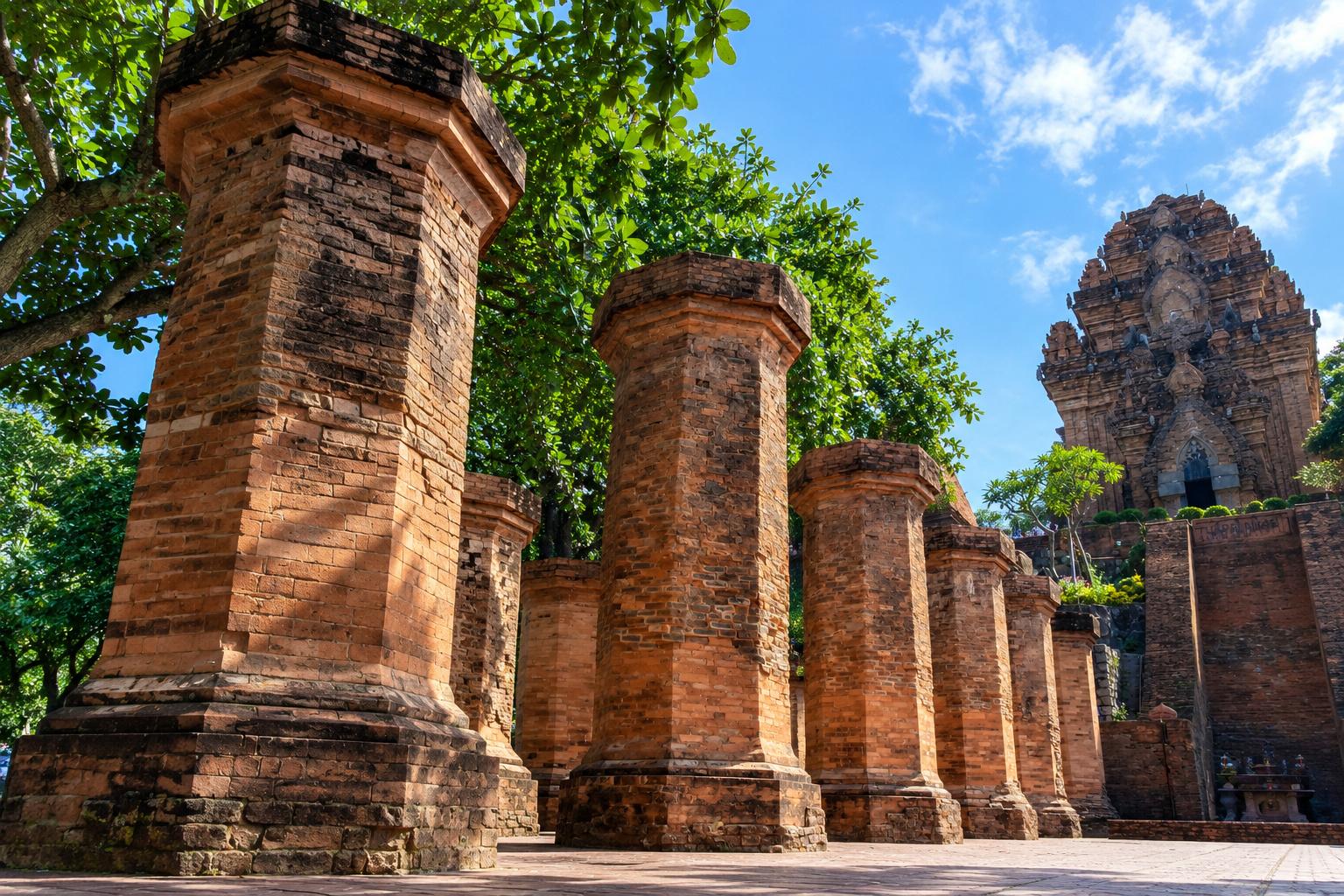
| Po Nagar Cham Towers | Cham, with Vietnamese folk worship | Four brick towers from the 8th to the 13th century | 30 to 60 minutes | Check the current ticket price before visiting |
Choose Long Son for the view, the church for the architecture and Po Nagar for the oldest history. A visitor with time for two should pair the pagoda with the church, which are only minutes apart.
Other Stops Near the Pagoda and the Church
Three more stops sit within a short ride of Long Son Pagoda, and each adds a different side of Nha Trang, as the Nha Trang travel guide describes.
Dam Market: 1.7 km From Long Son Pagoda
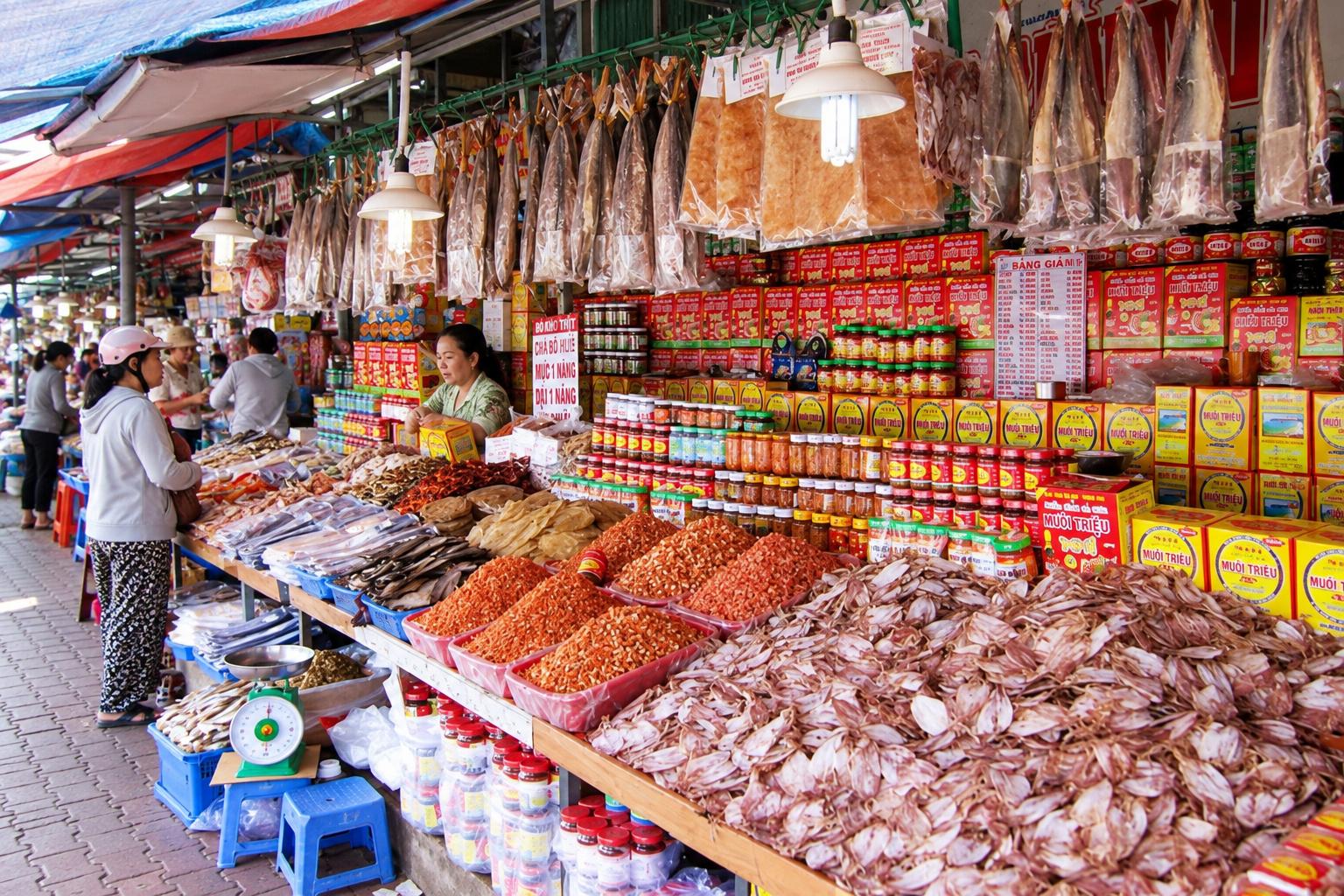
Dam Market on Phan Boi Chau Street is Nha Trang’s best-known market, with pearl jewellery, agarwood products and souvenirs, and street food from stalls in and around it. It is busiest in the morning and is a short drive from the pagoda, so check opening hours on the day.
Alexandre Yersin Museum: 2 km From Long Son Pagoda
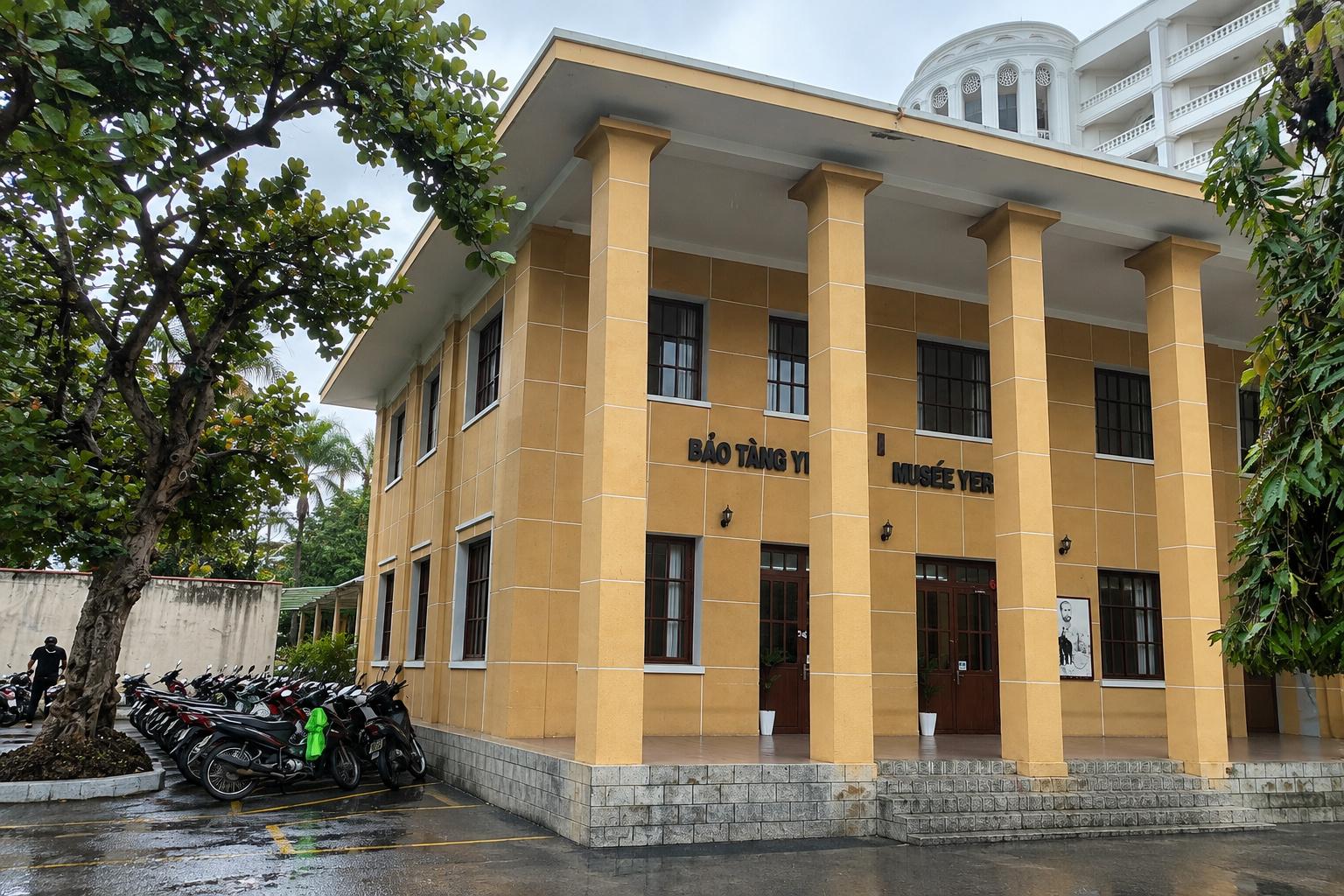
The museum at 10 Tran Phu honours the French-Swiss bacteriologist who contributed to Vietnam’s science, medicine and agriculture. It displays his library, laboratory equipment, letters and documents, opens on weekdays, mornings and afternoons, closes at weekends and on holidays, and costs 26,000 VND (about 1 USD) per person. It is 8 minutes from the pagoda by car.
Po Nagar Cham Towers: About 4 km From Long Son Pagoda
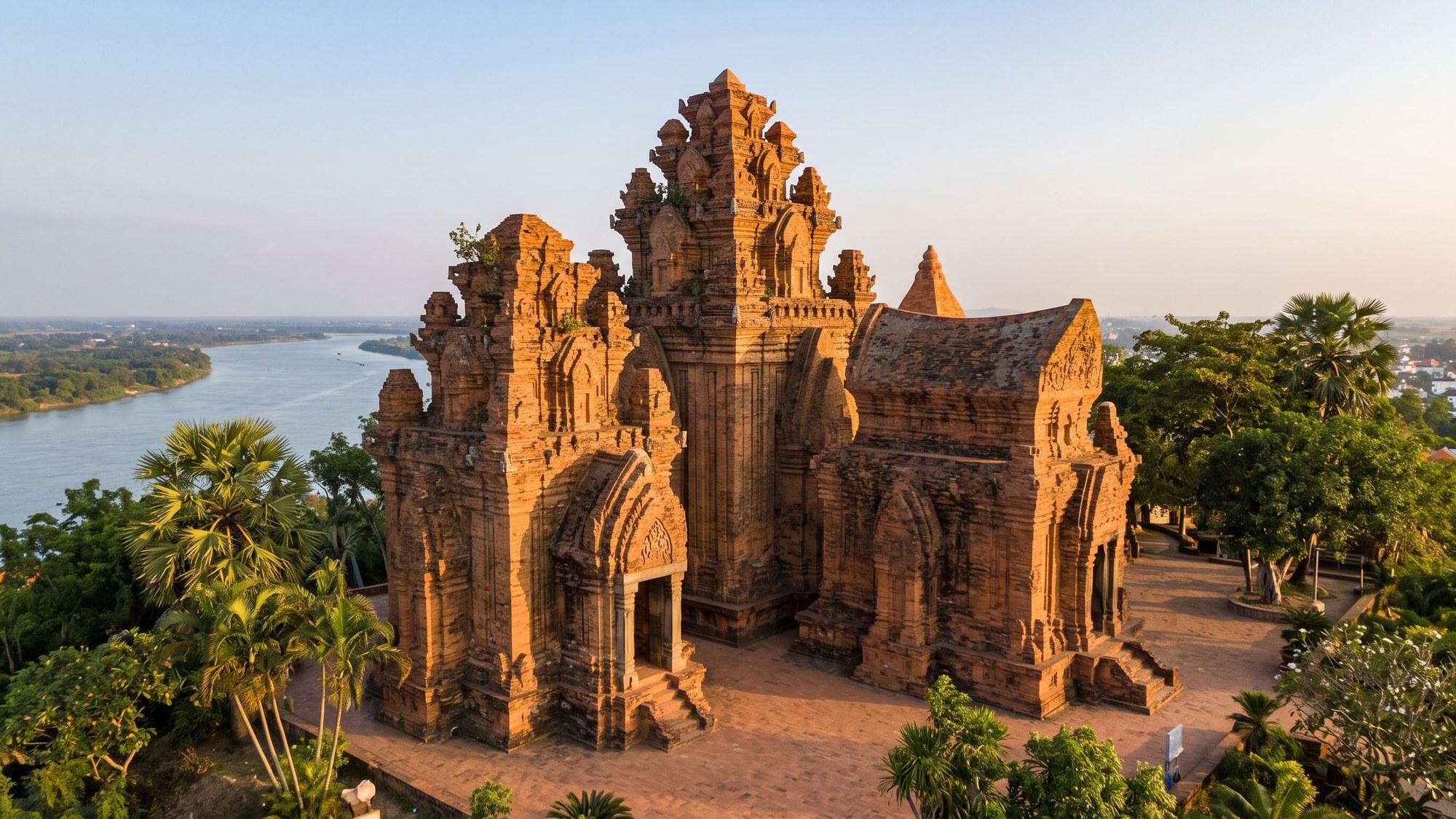
The Cham towers stand 9 minutes away by car on the north bank of the Cai River. The current ticket price is not confirmed on the official pages, so check it before visiting. Four brick towers from the 8th to 13th centuries are still used for worship. The guide to the Po Nagar Cham Towers covers history, hours and dress.
Staying on the Peninsula for a Nha Trang Day Trip
A visit to Long Son Pagoda and Nha Trang Cathedral from the Cam Ranh peninsula works best as a half-day trip: leave early, see both landmarks in the cooler morning hours, and save the beach and pool for the afternoon. The concierge at Alma Resort Cam Ranh can arrange a car, while Zazen Travel’s Cultural and Heritage Tour offers a guided alternative including the cathedral and Po Nagar Cham Towers.
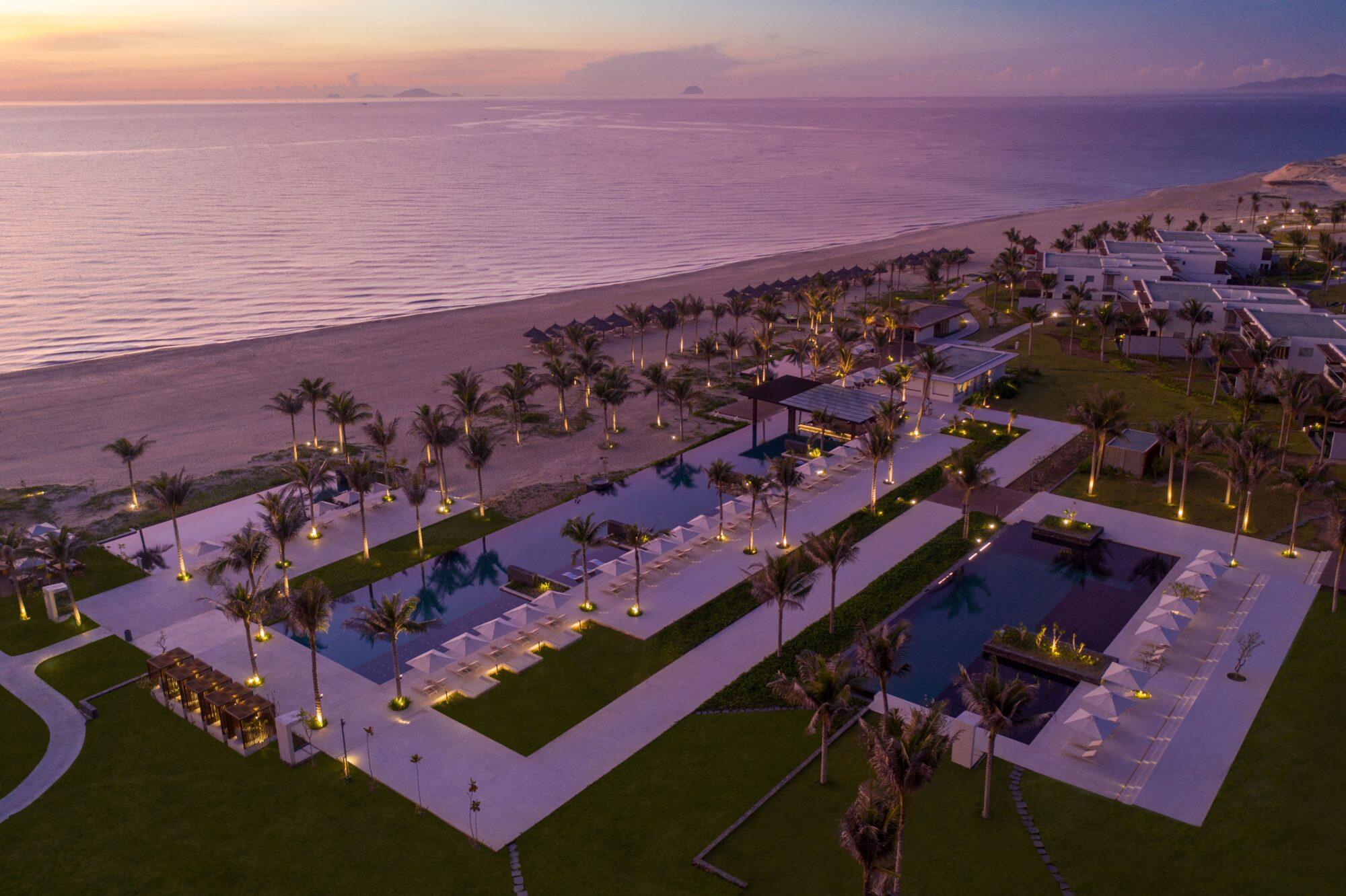
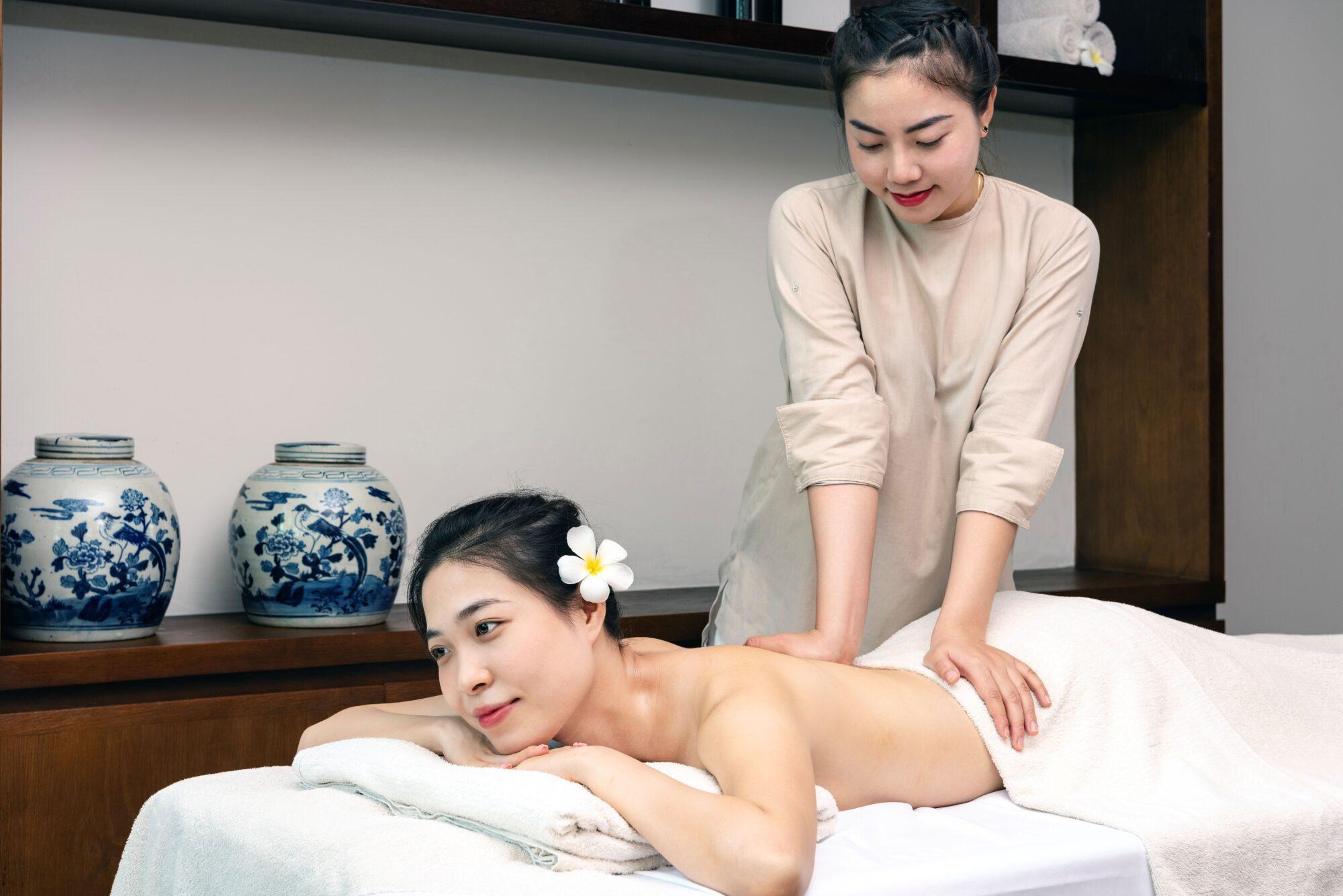
Spend the rest of the afternoon by the water or book a treatment at Le Spa, whose private treatment villas are named after Vietnamese flowers.
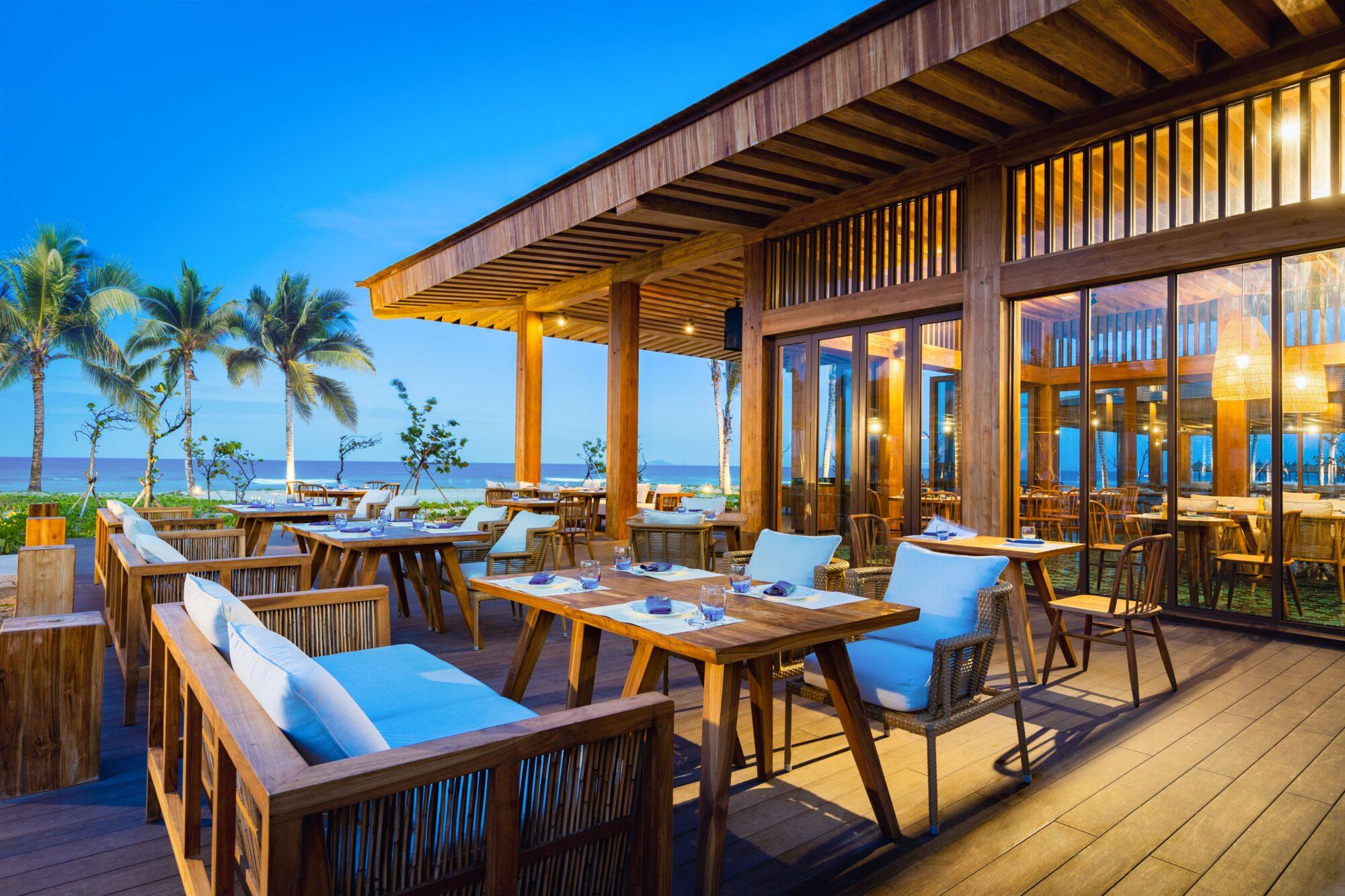
For dinner, Atlantis serves seafood by the sea. The half-day sightseeing route leaves time to relax rather than rushing between extra attractions.
For a shorter outing closer to the resort, Tu Van Pagoda in Cam Ranh city is another option; ask the concierge about transport.
Conclusion
A morning at Long Son Pagoda and the Stone Church, the two sites behind most stone pagoda searches, rewards an early start: a hillside temple with the White Buddha above the city, a Gothic church built of stone on its own hill and a short ride between them. Cover shoulders and knees, decline anyone selling tickets, go before 09:30 and plan the church around its Sunday hours.
Leave Alma Resort Cam Ranh at 07:30 and you’ll see both sites by late morning and be back by early afternoon for a swim, leaving the evening free for a massage and dinner at Atlantis.
Frequently Asked Questions
Are Long Son Pagoda and the Stone Church free to visit?
Yes, both are free, and no ticket is needed at either gate. Donations at the pagoda are optional.
Can you visit Nha Trang Cathedral in shorts?
No, the church asks for sleeves and trousers or skirts below the knee, and visitors in very short clothing may be refused entry.
What time does Nha Trang Cathedral open on Sunday?
Sunday visiting is limited to 05:00 to 07:00 and 11:00 to 16:30, except during the 15:00 Mass. From Monday to Saturday it opens from 05:30 to 17:00.
Is the climb at Long Son Pagoda difficult?
It is a long flight of stone steps under trees, slippery after heavy rain, and easiest in the morning or late afternoon. Wear flat shoes and carry water.
When should you avoid visiting Long Son Pagoda?
Avoid midday heat, the 1st and 15th of the lunar month and big festivals if you want it quiet, and skip the staircase after heavy rain.