


Best Beaches in Nha Trang 2026: City Sands to Quiet Coastal Escapes
Table of Contents
Most first-time visitors picture a single stretch of sand when they think of Nha Trang beaches, but the city and its bay actually cover a genuinely wide range: a busy urban shoreline, a quiet peninsula strip, a scattering of islands, and a coral reef protected by law.
This guide to Nha Trang beaches breaks down the real differences between all of them, what each one actually suits, and what to know before picking one over another.
Quick Summary: Best Beaches in Nha Trang
- Beach Types: Nha Trang’s beaches range from a busy city shoreline to a quiet peninsula strip, offshore islands, and a legally protected coral reef.
- How to Choose: Weigh distance first, then crowd levels, then whether you want swimming, snorkeling, or a full day trip.
- Quietest Beach: Bai Dai (Long Beach) runs about 15 km along the Cam Ranh Peninsula, around 20 km south of central Nha Trang.
- Seasons Matter: A beach that feels perfect in June can feel very different by November.
- Staying on the Beach: Alma Resort occupies 800 meters of Bai Dai, with kayaks, water bikes, and bodyboards available right on the sand.
How Do You Choose the Right Beach?
Proximity is the first real factor: a beach inside the city center trades quiet for convenience, while a peninsula or island beach trades convenience for space and calmer water.
Crowd level follows closely behind. Nha Trang’s main city beach draws the heaviest daily footfall of any of the Nha Trang beaches on this list, while several peninsula and island options stay genuinely uncrowded even in peak season.
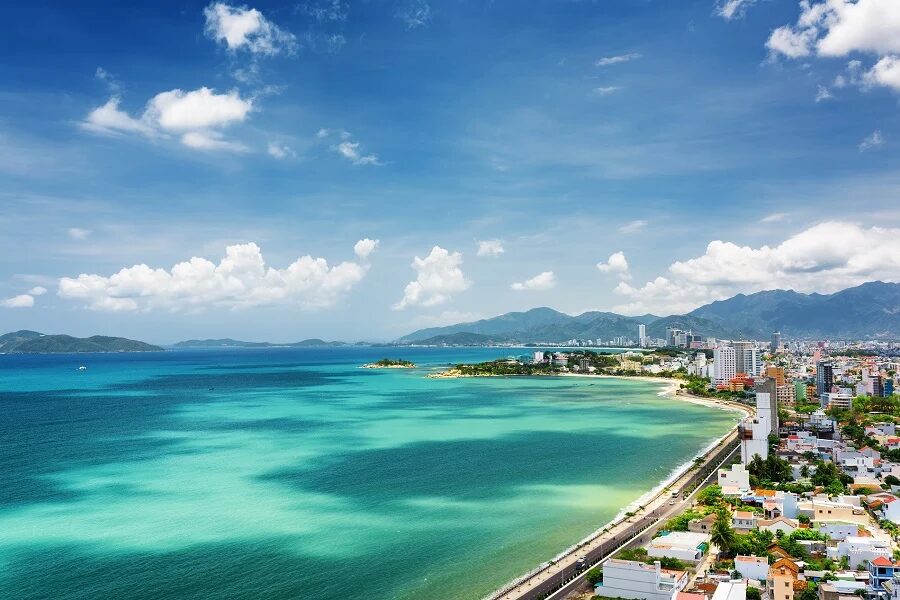
The third factor is what you actually want to do there: some of these beaches are built for straightforward swimming, others exist mainly as a boat-tour stop for snorkeling or diving, and at least one only really works as a full day trip rather than an afternoon visit.
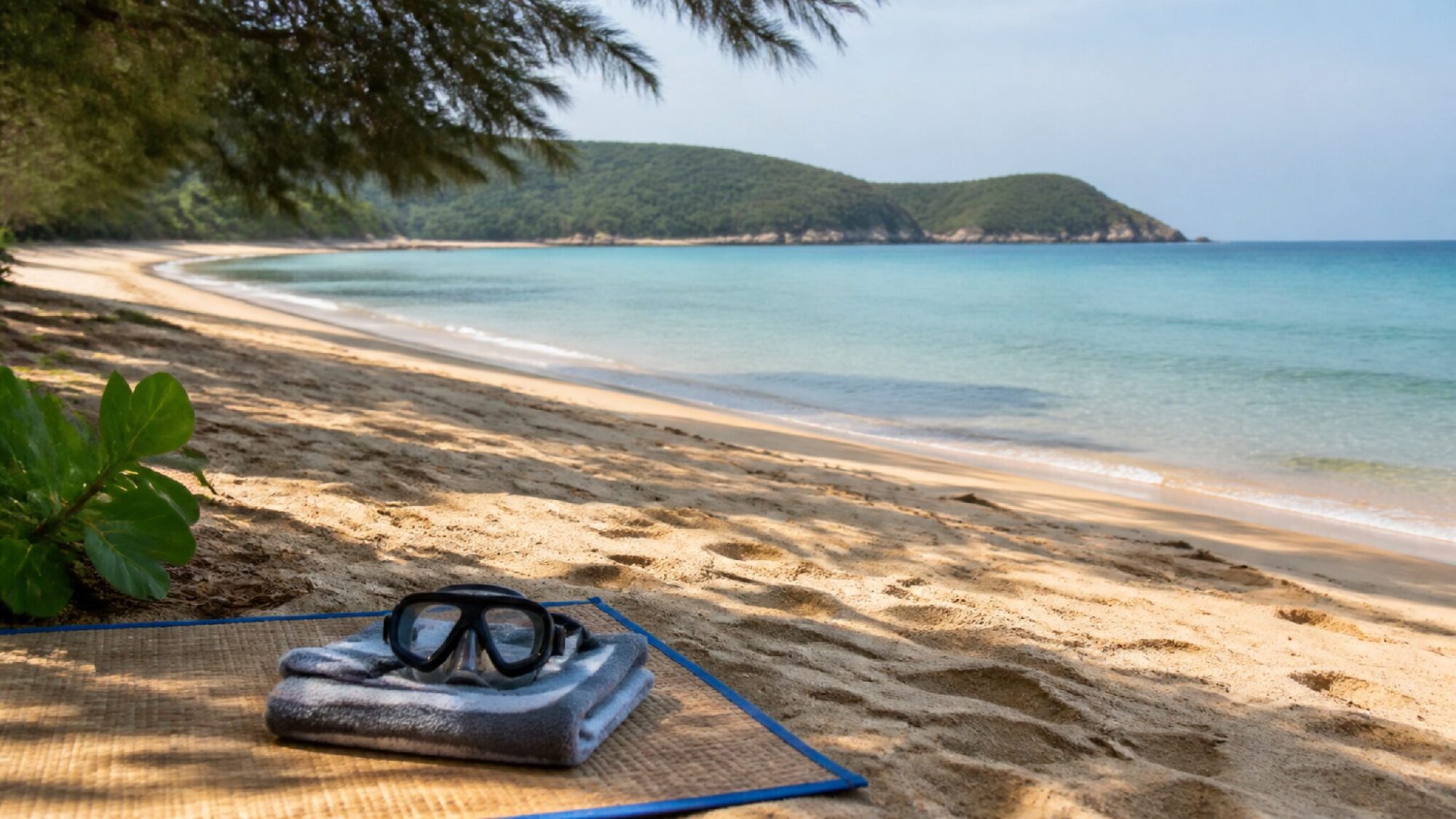
Season plays a real role too. A beach that feels perfect in June can feel entirely different by November, so it’s worth weighing the calmest-months guidance further down before locking in a single beach as the plan for the whole trip.
Some beaches only work as a full day
Not every beach suits an afternoon visit: some exist mainly as boat-tour stops for snorkeling or diving, and at least one only really works as a full day trip, so check that before planning a half day.
The main city beach draws the heaviest crowds, while several peninsula and island beaches stay uncrowded even in peak season; if you travel late in the year, check the calmest months before committing to one beach.
The Best Beaches In and Around the City
Seven names come up again and again in any real conversation about Nha Trang beaches, from the city’s own shoreline to islands reachable only by boat.
Bai Dai Beach (Long Beach)
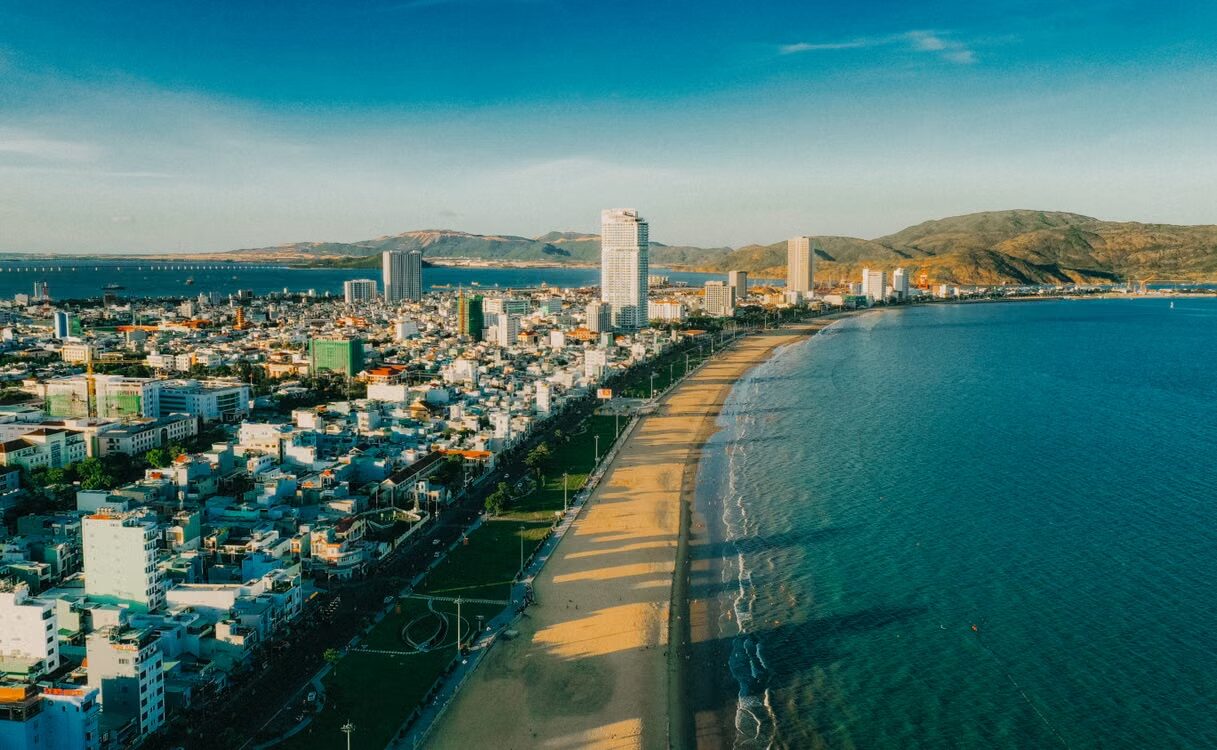
Bai Dai, meaning “long beach” in Vietnamese, runs for roughly 15 km along the Cam Ranh Peninsula, about 20 km south of central Nha Trang and just 5 to 12 km from Cam Ranh International Airport depending on the exact point along it.
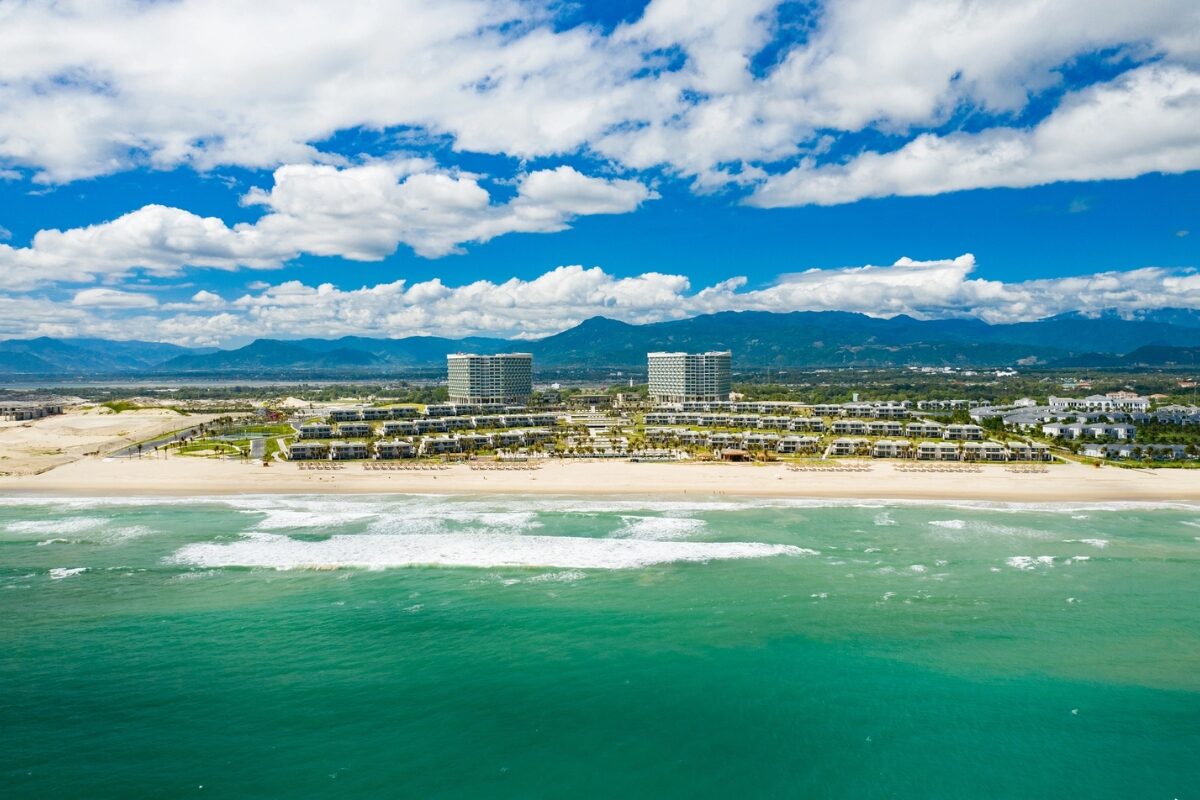
It is the quietest of the Nha Trang beaches covered here: no dense hotel strip, no busy promenade, just powdery sand and gentle waves running for kilometers. It is also the exact beach Alma Resort Cam Ranh sits on, covered in full further down.
The peninsula’s own coastal road, Nguyen Tat Thanh Boulevard, runs the length of Bai Dai and connects it directly back to the airport, making it one of the few Nha Trang beaches reachable without cutting through the city center at all.
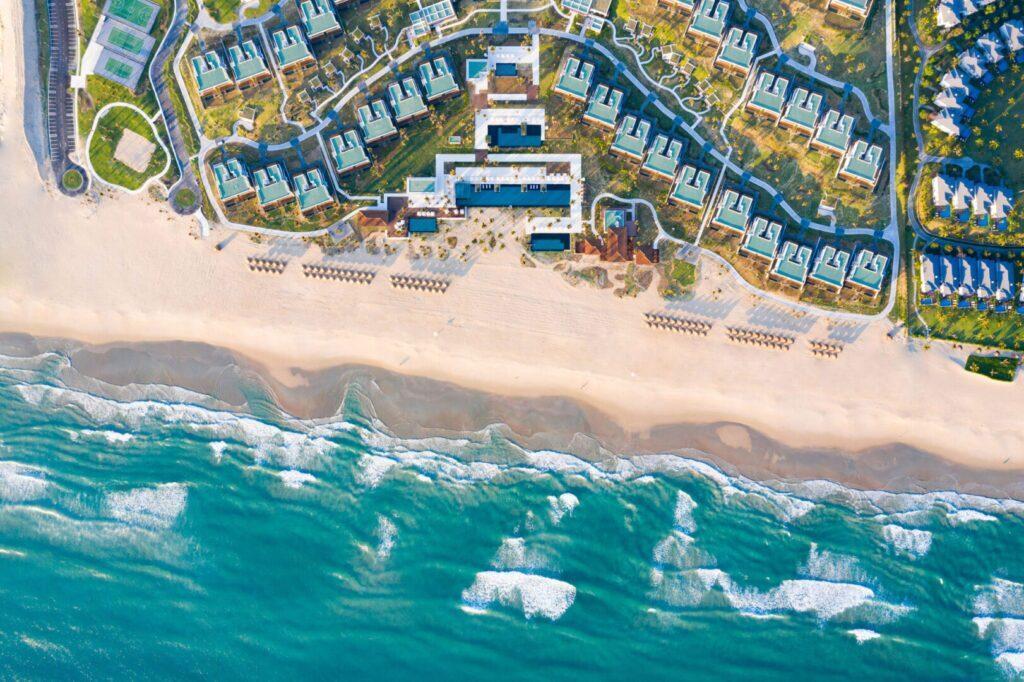
The peninsula’s shape also gives it calmer, more sheltered waves than the open city-facing shoreline gets on an average day, part of why it tends to suit families and less confident swimmers better than Tran Phu does.
Bai Dai stayed undeveloped for far longer than Nha Trang’s own city beach, and the reason is military rather than geographic. Cam Ranh Bay served as a major naval base for decades, first under French colonial administration, then the US military from 1965 to 1972, and the Soviet and later Russian navy through to 2002.
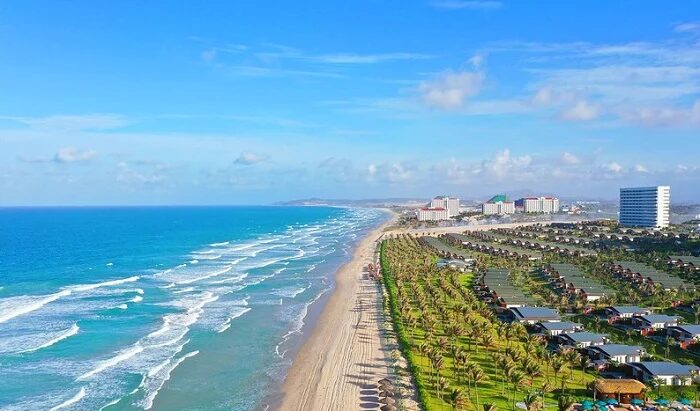
Tourism development along this stretch only began once that military use wound down, which is part of why a 15 km beach this close to an international airport stayed empty long after Nha Trang’s own waterfront had already filled in.
Cam Ranh International Airport’s own destination material positions Bai Dai as part of Khanh Hoa’s wider international coastal reputation, the same province whose Nha Trang Bay holds membership in the Club of the Most Beautiful Bays in the World. Bai Dai itself carries no separate award under that specific title, worth stating plainly rather than implying a beach-level distinction it hasn’t actually been given.
Detailed Information:
- Length: About 15 km
- Distance from Nha Trang City: About 20 km
- Distance from Cam Ranh Airport: About 10 minutes by car
- Best for: Quiet, uncrowded swimming and a resort-based stay
Why a beach this close to the airport stayed empty
Bai Dai stayed undeveloped long after Nha Trang’s city beach filled in because Cam Ranh Bay was a naval base for decades, used by the US military from 1965 to 1972 and by the Soviet and later Russian navy through to 2002.
Today Nguyen Tat Thanh Boulevard runs the length of Bai Dai back to the airport, so you can reach it without driving through the city center, and its sheltered waves suit families and less confident swimmers better than Tran Phu.
Tran Phu Beach (City Center)
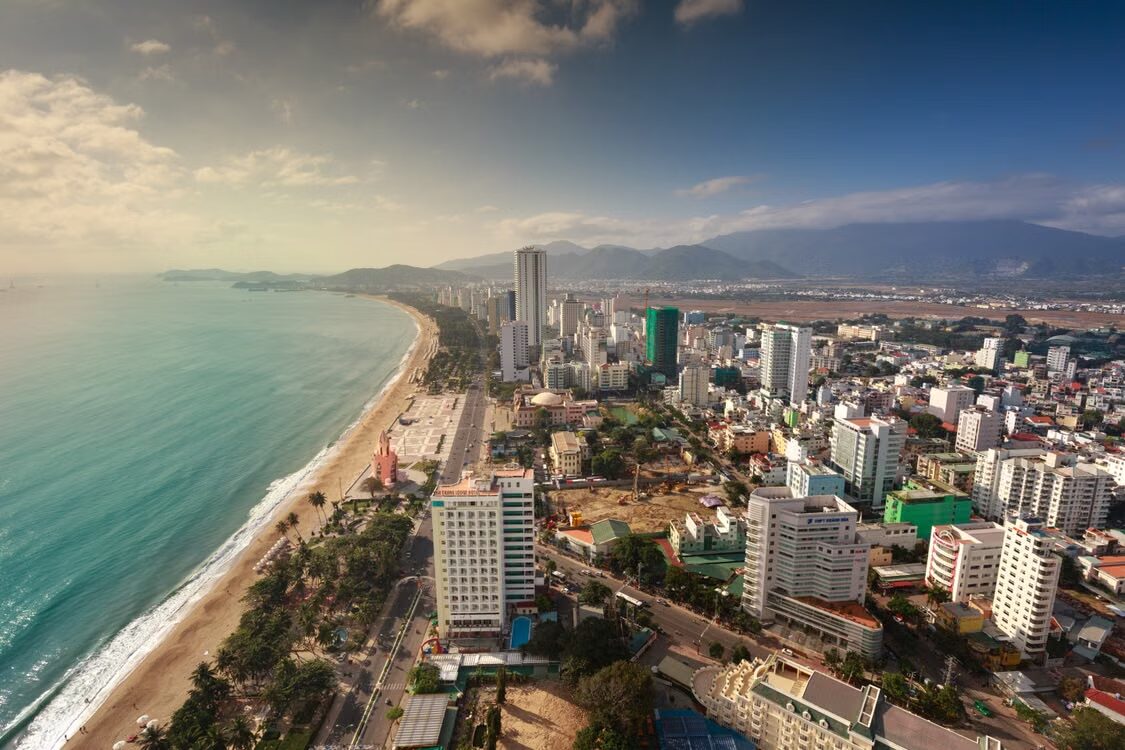
Tran Phu is Nha Trang’s own city beach, running roughly 6 to 7 km along Tran Phu Street through the heart of downtown, backed by a coastal park strip, hotel towers, and the city’s busiest restaurant row.
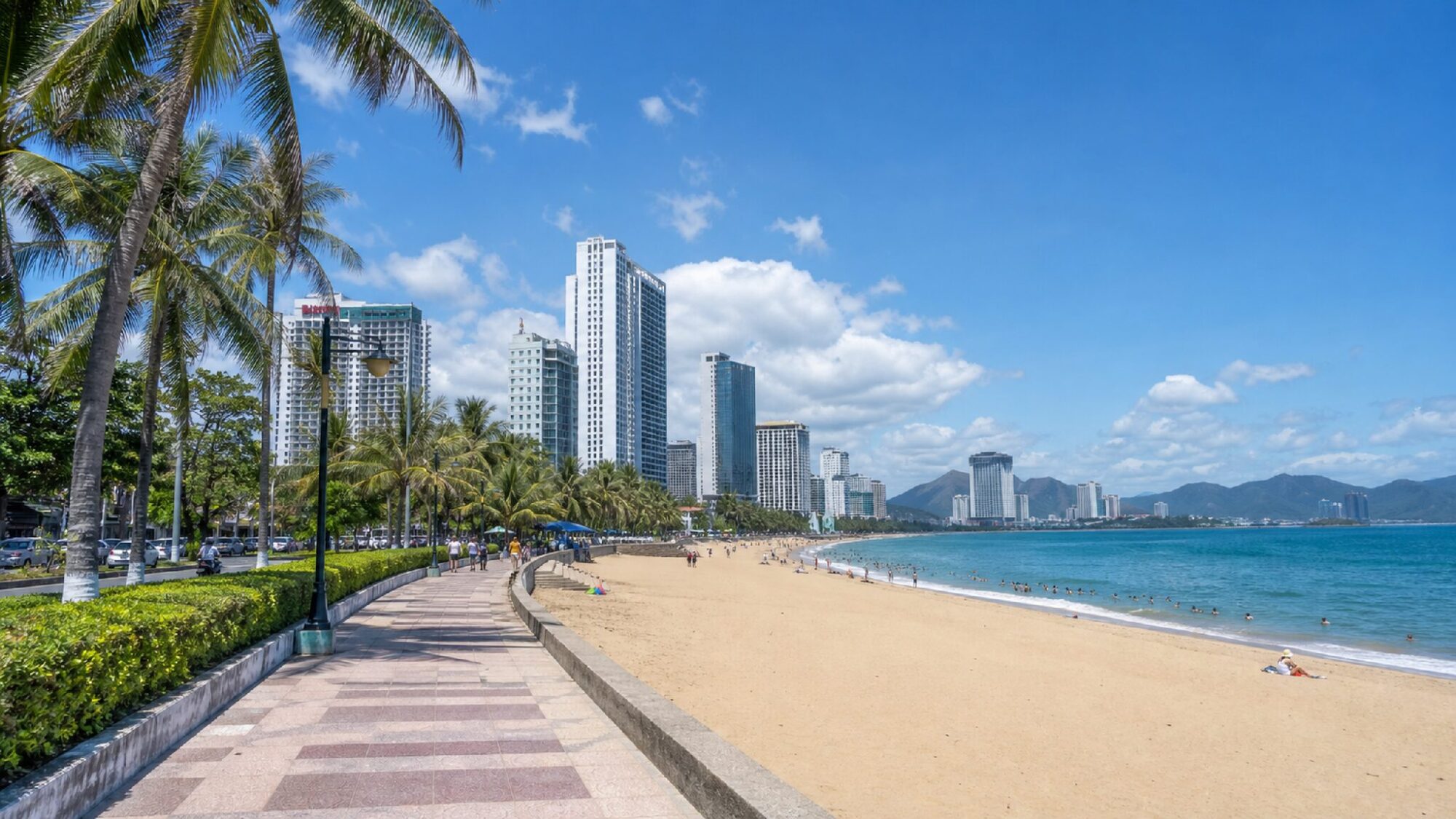
It is the single most convenient of the Nha Trang beaches for anyone staying downtown: swimming, jogging, and people-watching all happen along the same stretch, though it is also the most crowded, especially at sunrise and on weekends.
The park strip running alongside it adds original sculptures, outdoor fitness equipment, and a run of beach volleyball courts, drawing joggers and exercisers early in the morning and a slower stroll-and-people-watch crowd once the evening lights come on.
Long Son Pagoda’s giant white Buddha statue sits visible on the hillside just inland, a common photo stop for anyone already walking the promenade rather than a separate detour across town.
Detailed Information:
- Length: About 6 to 7 km
- Location: Central Nha Trang, along Tran Phu Street
- Best for: Convenience for a city-center stay
Bai Duong Beach (North of the City)
Bai Duong sits a few kilometers north of the city center, part of the Hon Chong Promontory, with golden sand, gentle waves, and a shallow, quiet sea noticeably calmer than Tran Phu’s busier stretch.
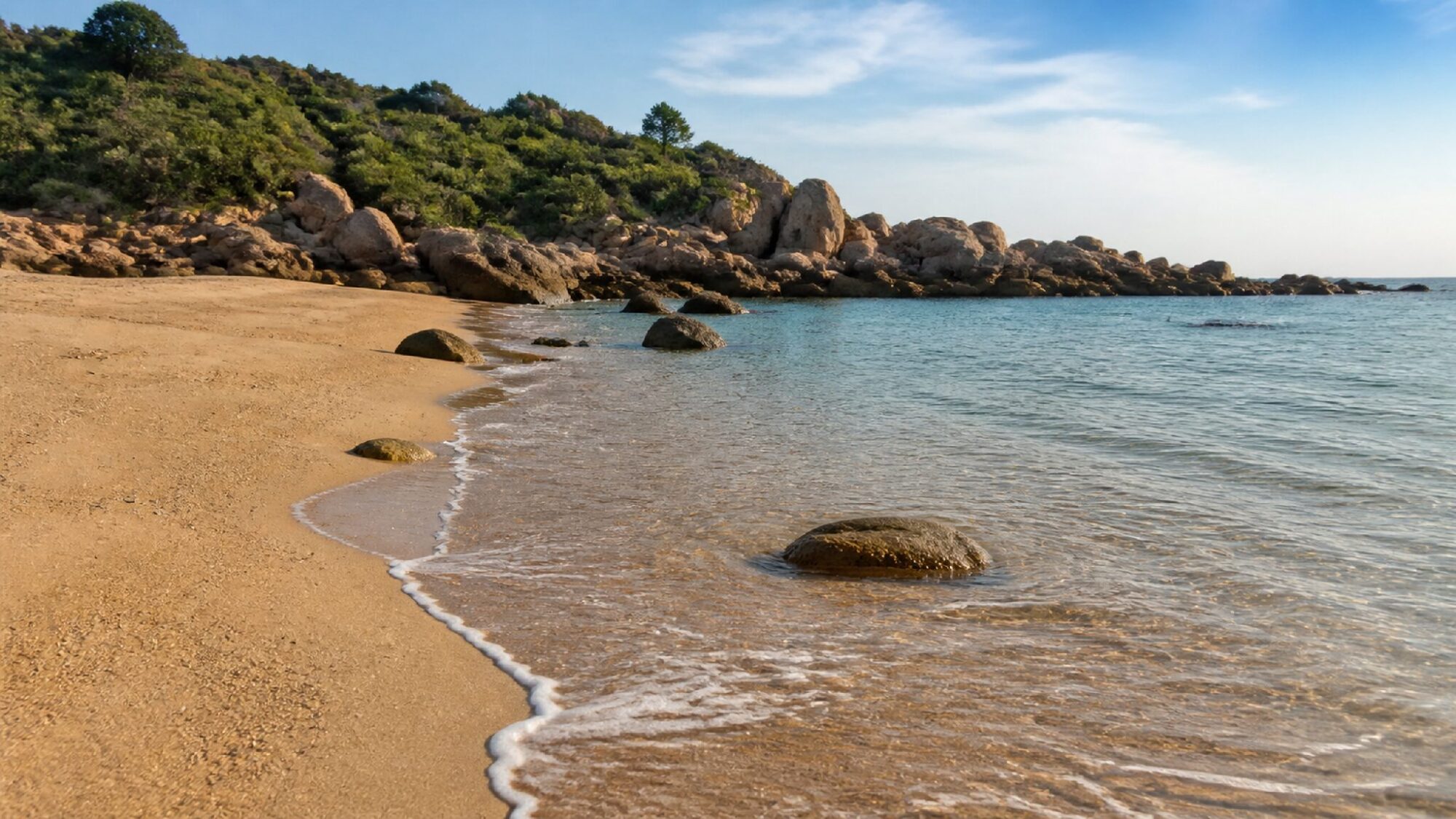
Its most distinctive feature shows up at low tide, when the sea retreats far enough to expose the seabed and local families wade out to gather oysters and crabs, a genuinely different scene from anywhere else on this list.
The promontory itself is worth the short detour even without the beach: its main boulder carries a giant five-fingered handprint locals attribute to a legendary fisherman bracing himself against the rock, giving Hon Chong its other common name, Five Finger Rock.
Detailed Information:
- Location: Hon Chong Promontory, a few km north of the city
- Best for: A quieter walk with island and islet views
Doc Let Beach (50km North)
Doc Let sits 45 to 50 km north of Nha Trang, about 1 to 1.5 hours away by motorbike, taxi, or bus, named for the sand dunes (‘doc’ means slope) visitors have to cross before reaching the water.
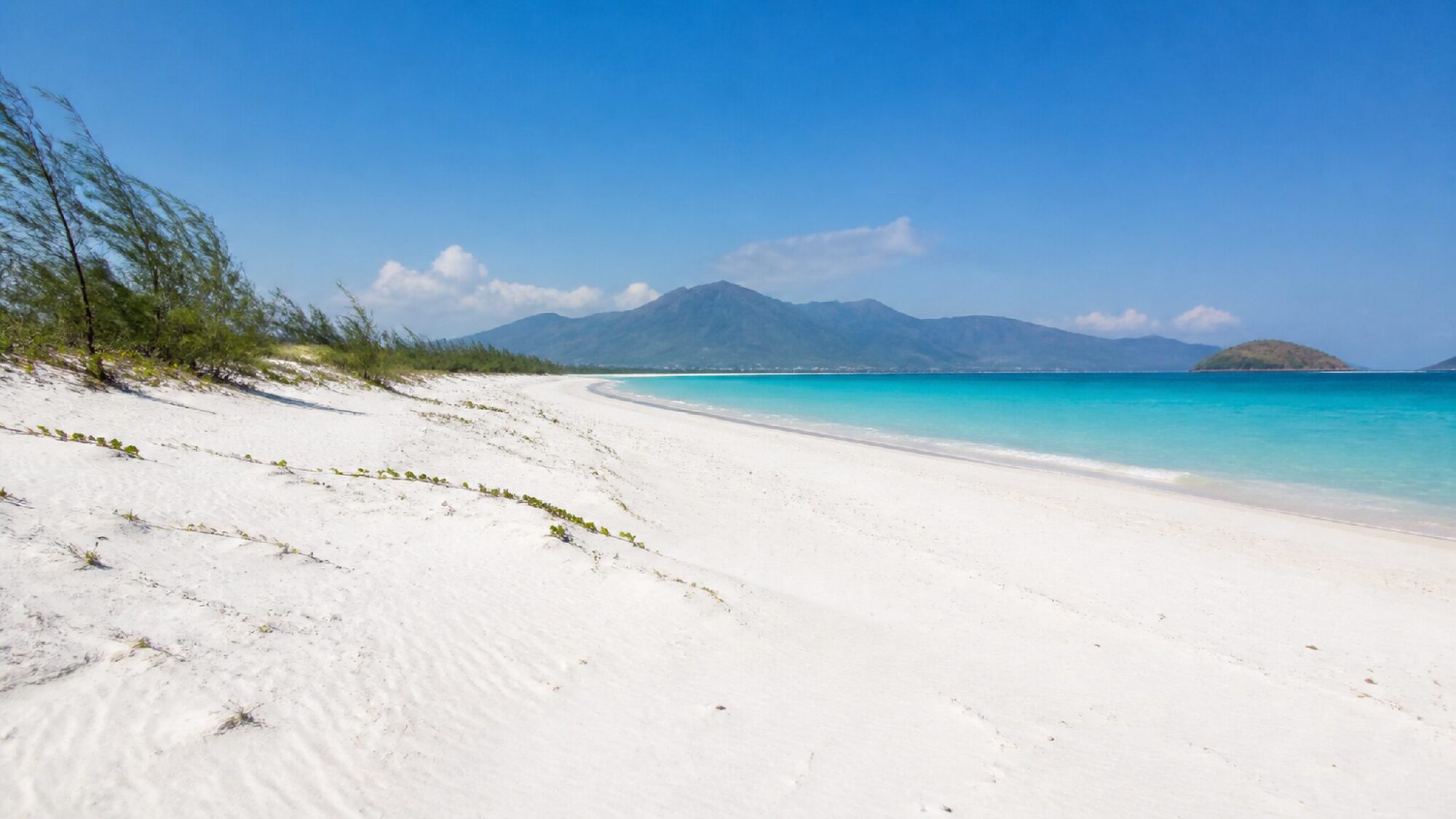
The beach itself runs close to 10 km, with exceptionally soft, powdery white sand and calm, shallow turquoise water safe to wade far out into, plus paragliding and water motorbike rentals for anyone wanting more than a swim.
The Hon Khoi salt fields sit right alongside Doc Let, one of the largest salt-producing areas in the country. Women wade into the shallow fields as early as 4am to rake the salt by hand, a genuinely striking sight best caught between January and June when the fields are actively worked.
Fresh grilled seafood and bánh xèo from the beachside stalls right behind the sand are part of the draw here too, a natural lunch stop before the drive back rather than something to seek out separately in town.
Detailed Information:
- Length: Nearly 10 km
- Distance from Nha Trang: About 45 to 50 km
- Best for: A full day trip, March through September
Hon Mun (Marine Protected Area)
Hon Mun anchors Vietnam’s first officially recognized marine protected area, established in 2001 and covering roughly 160 sq km of combined land and water, home to more than 350 hard coral species and over 230 reef fish species.
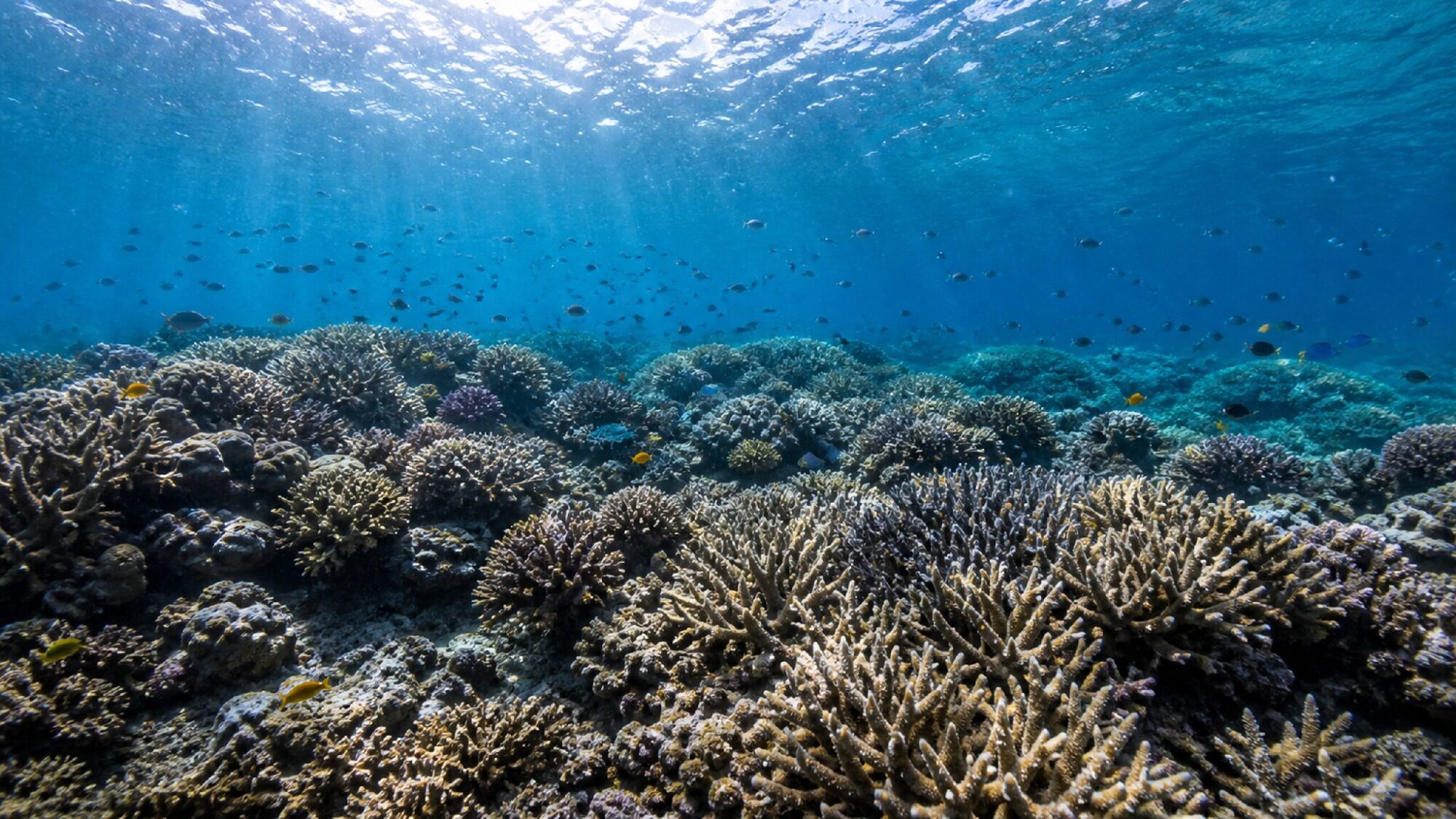
There is no real beach to walk onto here in the usual sense; Hon Mun is a boat-tour and snorkeling or diving stop, per IUCN’s own review of the marine protected area, not a spot to reach independently or spend a day sunbathing.
A separate marine protected area entrance fee, typically 22,000 to 70,000 VND per person depending on the operator and inclusions, applies on top of the tour price itself and usually is not covered by the wider island-hopping ticket, worth confirming before boarding the boat.
Named dive sites around Hon Mun draw divers well beyond first-timers: Madonna Rock’s submerged caverns and swim-throughs run to about 30 m at their deepest, Moray Beach’s own cave shelters pipefish and devil scorpionfish, and Hon Mun Wall’s vertical drop is considered the area’s more advanced option.
Detailed Information:
- Status: Vietnam’s first marine protected area (2001)
- Area: About 160 sq km, combined land and water
- Best for: Snorkeling and diving on a guided boat tour
Hon Tam and Hon Noi
Hon Tam sits about 7 km southeast of the city, with over a kilometer of pristine white sand, clear water, and a run of paid water sports (flyboarding, parasailing, sea walking) alongside a small mud-bath facility and an old fishing-village theme area.
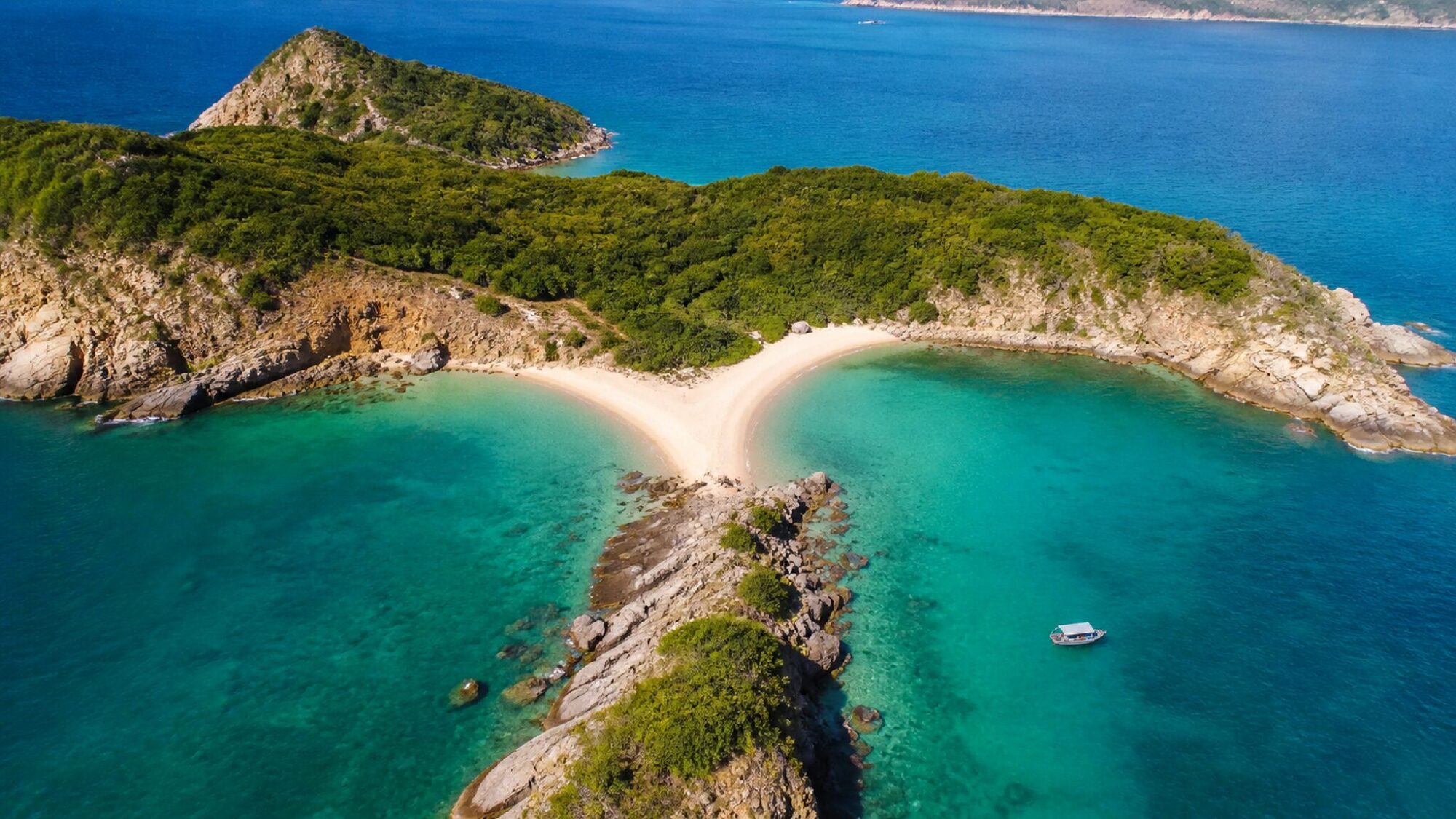
Hon Noi, about 25 km out, is known locally as Dao Yen, or Swiftlet Island, for the wild swiftlet colonies nesting in its cliffs, and stands out among the bay’s islands for having two distinct beaches rather than one.
Both islands are reached by speedboat from Cau Da pier, a ride of roughly 15 to 20 minutes each way, usually sold as a round-trip ticket bundled with the day’s water sports or folded into a wider multi-island tour rather than booked as a standalone ferry crossing.
Hon Tam’s own mud bath is smaller and less crowded than the mainland’s well-known Thap Ba facility, a quieter alternative for anyone already spending the day on the island rather than booking a separate mud-bath outing back on shore.
Detailed Information:
- Distance: Hon Tam about 7 km, Hon Noi about 25 km
- Best for: A day of water sports (Hon Tam) or a quieter double-beach stop (Hon Noi)
Bai Tranh Beach (Hon Mieu Island)
Bai Tranh sits on Hon Mieu (also called Tri Nguyen) island, about 15 km from the city center, split into two distinct sections along its roughly 500 m length: one side of fine white sand, the other of smooth, colorful pebbles.
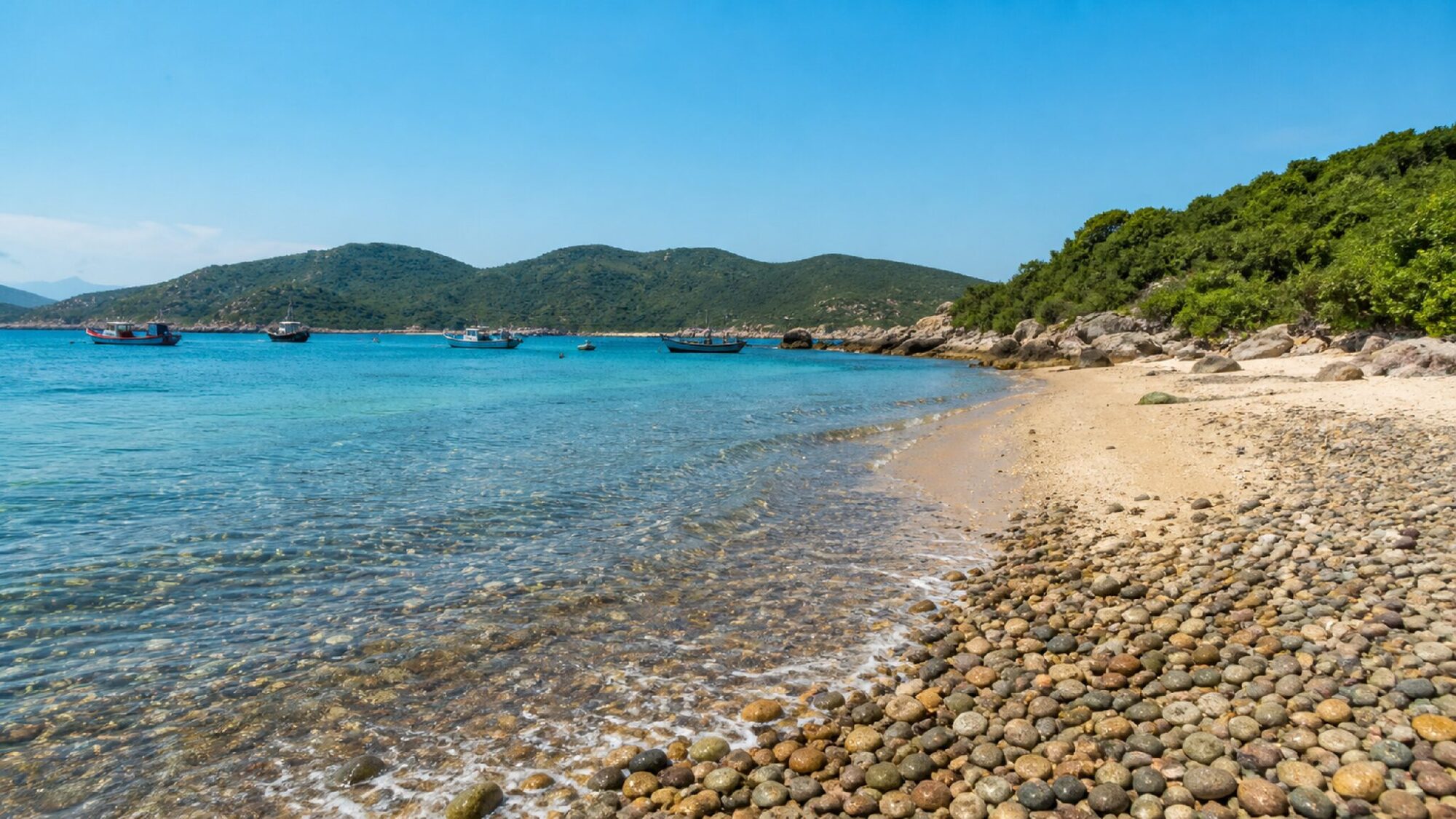
Snorkeling here is free, scuba diving runs about 600,000 VND per person, and sea walking (a helmeted underwater walk along the seabed) runs about 1,000,000 VND, all confirmed before booking since island-tour pricing shifts seasonally.
The same island also holds Tri Nguyen Aquarium, built in 1997 inside a fossil-ship-shaped tank structure, open daily from 7am to 5:30pm with tickets around 5 USD for adults, an easy add-on for anyone already making the boat trip out to Bai Tranh.
A working fishing village still operates alongside the tourist side of the island, with floating fish farms visible just offshore from the aquarium itself, a genuine working backdrop rather than a staged one.
Detailed Information:
- Length: About 500 m, split between sand and pebble
- Distance from Nha Trang: About 15 km, by boat
- Best for: An island-hopping day trip with light water activities
| Beach | Distance from Nha Trang City | Best For |
|---|---|---|
| Bai Dai Beach (Long Beach) | About 20 km | Quiet swimming, resort stays |
| Tran Phu Beach | City center | Convenience, city-based stays |
| Bai Duong Beach | A few km north | Quiet walks, low-tide scenery |
| Doc Let Beach | 45 to 50 km | Full day trip, water sports |
| Hon Mun | Boat tour only | Snorkeling and diving |
| Hon Tam and Hon Noi | 7 to 25 km, by boat | Water sports, double beaches |
| Bai Tranh Beach | 15 km, by boat | Island-hopping day trips |
Getting to Each Beach
How to reach each stop on this list varies more than it might seem, from a short walk to a boat departing a fixed pier.
To Tran Phu and Bai Duong
Both sit close enough to the city center to reach on foot, by rented bicycle, or with a short Grab or taxi ride, no advance planning required beyond picking a time of day.
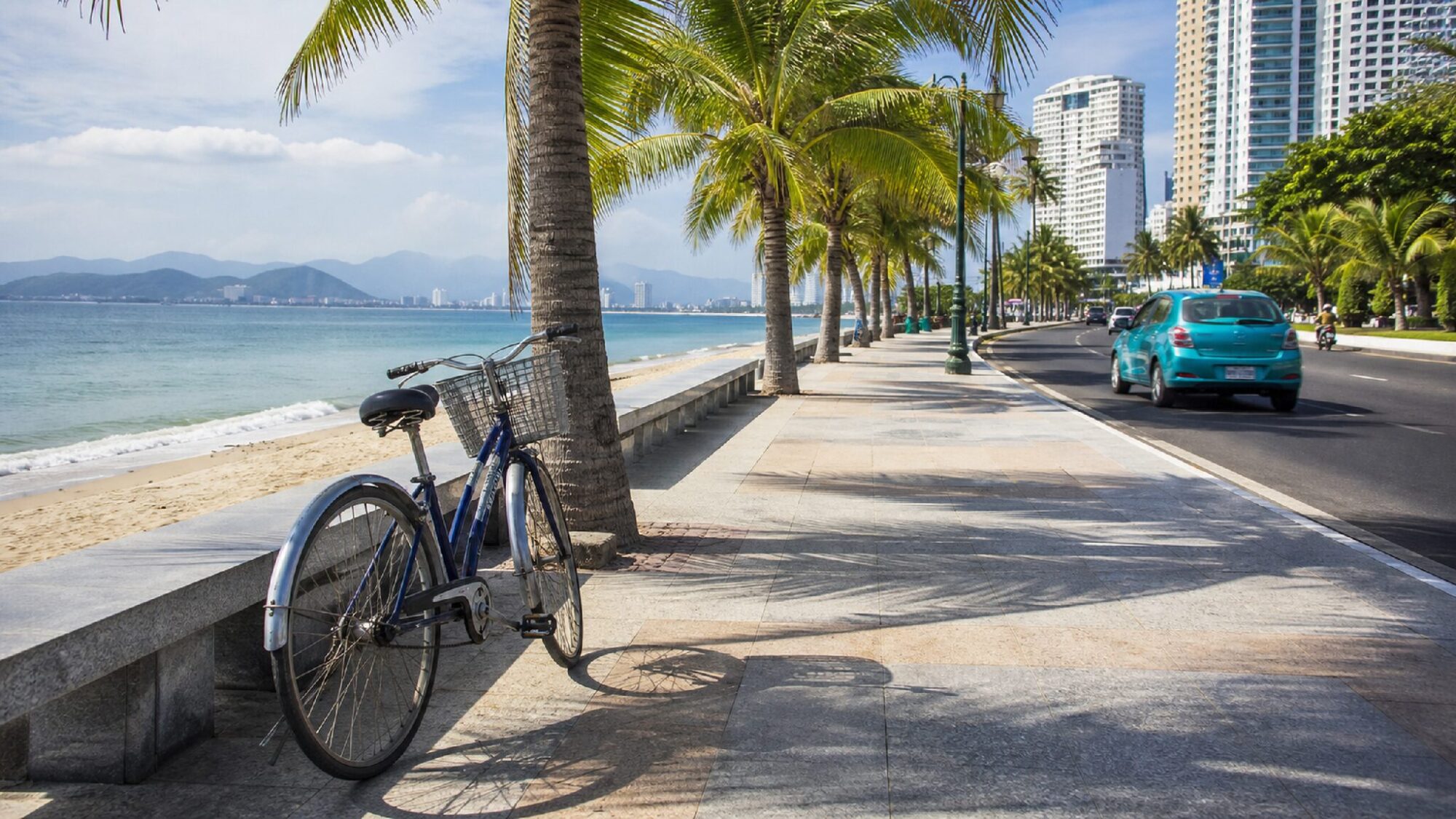
The two also sit close enough together that a single morning can realistically cover both, a short ride between the city beach and the quieter promontory stretch to the north rather than treating them as separate day trips.
To Doc Let
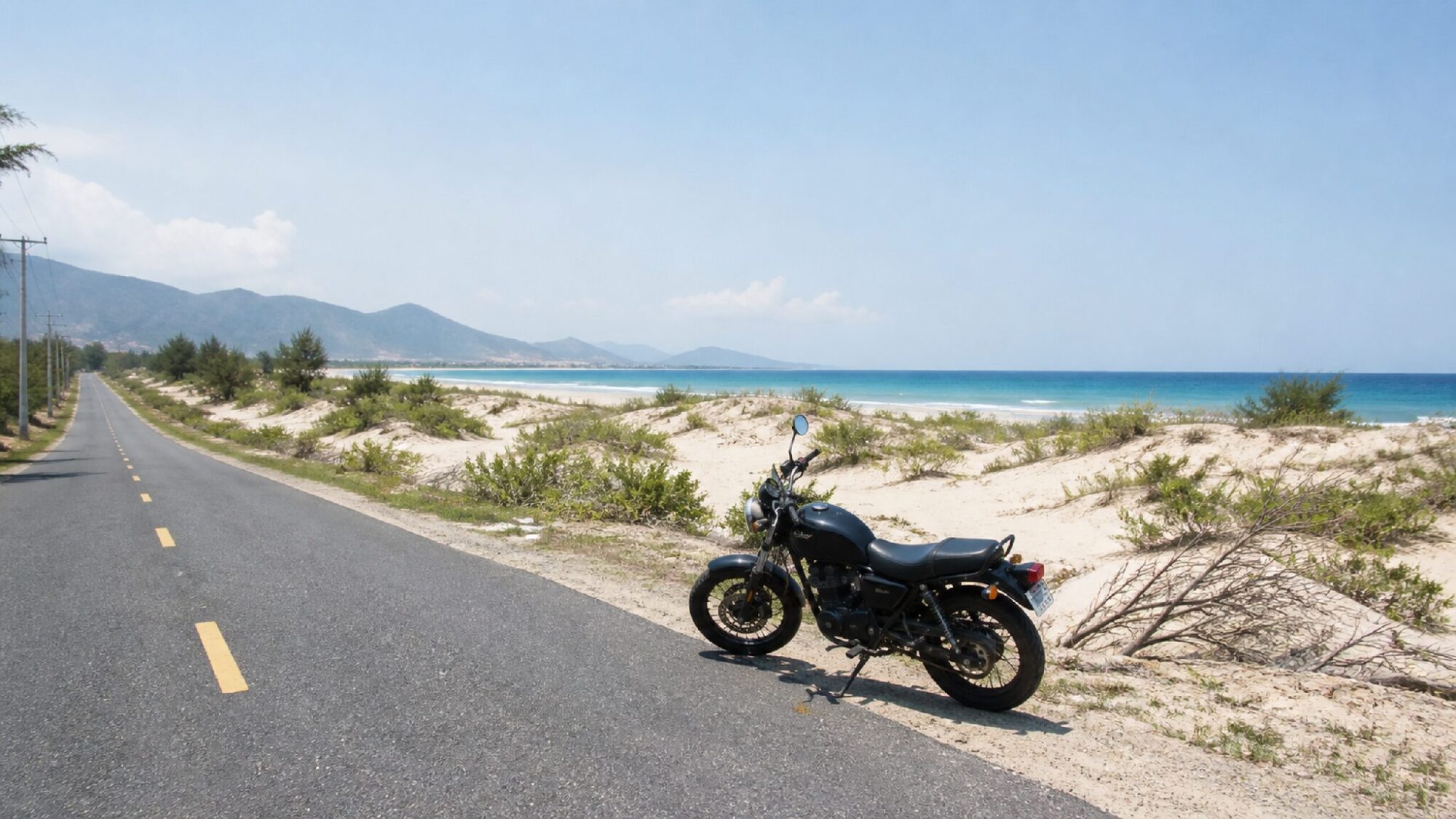
Doc Let is the one beach on this list that genuinely rewards renting a motorbike or booking a private car for the day. A public bus route exists but runs infrequently, and a round-trip taxi or private driver removes the guesswork of matching a return bus schedule to the rest of the day’s plans.
To the Outer Islands
Hon Mun, Hon Tam, Hon Noi, and Bai Tranh are all reached by boat, typically departing from Cau Da pier on a bundled multi-island tour rather than a single-destination ferry ticket, which is usually the more cost-effective way to see more than one of them in a day.
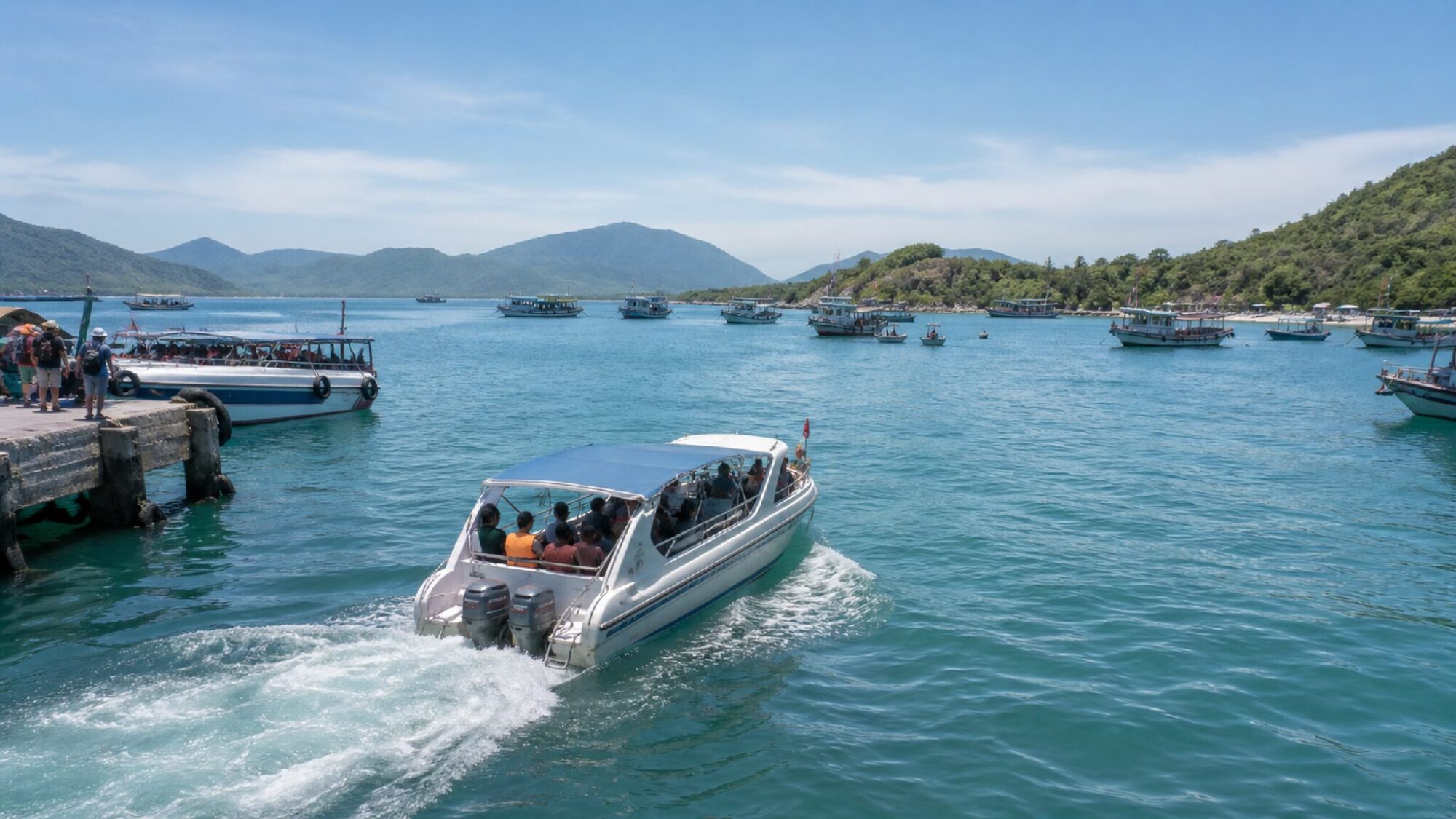
A standard multi-island itinerary usually strings together three stops in one day, Hon Mun for snorkeling, Hon Tam or Bai Tranh for the beach and water sports, and a seafood lunch on the water, rather than requiring a separate booking for each island.
To Bai Dai and the Airport
Bai Dai sits closest to Cam Ranh Airport of anything on this list, reachable in about 10 minutes by car and effectively bypassing the city center altogether for anyone flying directly into Cam Ranh rather than starting a trip from downtown Nha Trang.
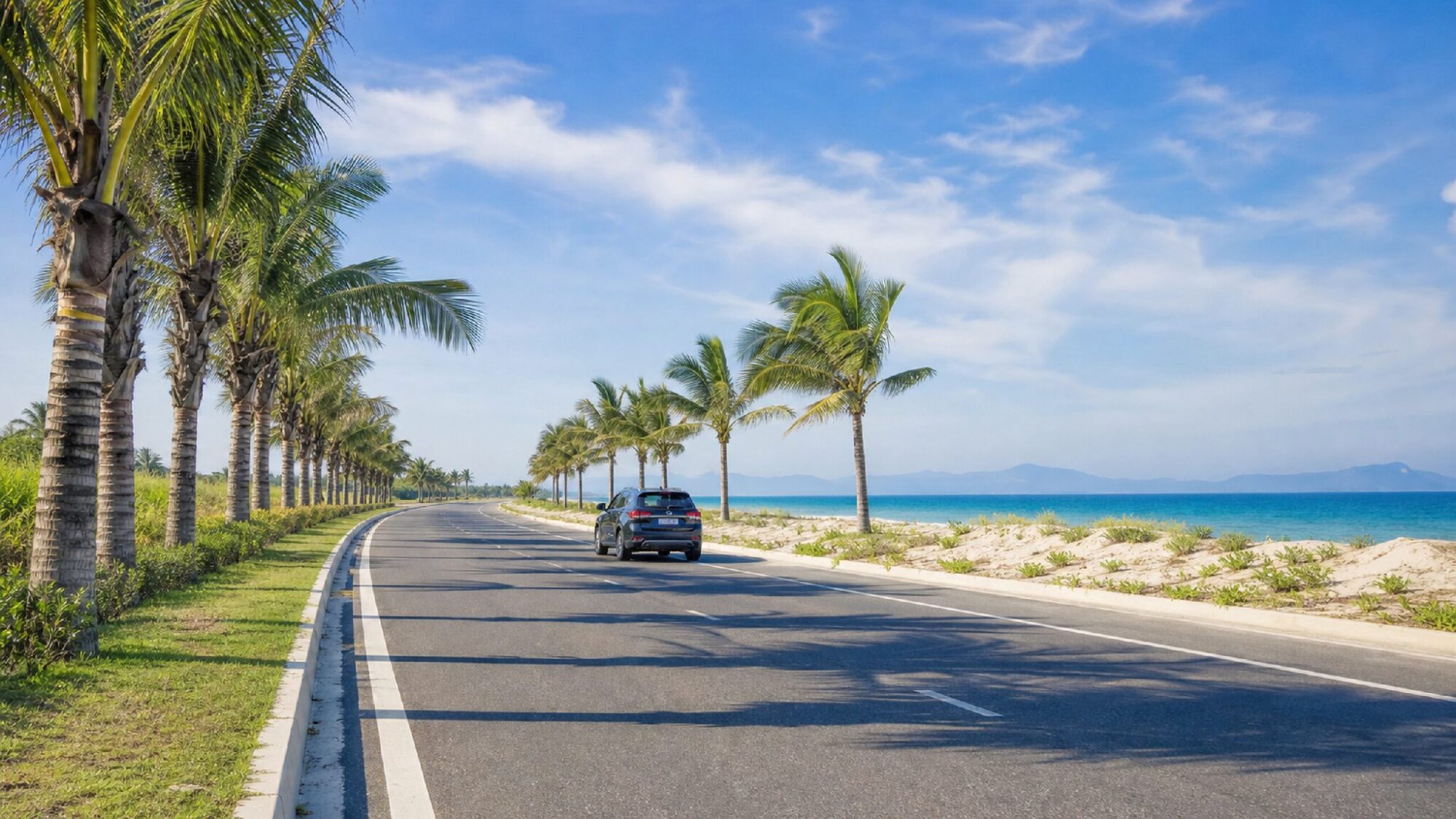
A private car or resort transfer is the more comfortable option for that specific route, since a public bus connection between the airport and Bai Dai simply does not exist the way it does for the city-facing beaches further north. For anyone splitting time between the two, the resort’s own how to get from Nha Trang to Cam Ranh guide covers the return leg in more depth.
What to Know Before You Go
A little planning around timing and safety makes a real difference across every one of the Nha Trang beaches covered above, not just the busiest one.
The Calmest Months to Swim
February through August is the most reliable window for calm seas and clear skies across Nha Trang beaches generally, with minimal rainfall and gentle waves suited to swimmers of any level. The resort’s own best time to visit Nha Trang guide breaks that window down month by month for planning a full trip around it.
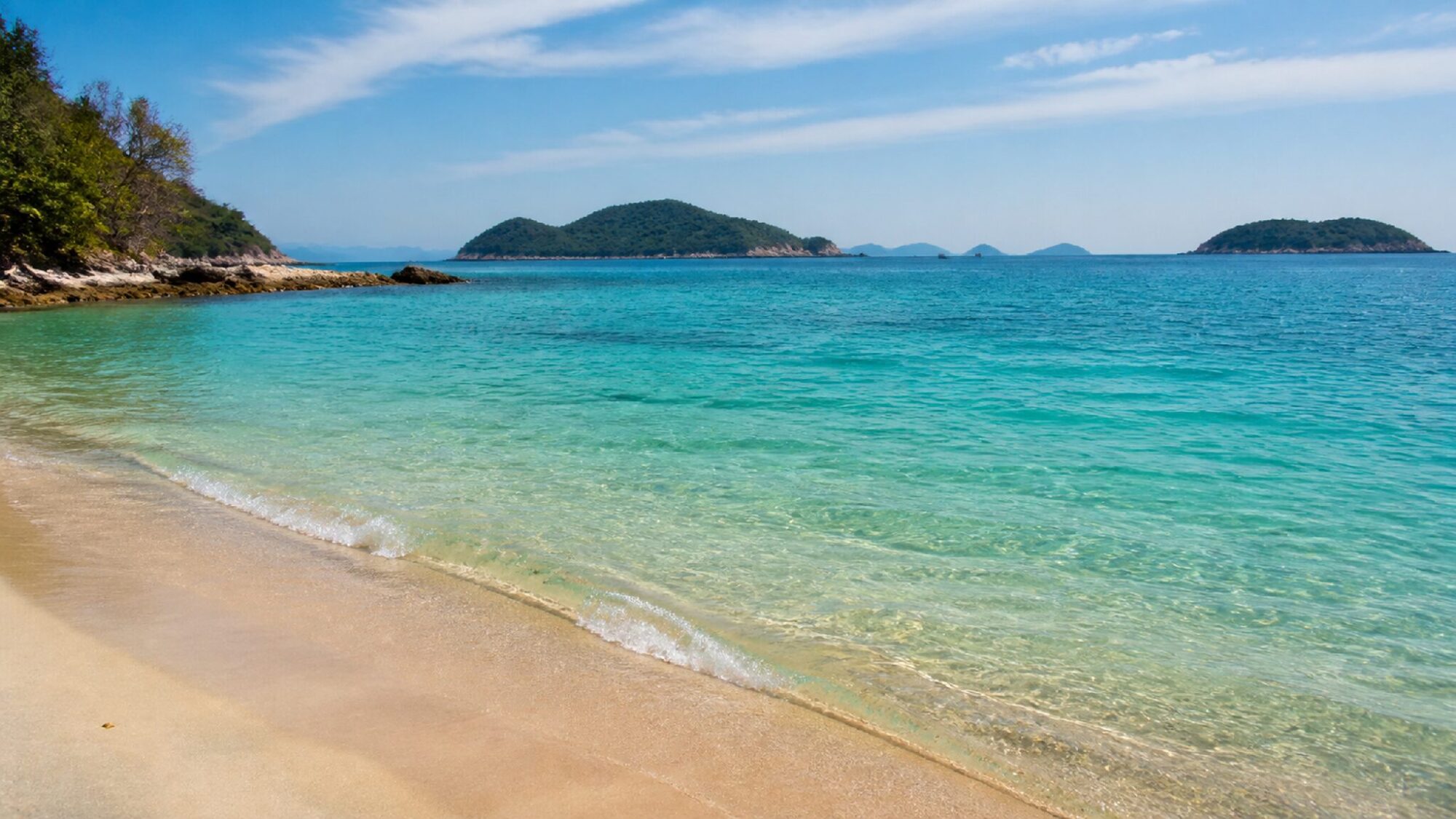
Typhoon season runs from September into early December, with October and November the riskiest months for rough seas and unusual currents, though Nha Trang’s own bay is sheltered by mountains and outlying islands, so a direct typhoon strike is uncommon. Jellyfish are also more likely to appear in August, worth a quick check before wading in that month.
December and January bring the coolest water temperatures of the year, still swimmable but noticeably brisker than the warm, glassy sea most visitors picture, worth knowing if the trip is timed around that window specifically for a swim-focused stay.
November is historically Nha Trang’s single wettest month, and combined with the tail end of typhoon season it’s the one stretch of the year worth actively avoiding if a beach-heavy itinerary is the whole point of the trip.
What to Pack
A reef-safe, mineral-based sunscreen matters more here than at an average beach destination, since regular chemical sunscreen residue is one of the pressures already stressing Hon Mun’s protected coral, worth swapping for a day that includes any of the outer islands.

Water shoes earn their space in a day bag too: Bai Tranh’s pebble side and the rocks around Hon Chong Promontory are both harder to walk barefoot than expected, and a rash guard is worth packing for anyone snorkeling long enough to need more sun coverage than a swimsuit alone provides.
A refillable water bottle and a wide-brim hat matter more than either might suggest out on open water: shade is scarce on a boat deck, and the glare bouncing off white sand and turquoise water burns faster than the same sun feels standing on land.
Currents, Lifeguards and Safety
Lifeguards are stationed along the busiest stretches, particularly near major hotels and public swimming zones on Tran Phu, but several quieter Nha Trang beaches on this list have no lifeguard coverage at all, worth checking before choosing where to actually get in the water.
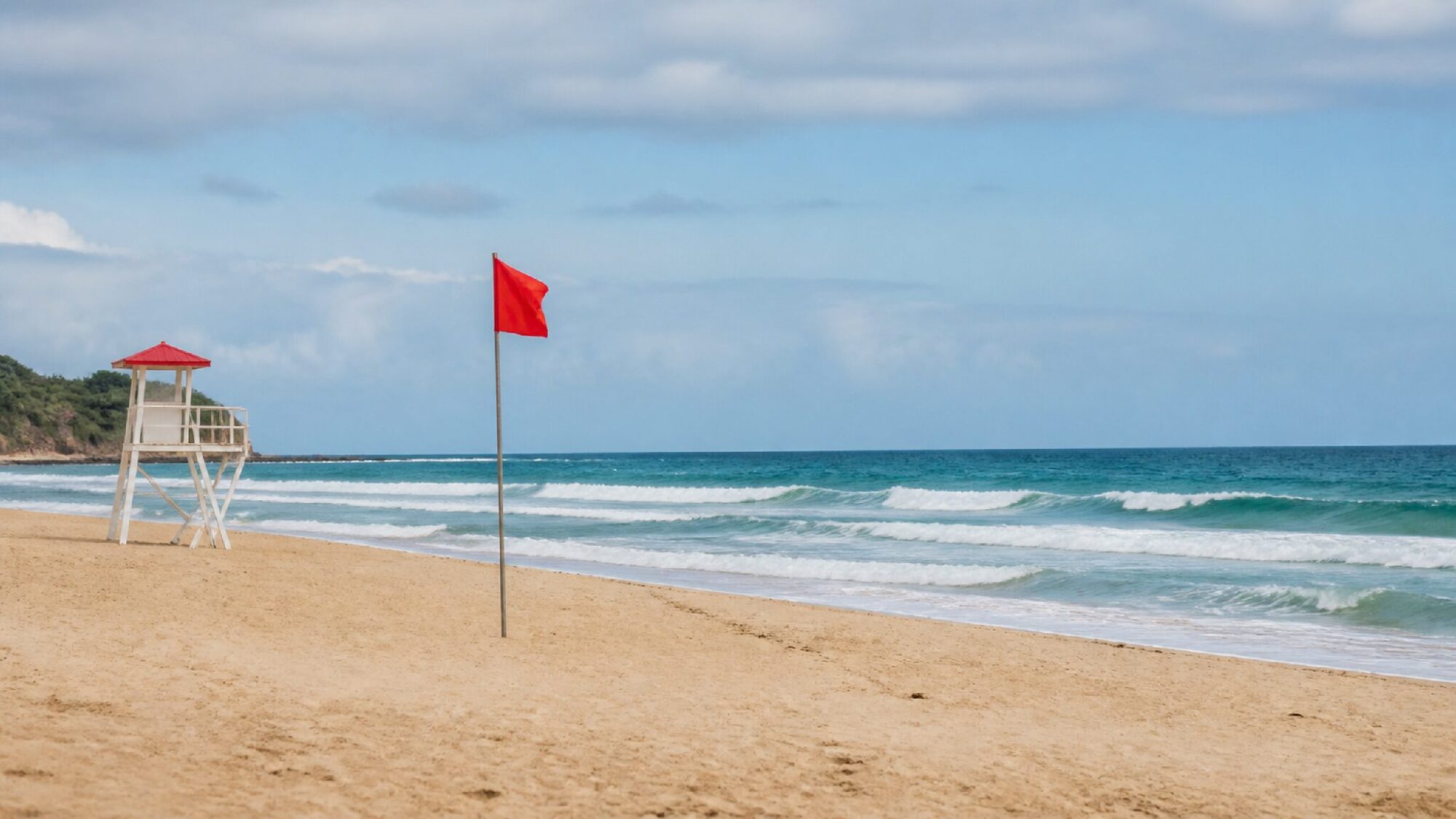
A red flag posted on the sand signals a strong undercurrent and means swimming is not safe that day, a warning worth respecting even when the water looks calm from the shore. Currents also run less predictably during the rainy season, another reason to favor a lifeguarded zone over an empty stretch of sand outside peak season.
Swimming at any of the outer islands, Hon Mun included, means relying on the tour boat’s own crew rather than a fixed lifeguard tower, so sticking close to the group and following the guide’s marked swimming zone matters more there than it does on the mainland.
Checking a local weather forecast the morning of, rather than relying on a booking made days earlier, is worth the extra minute: conditions on the bay can shift enough overnight to change whether a smaller boat tour actually runs that day.
Staying on Bai Dai Beach at Alma Resort
Bai Dai, introduced above as the quietest of the city-adjacent Nha Trang beaches, is where Alma Resort Cam Ranh itself sits, a property recognized as the T+L World’s Best Awards’ #1 Resort in Southeast Asia in 2024 and a top-5 finisher in the region again in the 2026 edition.
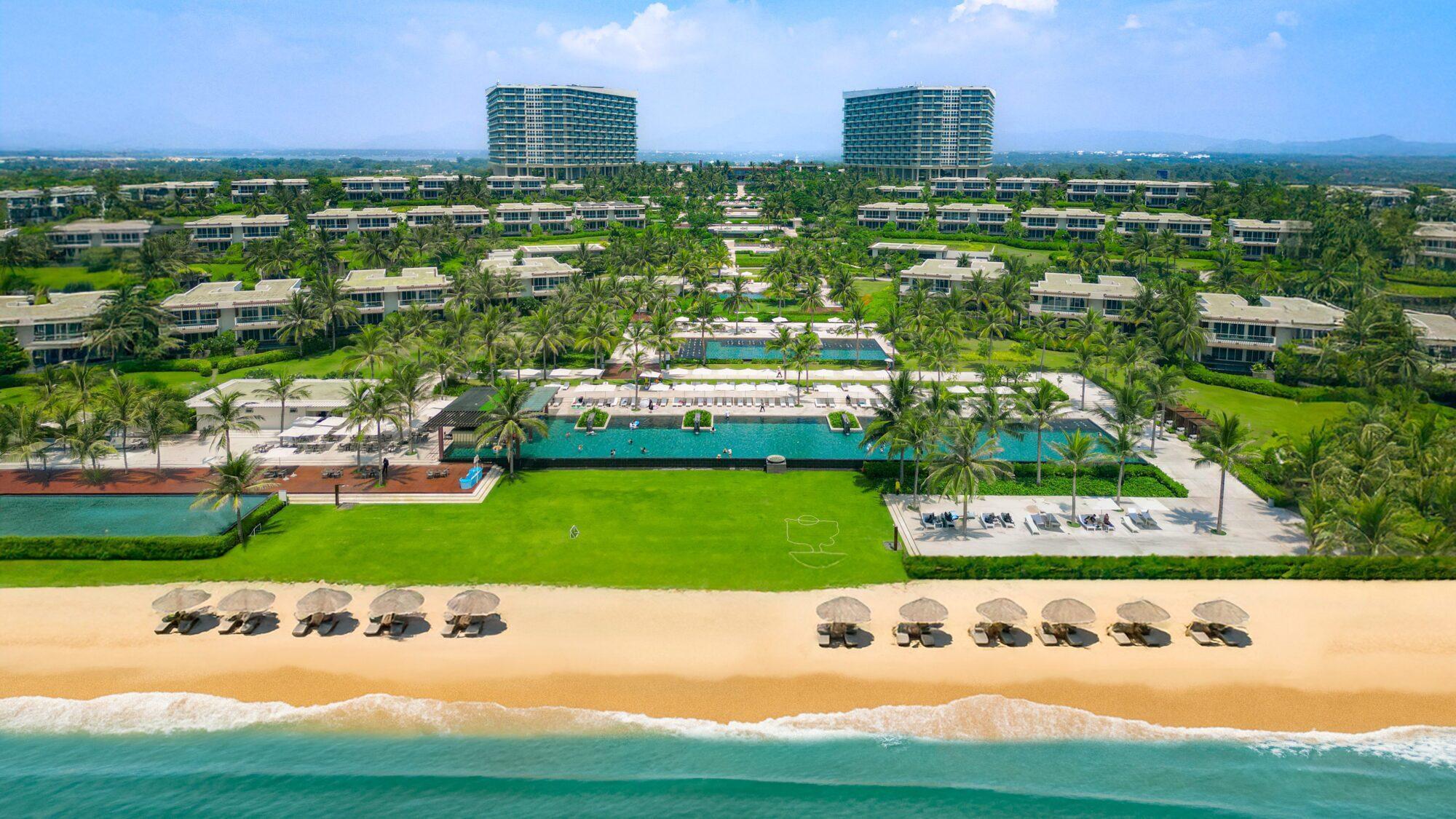
Alma Resort occupies an 800-meter stretch of Bai Dai Beach, giving guests direct access to the sand without having to travel elsewhere along the coast. The resort’s beachfront is open daily from 6:00 a.m. to 6:00 p.m., covering everything from an early walk to a late-afternoon swim.

Kayaks, water bikes, bodyboards, and a water roller are all available directly on the beach. The water roller is a large inflatable cylinder that participants walk inside while it floats on the surface. Having the equipment on-site also means guests do not need to arrange separate rentals in Nha Trang.
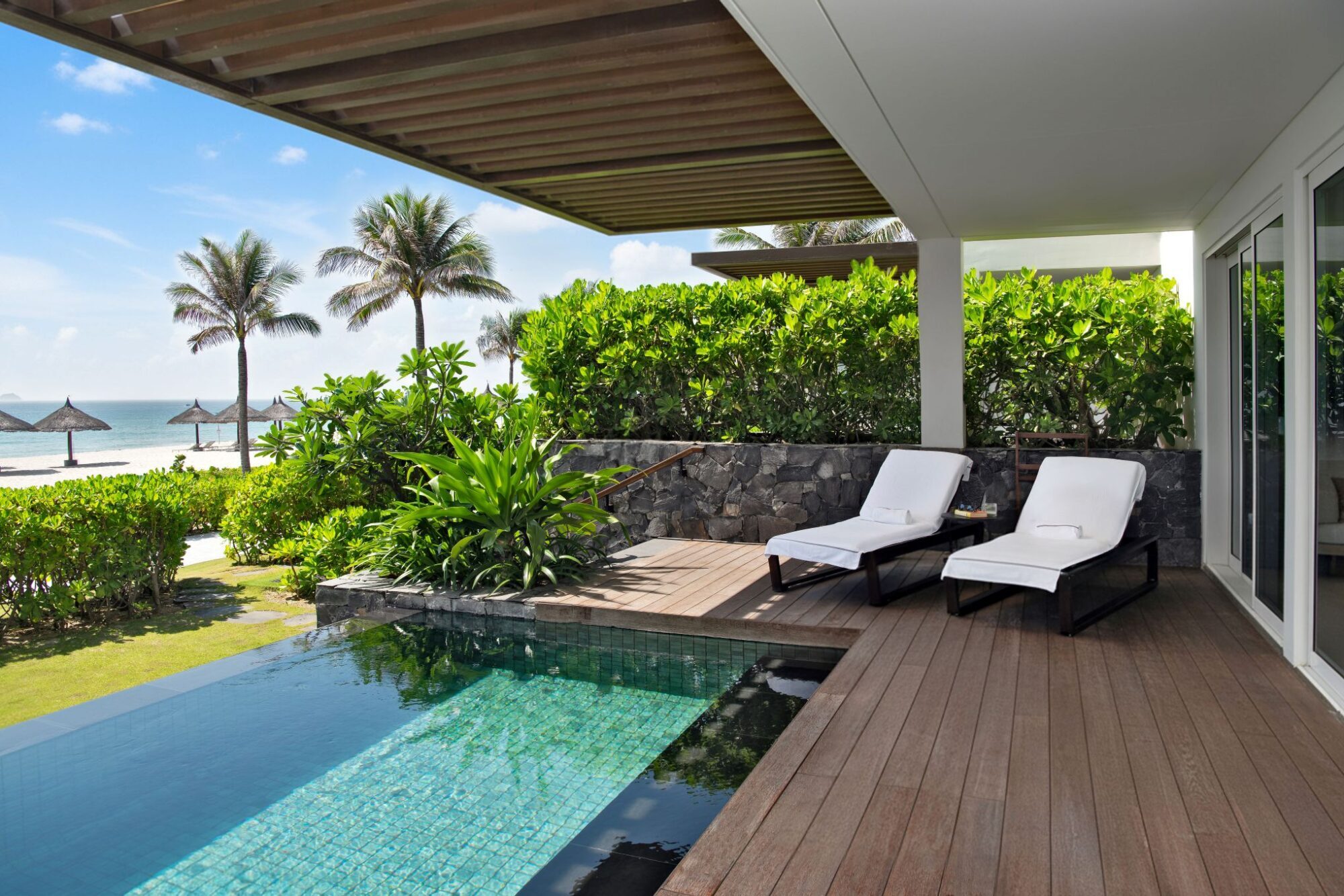
For the closest possible access, the 1 Bedroom Villa, Private Pool, Beach Front places the shoreline just beyond the villa. The 147-square-meter accommodation suits a couple or small family, with a private pool and no shared pool deck.
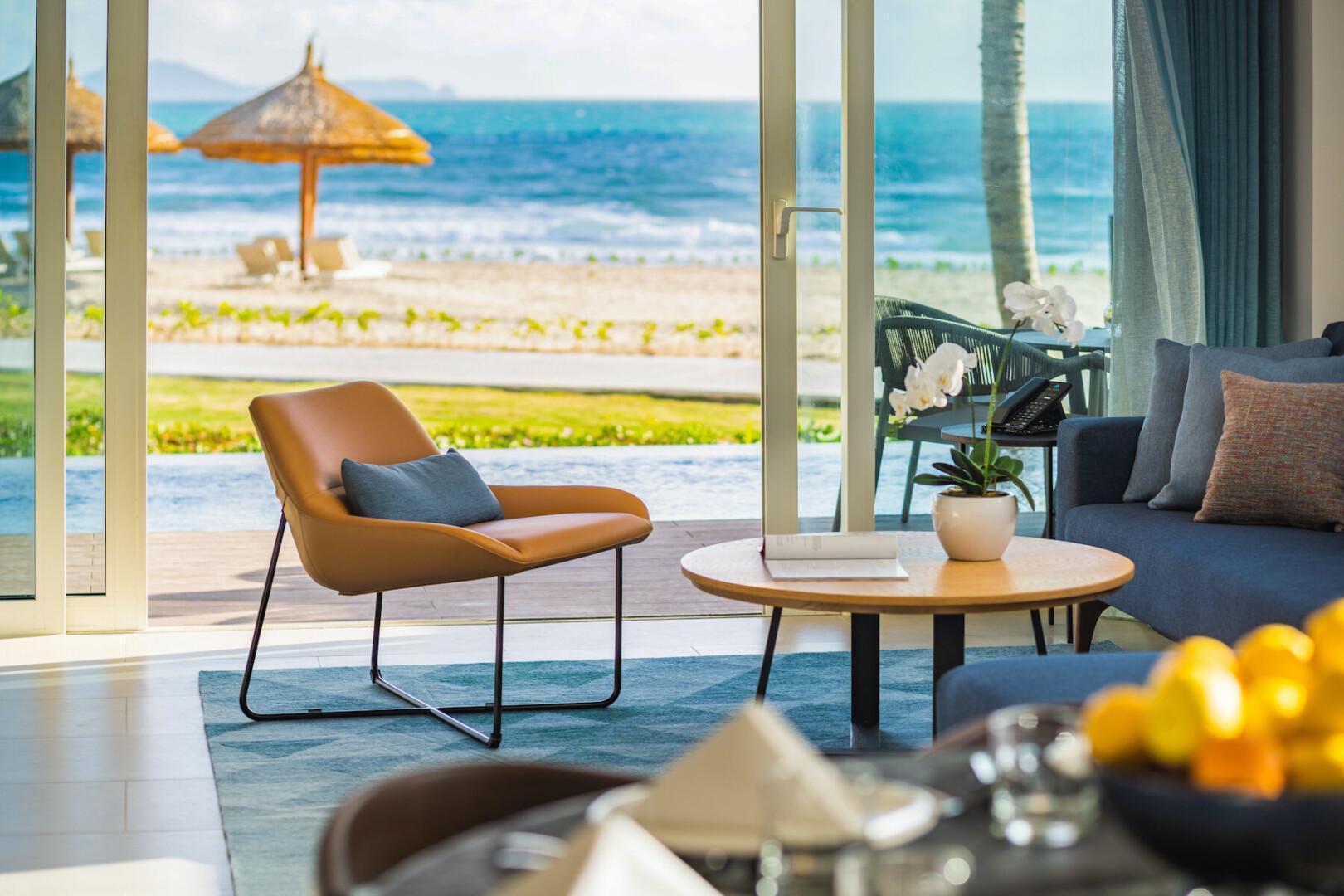
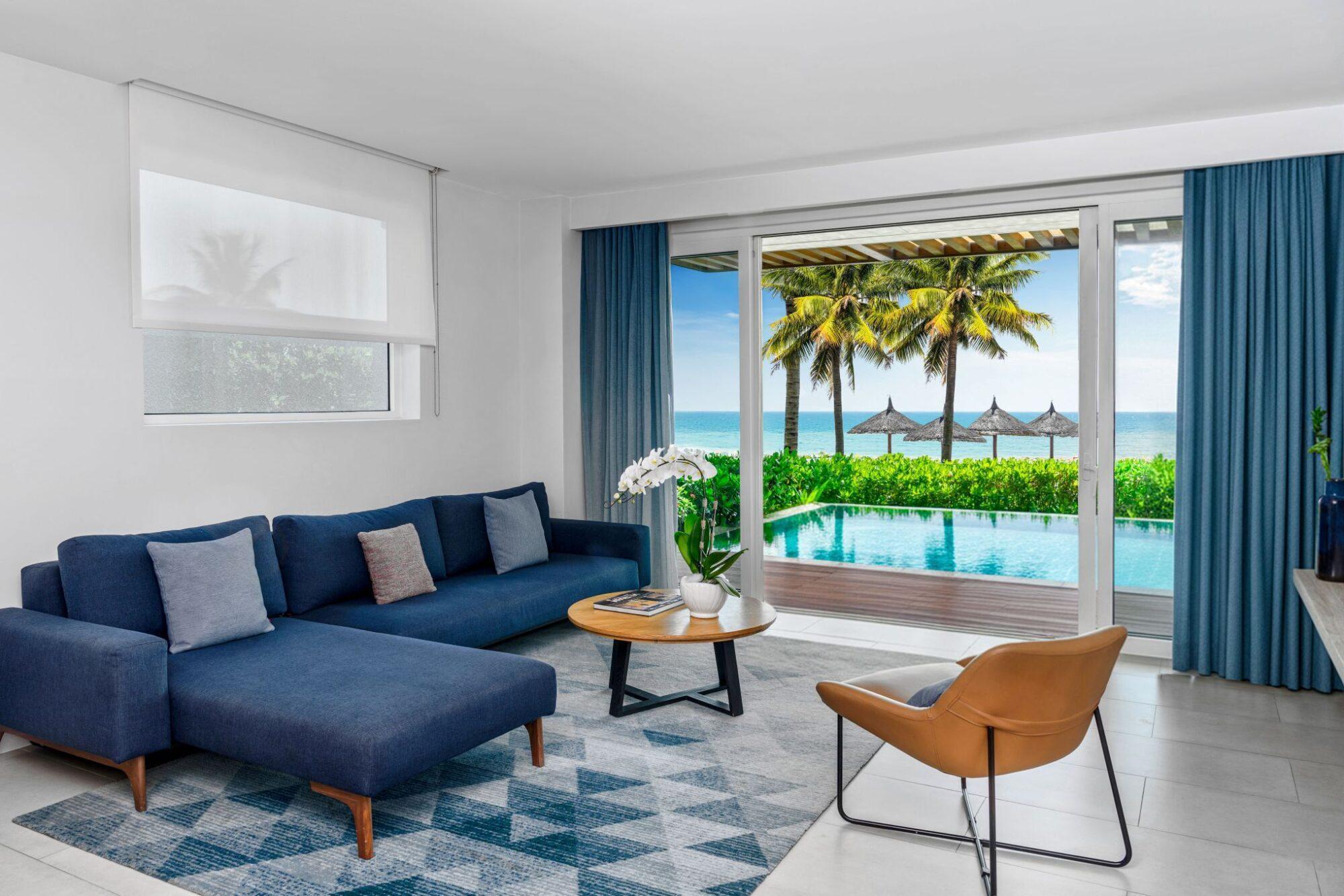
For a bigger group wanting the same direct beach access, the 2 Bedrooms Villa, Private Pool, Beach Front scales that same layout up to 182 sqm and sleeps up to 7, still with its own private pool rather than a shared one, sized for two families traveling together or a multi-generational group who’d rather not book two separate rooms just to get the same stretch of sand outside the door.
For an evening drink without leaving the sand, Beach Bar sits right on the resort’s own stretch, a simpler, beachside counterpart to the resort’s other bars further inland. Its food menu runs an Australian Beef Burger (375,000 VND), a Four Cheese Pizza (595,000 VND), and Crispy Rock Shrimp with spicy mayo (160,000 VND), built for sharing over a sunset rather than a full sit-down meal.
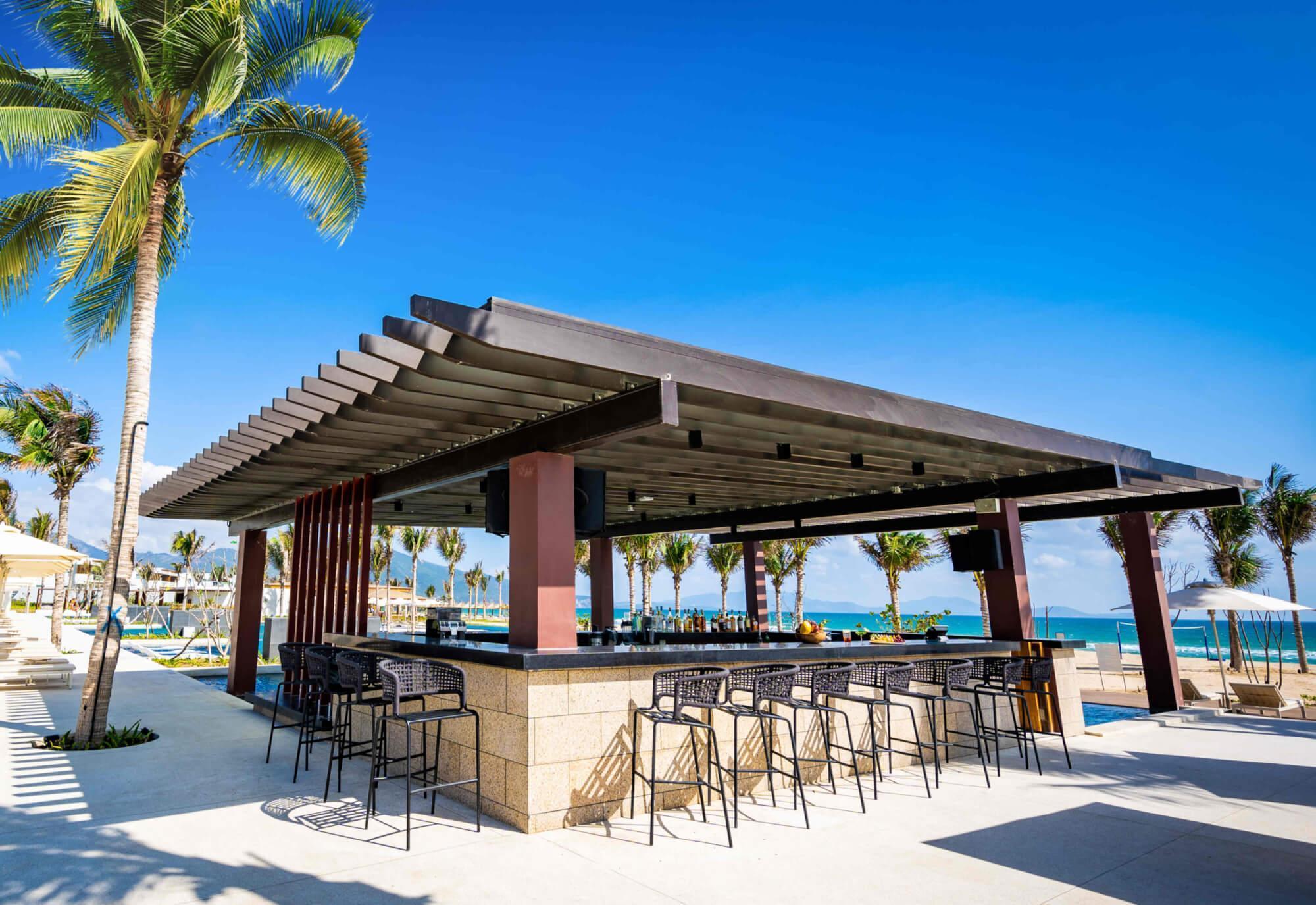
Because the resort’s beach runs on a set schedule rather than the flag-and-lifeguard system covering the public beaches above, guests get a predictable, supervised window to swim rather than needing to check conditions each morning.
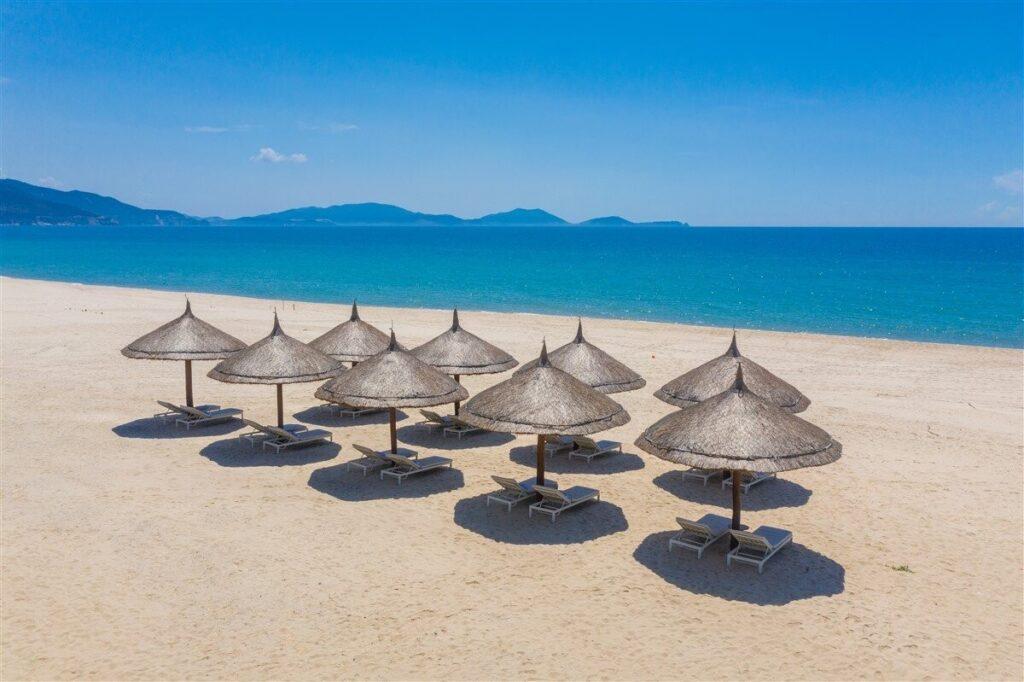
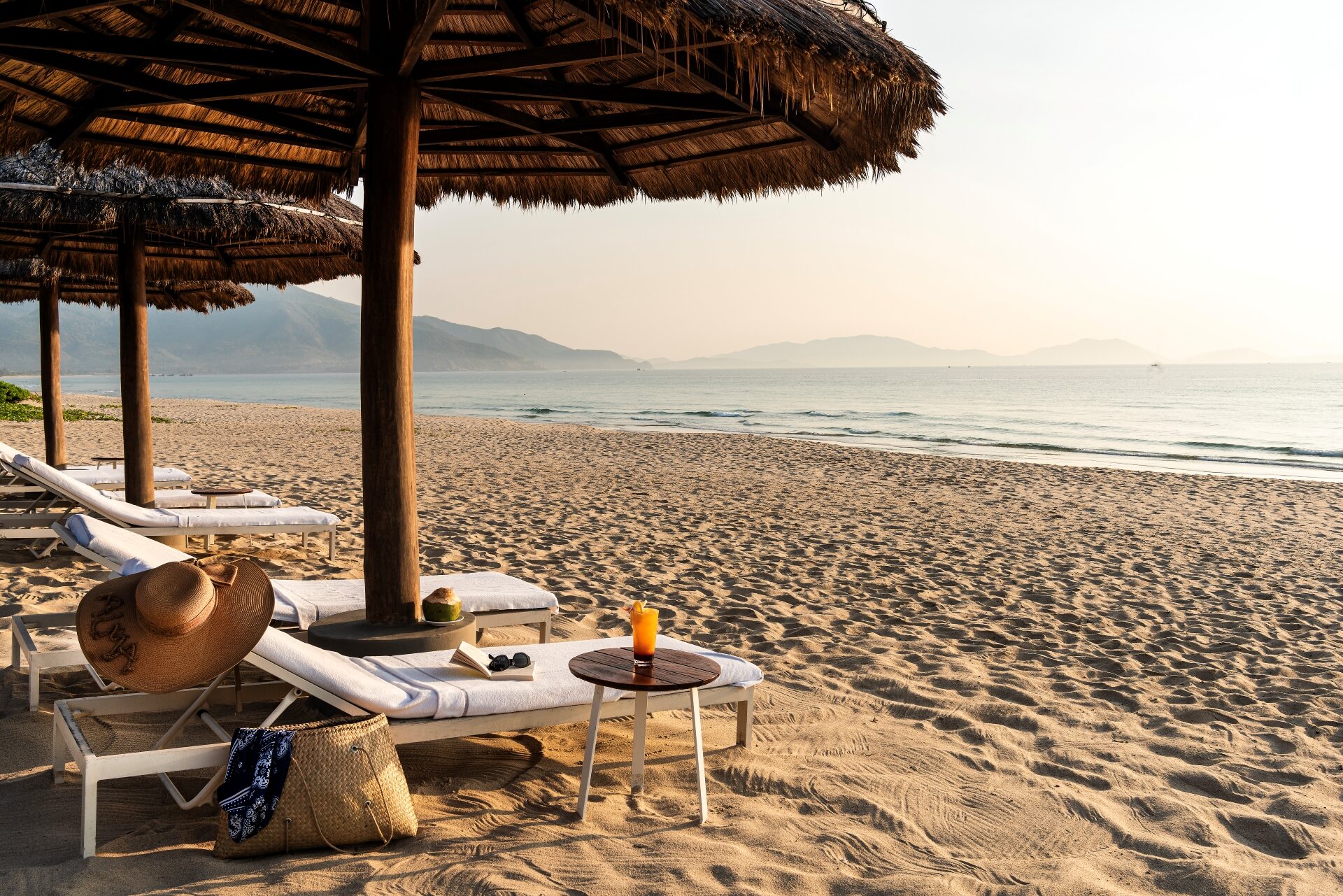
Sun loungers and umbrellas line the sand at no extra charge, close enough to Beach Bar that an evening drink never means a long walk back for it, removing the common resort-fee surprise some public beach vendors still add for a shaded spot on a busier stretch.
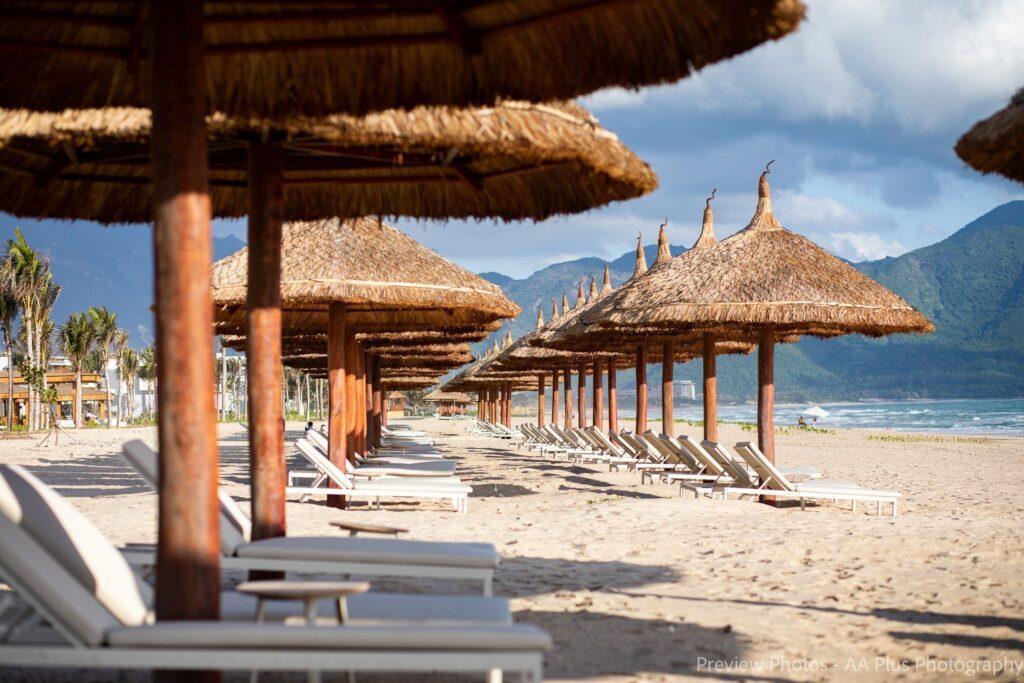
Kite flying runs daily from 4 to 5pm up on Alma Hill, looking down over the same stretch of Bai Dai from above, a genuinely different way to spend the hour before sunset than staying down on the sand itself.

The Nursery and Herb Garden nearby, open mornings and late afternoons, is worth a slower walk on the way back down for anyone who’d rather see where the resort’s own kitchens actually source their herbs.
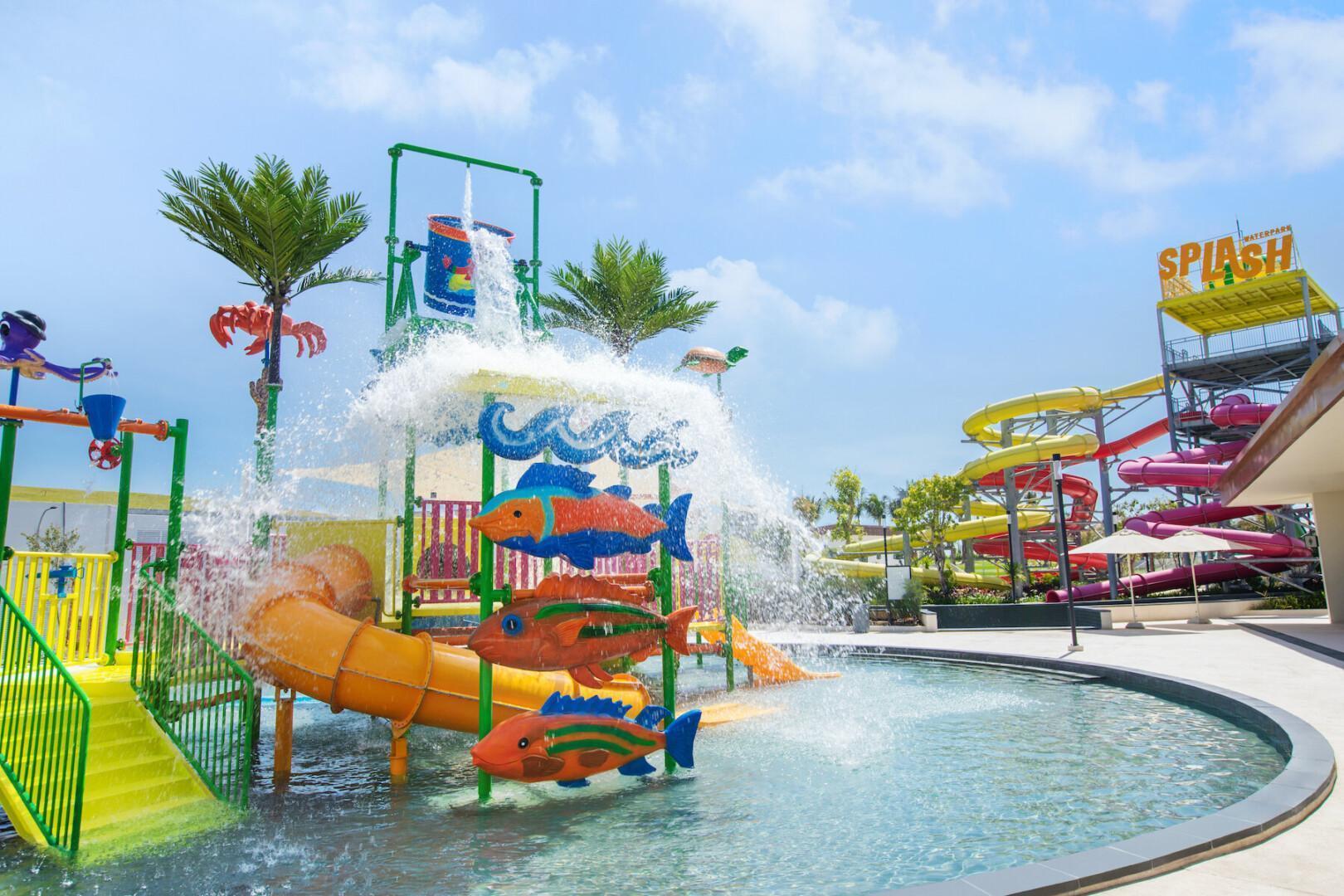
Families wanting more than open water also have Splash Water Park a short walk inland, a wave pool, lazy river, and slides for the days the sea itself feels like enough sun for one afternoon.
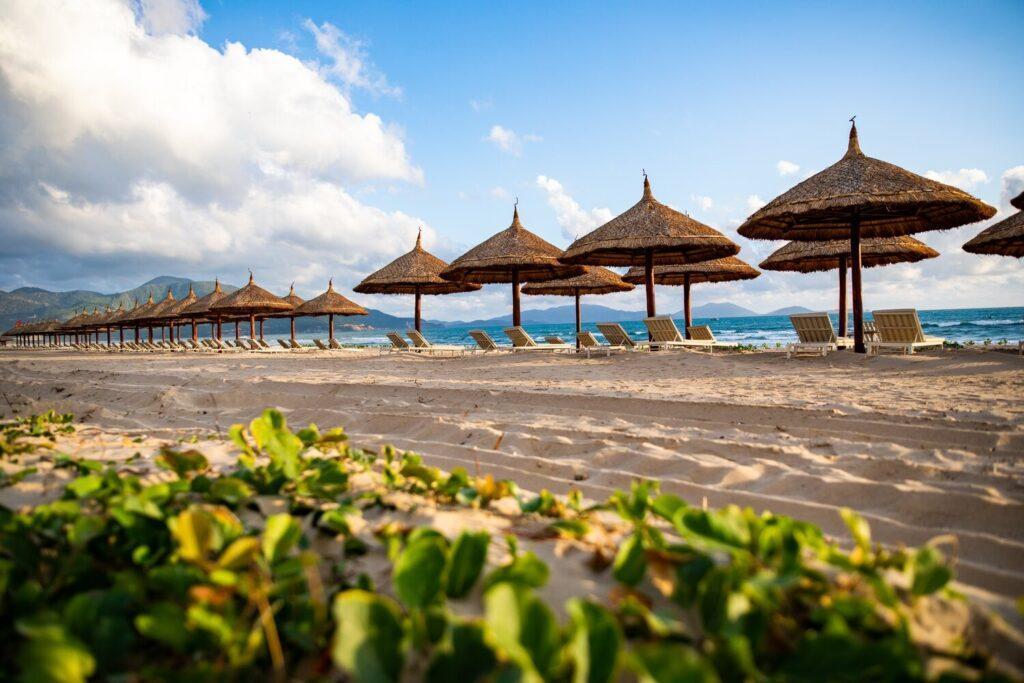
Sunset is when the beach empties out fastest into a genuinely quiet stretch of coastline, worth timing a walk for rather than only visiting at midday.
Choosing the right beach is only part of deciding where to stay. Travelers can compare accommodation along the coast in this guide to the best beach resorts in Nha Trang, while those visiting with children may find the overview of family resorts in Nha Trang more relevant.
It is also worth comparing the beaches of Cam Ranh and Nha Trang, as each area offers a different balance of resort space, city access, and coastal atmosphere.
Skip the equipment rentals in the city
Kayaks, water bikes, bodyboards, and a water roller are available directly on Alma’s beach, so there is no need to arrange separate rentals in Nha Trang.
The beachfront is open daily from 6:00 a.m. to 6:00 p.m.; for sand just beyond your door, the 147 sqm 1 Bedroom Villa, Private Pool, Beach Front suits a couple, while the 182 sqm two-bedroom version sleeps up to 7.
Conclusion
Picking between the Nha Trang beaches covered here really comes down to what kind of day you want: a convenient city swim, a quiet peninsula stretch, or a boat trip out to a reef or an island somewhere further offshore.
Alma Resort Cam Ranh puts one of the calmest of those options, 800 meters of Bai Dai Beach, directly outside the door for anyone who would rather not choose between the resort and the beach itself at all.
Read more: Nha Trang Travel Guide 2026: Everything You Need to Know Before You Go
*Prices are for reference only and may change without notice. Please contact us directly for current rates.
Frequently Asked Questions
Which Nha Trang beach is best for swimming?
Bai Dai and Doc Let both offer calmer, shallower water than the busier city center, making them the most comfortable of the Nha Trang beaches for casual and less confident swimmers, while Tran Phu is the most convenient option for anyone staying downtown.
Is Bai Dai Beach the same as Long Beach?
Yes, Bai Dai translates directly to “long beach” in Vietnamese, and both names refer to the exact same roughly 15 km stretch of sand along the Cam Ranh Peninsula.
Do you need a boat tour to see Hon Mun?
Yes, Hon Mun has no independent public access; it is reached only by a guided boat tour departing Nha Trang, typically as one stop on a wider island-hopping itinerary that includes snorkeling or diving over its protected reef.
Which beach is quietest and least crowded?
Bai Dai and Bai Duong are the two quietest of the Nha Trang beaches covered here, both well outside the city center’s daily foot traffic, with Bai Dai the longer, more secluded, and more resort-oriented of the two.
Can you walk to the beach from downtown?
Yes, if you mean Tran Phu Beach itself, which runs directly through the city center within easy walking distance of most downtown hotels. Every other beach on this list requires a taxi, motorbike, or boat to reach.